‘Who the Hell Is That Monster?’ — Daniel Cormier Recalls the First Time He Saw Brock Lesnar WRESTLE Like a Beast in Junior College
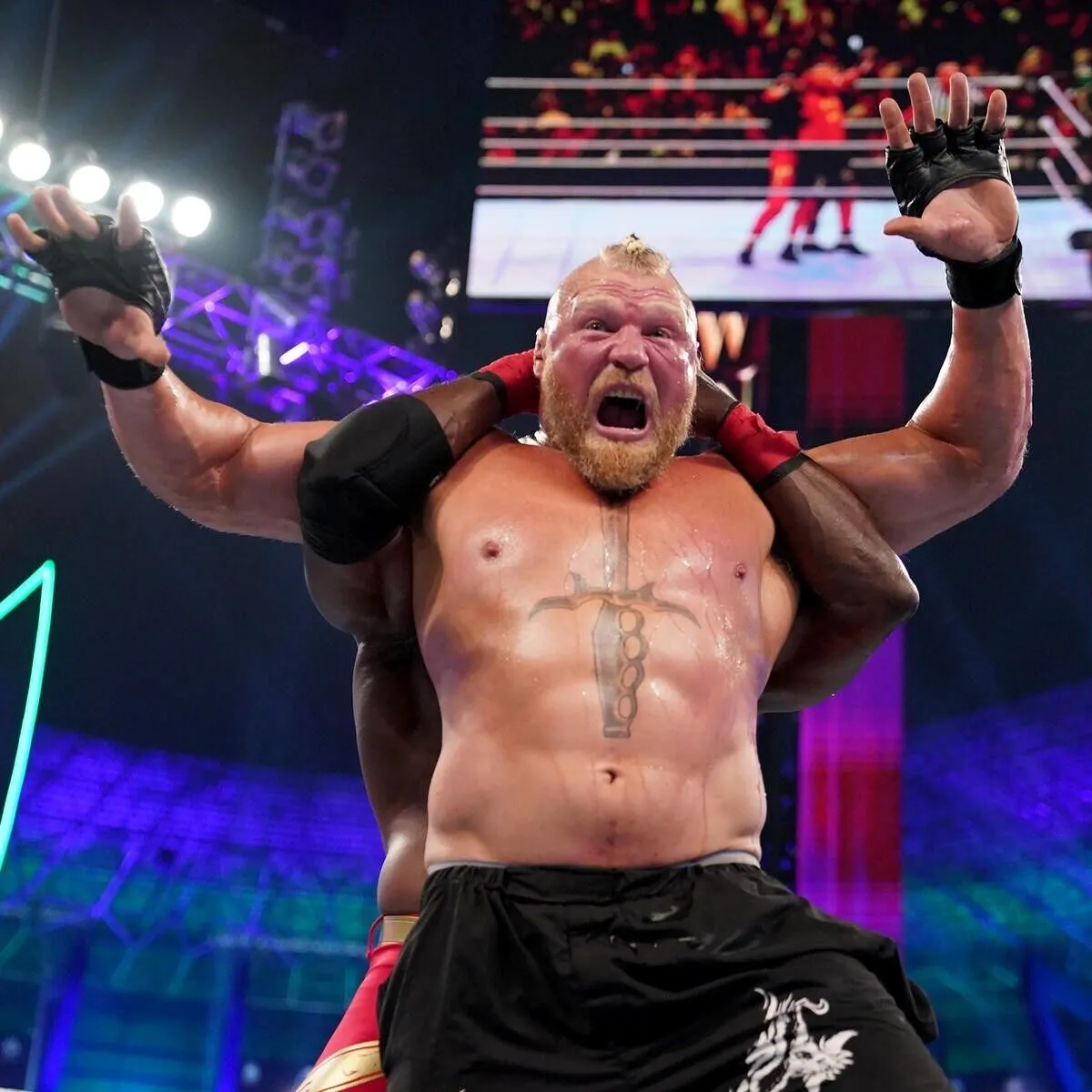
When it comes to collegiate wrestling legends, few names resonate as loudly as Brock Lesnar. Before he became a global superstar in WWE and later an imposing force in UFC, Lesnar was already a phenomenon on the wrestling mats. His raw strength, unmatched athleticism, and relentless drive made him a dominant figure from the very beginning of his career. This was precisely the impression that future UFC champion Daniel Cormier had when he first laid eyes on Lesnar during his junior college wrestling days.
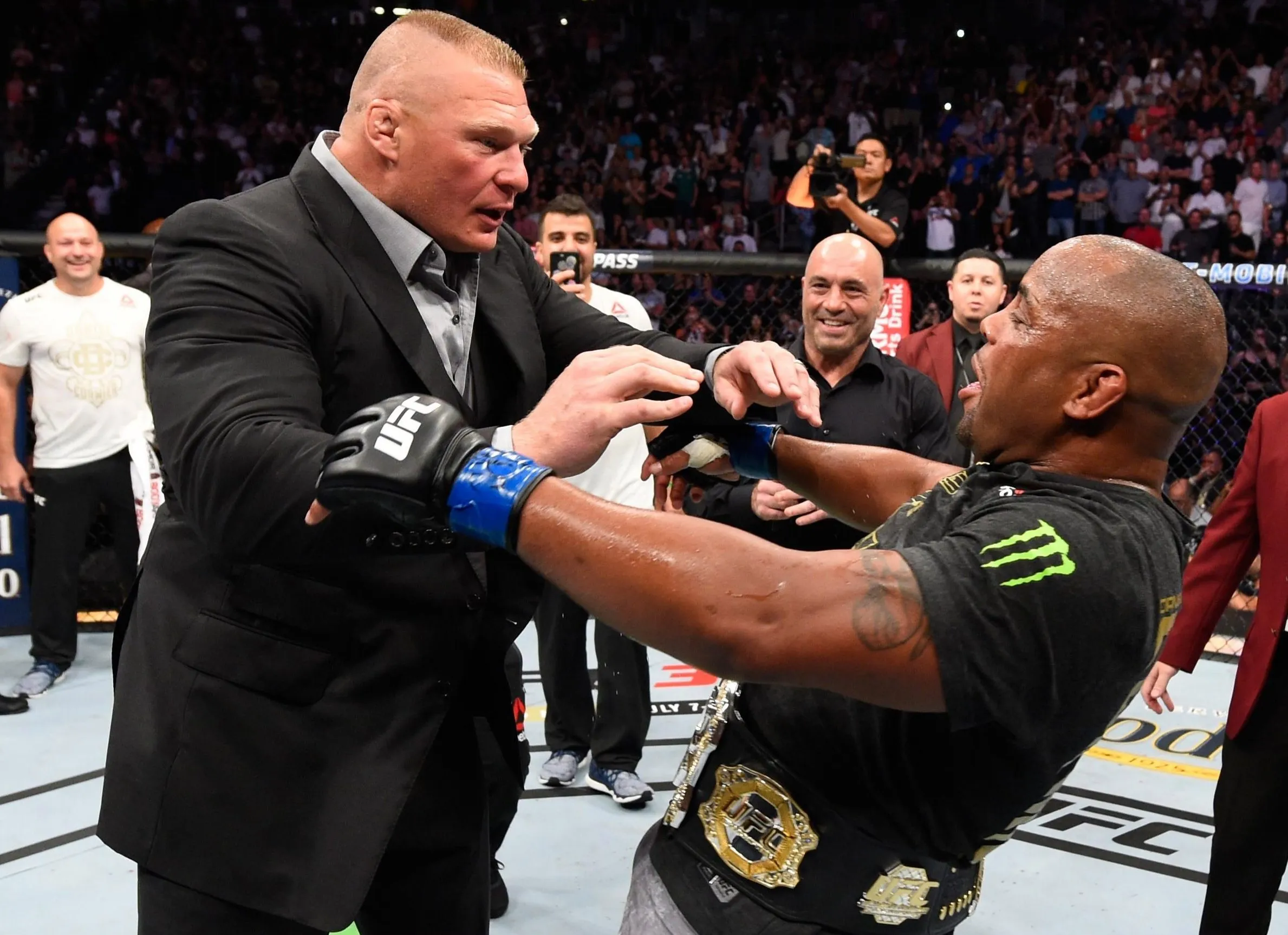
In a recent conversation reflecting on his early experiences in wrestling, Cormier shared a vivid memory that captured just how awe-inspiring Lesnar was from the moment he appeared on the scene. The encounter not only highlighted Lesnar’s natural talent but also underscored the level of intimidation he brought to the mat, even before his professional fame.
A First Encounter That Left an Impression
Cormier, himself a two-time Olympian and a wrestler with deep roots in the sport, knows exactly what it takes to compete at an elite level. Yet even with all his experience, he recalls being utterly stunned the first time he saw Brock Lesnar wrestle. This wasn’t yet the Lesnar who would win the NCAA Division I Heavyweight Championship for the University of Minnesota in 2000 or dominate inside the Octagon. This was Lesnar in his formative years, wrestling at Bismarck State College, a period when the seeds of his future dominance were being sown.
Cormier described Lesnar’s physical presence as almost otherworldly. “Who the hell is that monster?” was his first thought upon seeing the young heavyweight compete. At that time, Lesnar already possessed a frame that set him apart from nearly every other junior college wrestler. Standing at about 6’3” and weighing close to 275 pounds, Lesnar’s build was a perfect fusion of size, speed, and explosive power. It wasn’t just that he was big; it was how he moved—fast, fluid, and with a relentless energy that made it clear he wasn’t like the others.
The Beast Before the Beast Incarnate
To fully appreciate Cormier’s reaction, it’s important to understand the context of Lesnar’s rise. Before his transfer to the University of Minnesota, Lesnar had carved out an incredible reputation in the junior college circuit. Wrestling at Bismarck State, he quickly became a force to be reckoned with, capturing the NJCAA Heavyweight Championship and attracting the attention of top wrestling programs across the country.
Cormier vividly remembered watching Lesnar dominate his opponents with a style that combined traditional wrestling fundamentals with raw, unbridled physicality. Unlike many heavyweights, who often rely on brute strength alone, Lesnar showcased surprising technical proficiency. His double-leg takedowns were lightning-fast for someone his size, his mat control was suffocating, and his ability to scramble in tight situations left opponents bewildered.
It was in these early years that the legend of Lesnar began to take shape. He wasn’t simply overpowering people; he was outwrestling them, breaking their will, and doing it with an intensity that felt more fitting for a professional arena than a junior college tournament.
Cormier’s Perspective as a Competitor
For Daniel Cormier, who would go on to build his own legacy as one of the most well-rounded and successful combat sports athletes of his generation, seeing Lesnar in action was more than just witnessing a future star—it was an eye-opening experience. Cormier himself was no stranger to competing against and alongside elite wrestlers, but Lesnar’s combination of size, athleticism, and technical skill was unlike anything he had seen in the junior college ranks.
Cormier often speaks about how wrestlers develop a sixth sense for identifying greatness early on. Watching Lesnar move, react, and execute gave Cormier that undeniable feeling: this was a once-in-a-generation talent. Even in those early days, it was clear that Lesnar wasn’t just another standout collegiate wrestler—he was destined for much bigger stages.
The Psychological Edge
Another element that struck Cormier was Lesnar’s intimidation factor. Wrestling is as much a mental game as it is a physical one, and Lesnar’s mere presence on the mat was enough to shake opponents before the whistle even blew. His imposing size and explosive style created a psychological barrier that few could overcome.
Cormier recalled how other wrestlers would visibly tense up when facing Lesnar. Many knew they were stepping onto the mat not just against a skilled competitor, but against an athlete who exuded sheer dominance. Lesnar didn’t just wrestle to win; he wrestled to break people, to impose his will so completely that his opponents left the mat questioning their own abilities.
This psychological advantage became a hallmark of Lesnar’s career, extending far beyond his junior college years. Whether in NCAA tournaments, WWE rings, or the UFC Octagon, Lesnar’s ability to intimidate opponents before a match even began became one of his most potent weapons.
From Junior College to NCAA Stardom
Lesnar’s success at Bismarck State opened doors for him to wrestle at a higher level. He transferred to the University of Minnesota, where he became a central figure in one of the country’s premier wrestling programs. Under the guidance of elite coaching and surrounded by top-tier talent, Lesnar’s skills only sharpened.
In 2000, his collegiate career reached its pinnacle when he captured the NCAA Division I Heavyweight Championship, solidifying his place among the best amateur wrestlers in the nation. But even as he celebrated that achievement, those who had watched him from the beginning—like Cormier—knew that this was simply the next step in a much larger journey.
The Foreshadowing of a Larger-Than-Life Career
When Cormier talks about that first time seeing Lesnar wrestle, there’s a sense of inevitability in his words. It’s as if he knew, even then, that Lesnar was destined for greatness beyond wrestling mats. The blend of raw talent, physical dominance, and an innate understanding of competition marked Lesnar as someone who would thrive in any arena.
Of course, history has proven that intuition correct. After graduating, Lesnar transitioned to WWE, where his in-ring persona as “The Beast Incarnate” mirrored the very qualities Cormier had witnessed in junior college. Later, Lesnar brought that same intensity into mixed martial arts, capturing the UFC Heavyweight Championship and proving that his athletic prowess could transcend sports.
Cormier’s Lasting Respect for Lesnar
For Cormier, reflecting on that early encounter with Lesnar isn’t just about recalling the past—it’s about appreciating a fellow competitor’s journey. In Lesnar, he saw an athlete who refused to be defined by limitations, who embraced every challenge with the same ferocity he displayed as a young junior college wrestler.
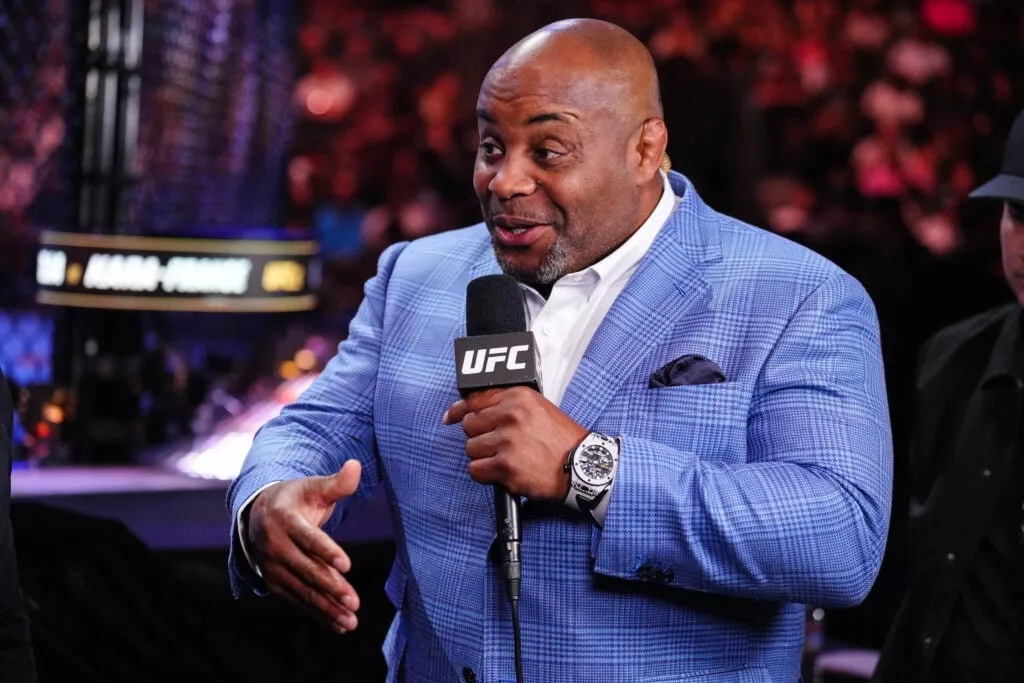
Cormier’s respect for Lesnar goes beyond admiration for his accomplishments; it’s rooted in understanding the work, sacrifice, and mentality that it takes to become an athlete of that caliber. Even today, Cormier often speaks about Lesnar with a tone of reverence, acknowledging him as one of the most physically gifted and mentally tough competitors he’s ever seen.
Conclusion: A Moment That Defined a Legend
The first time Daniel Cormier saw Brock Lesnar wrestle in junior college wasn’t just a memorable moment—it was the beginning of a narrative that would define one of the most dynamic athletes in modern sports history. That moment encapsulated everything that makes Lesnar who he is: a beast on the mat, a competitor who combined technical precision with raw power, and an athlete whose presence alone could shift the dynamics of any match.
Cormier’s words—“Who the hell is that monster?”—still resonate because they reflect what everyone felt when Brock Lesnar first emerged: awe, fear, and recognition that they were witnessing something extraordinary. From his humble beginnings at Bismarck State to conquering NCAA wrestling, dominating WWE, and seizing UFC gold, Lesnar has remained true to that first impression—a monster in the best sense of the word, redefining what it means to be a competitor.
Related News