Harry Styles Only Said Two Words – And They’ve Been Fueling Speculation for Five Years
Why “Who cares?” became one of the most dissected phrases in modern celebrity culture—and why it still matters.
In a world where every celebrity statement is scrutinized under a cultural microscope, Harry Styles has mastered the art of saying everything and nothing at the same time. Back in 2019, during a sit-down interview with The Guardian, Styles was asked a question that has followed him for most of his adult life: Is he bisexual? His answer was just two simple words: “Who cares?” And while those words might seem dismissive on the surface, they’ve since become a rallying cry, a philosophical stance, and for many, a coded message—sparking five years of relentless debate, speculation, and re-interpretation.
But why did those two words echo across pop culture like a cannon shot? What made “Who cares?” more than just a brush-off? And what does Harry Styles’ enigmatic silence on his sexuality tell us about the blurred lines between privacy, identity, and performance in the age of social media?
The Question That Never Goes Away
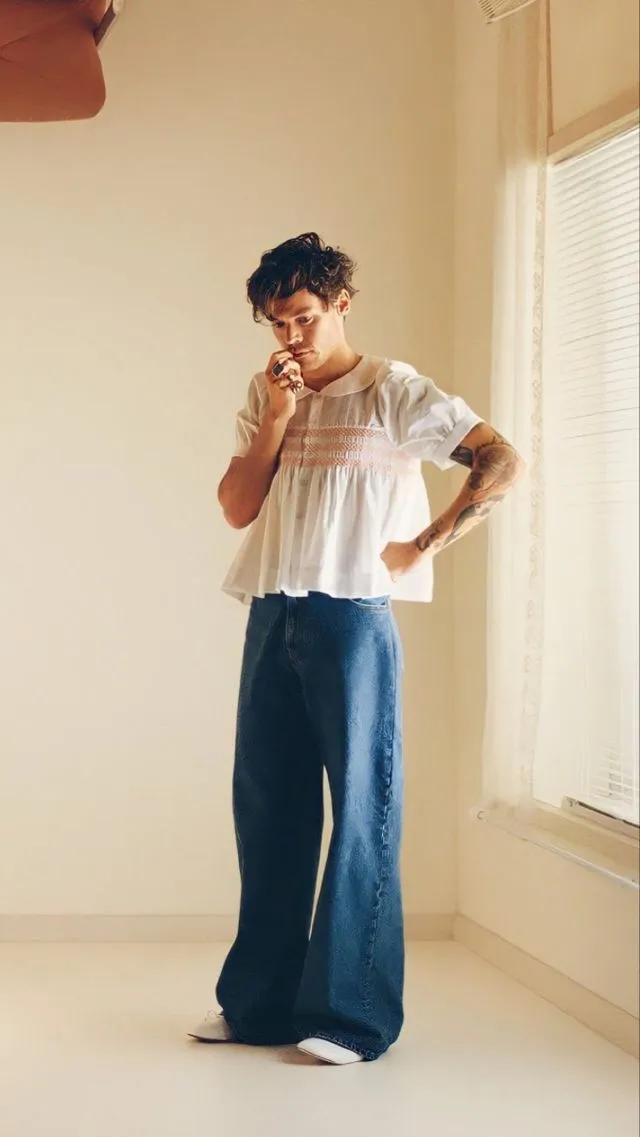
Since his early days in One Direction, fans and tabloids alike have obsessed over Styles’ sexuality. Every outfit, every stage gesture, every lyric has been pulled apart by the internet’s collective magnifying glass. His flamboyant fashion, often lauded for defying gender norms, only added fuel to the fire. From pearl necklaces to sheer blouses, the visual language of Styles’ wardrobe became its own kind of conversation—a subtle rebellion against the macho norms of pop stardom.
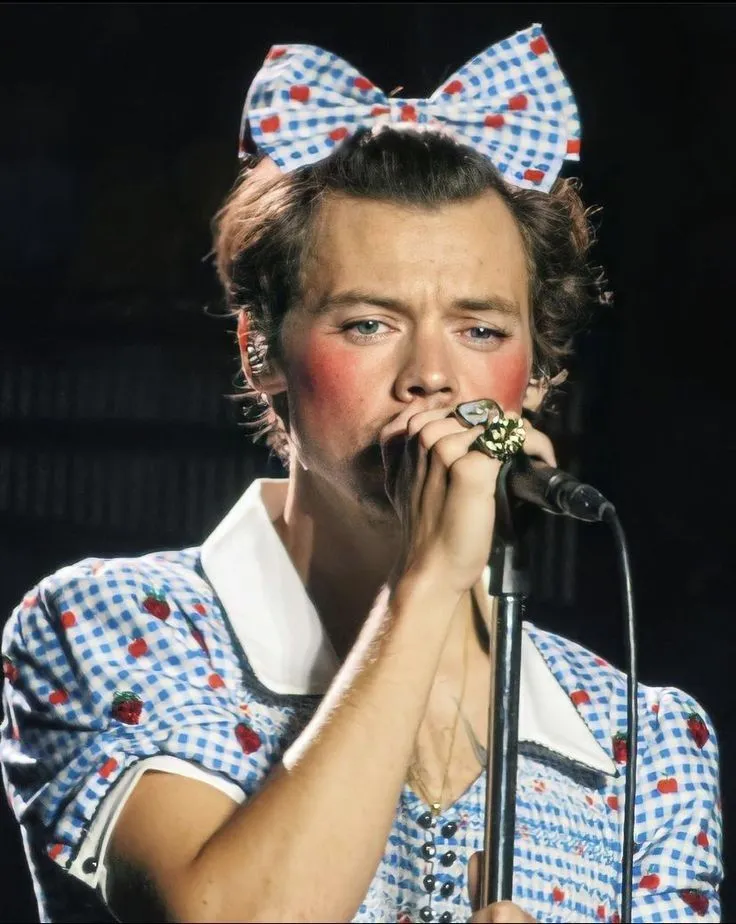
So when The Guardian finally asked the question directly—”Are you bisexual?”—many expected a headline-worthy confession. Instead, Styles leaned back, smiled, and said, “Who cares?” That moment, caught on tape and replayed endlessly, was the exact opposite of what celebrity culture is used to. There was no coming out, no denial, no dramatic pause. Just a calm refusal to engage.
A Masterclass in Deflection or a Radical Statement?
The brilliance of “Who cares?” lies in its ambiguity. Is it a deflection? A refusal to label himself? Or a genuine expression of how little weight he gives to the binary constructs of sexuality? Styles himself has never clarified. And perhaps that’s the point.
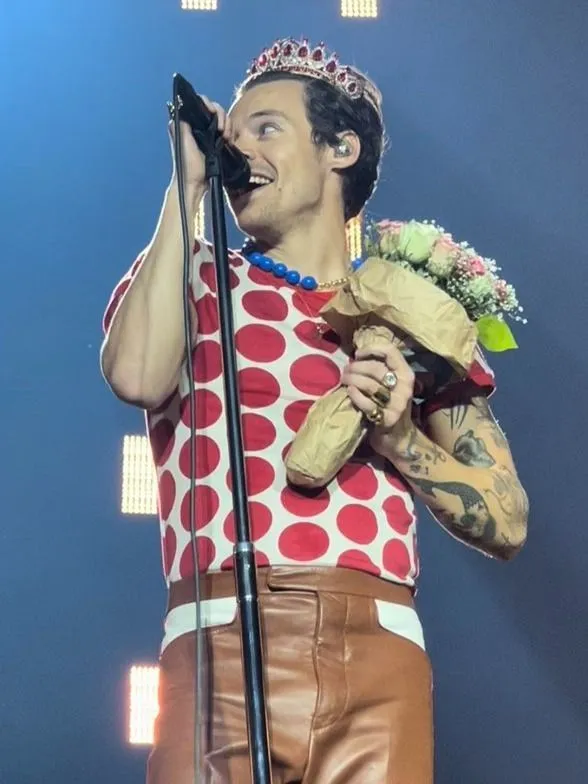
In the same interview, Styles mentioned that he doesn’t feel the need to label his sexuality. And in countless performances since—most notably during his “Love On Tour” shows—he’s waved rainbow flags, performed in pink sequins, and created a space that celebrates queerness without demanding definition.
But to some, “Who cares?” wasn’t enough. Critics accused him of queerbaiting, a term used when public figures hint at being LGBTQ+ to attract queer audiences without explicitly identifying as such. Others applauded him for refusing to conform, for letting his actions speak louder than any label ever could.
The Cultural Aftershock: Five Years Later
Fast forward to 2025, and Styles’ two-word answer is still making headlines. On forums, in think pieces, and across Twitter/X, fans continue to argue: Was it evasive or empowering? Is Harry queer, or is he simply challenging the need for labels altogether?
What makes the ongoing conversation even more fascinating is how “Who cares?” became more than just a reply—it became a cultural litmus test. Those two words now reflect how people view identity in the modern age. For some, it’s a symbol of progress: a celebrity finally refusing to play into the media’s need for a “coming out” story. For others, it’s frustrating: a perceived dodge that capitalizes on queer aesthetics without clear allegiance.
The debate also reveals a deeper tension: Are public figures obligated to define themselves to the public they influence? Or do they have the right to exist in the gray, unlabelled space of fluidity?
Fashion, Performance, and the Visual Code of Identity
One cannot separate Styles’ “Who cares?” from the aesthetic choices that have followed. In 2020, he appeared on the cover of Vogue in a Gucci dress—becoming the first solo male cover star in the magazine’s history. The cover shattered expectations and polarized audiences. Conservatives cried outrage. Queer communities cheered. The fashion world paused, then exploded.
Every step he’s taken since then—whether it’s appearing on red carpets in feather boas or headlining festivals in rhinestone jumpsuits—has played with gender, sexuality, and societal expectations. And yet, through it all, Styles has remained consistently vague. His art, his fashion, and his public image form a mosaic without a legend—a masterpiece of mystery.
The Price of Privacy in the Digital Age
Styles’ decision to keep his personal life out of the spotlight feels radical in an era where oversharing is the norm. While fans dissect every move for hidden meanings, he continues to offer very little. He hasn’t confirmed or denied relationships, hasn’t addressed rumors directly, and never followed up on that “Who cares?” moment.
But make no mistake—his silence is not accidental. It’s deliberate. It’s a quiet rebellion against the demand that celebrities lay bare their identities for public consumption. Styles is telling us: What I do, what I wear, how I perform—that’s all the answer you’ll get. And maybe that’s all the answer you need.
The Bigger Picture: Beyond Labels, Beyond Expectations
The true power of Styles’ answer may lie in its ability to challenge our need for resolution. In a culture obsessed with certainty, he offers ambiguity. In a world demanding identity tags, he gives gestures, lyrics, and glances instead. His refusal to define himself reminds us that not everything needs to be put in a box—especially not people.
Who cares?—as it turns out—isn’t a dismissal. It’s a dare. A challenge to all of us to look inward and ask: Why do we need to know so badly? Why does it matter? And who are we to demand clarity from someone simply living in authenticity?