







Fans Are Losing It Over This Unexpected Comparison Between Kendrick Lamar and Eminem — You Won’t Believe Who Came Out ‘Whiter’
In the ever-evolving landscape of hip-hop, comparisons between artists are nothing new. From Tupac vs. Biggie to Drake vs. Kanye, the genre has always thrived on debates, rivalries, and unexpected parallels. But recently, social media has exploded with one of the most unexpected — and provocative — discussions yet: a heated comparison between Kendrick Lamar and Eminem, not about lyrical prowess, cultural impact, or album sales, but rather, who comes across as “whiter.”
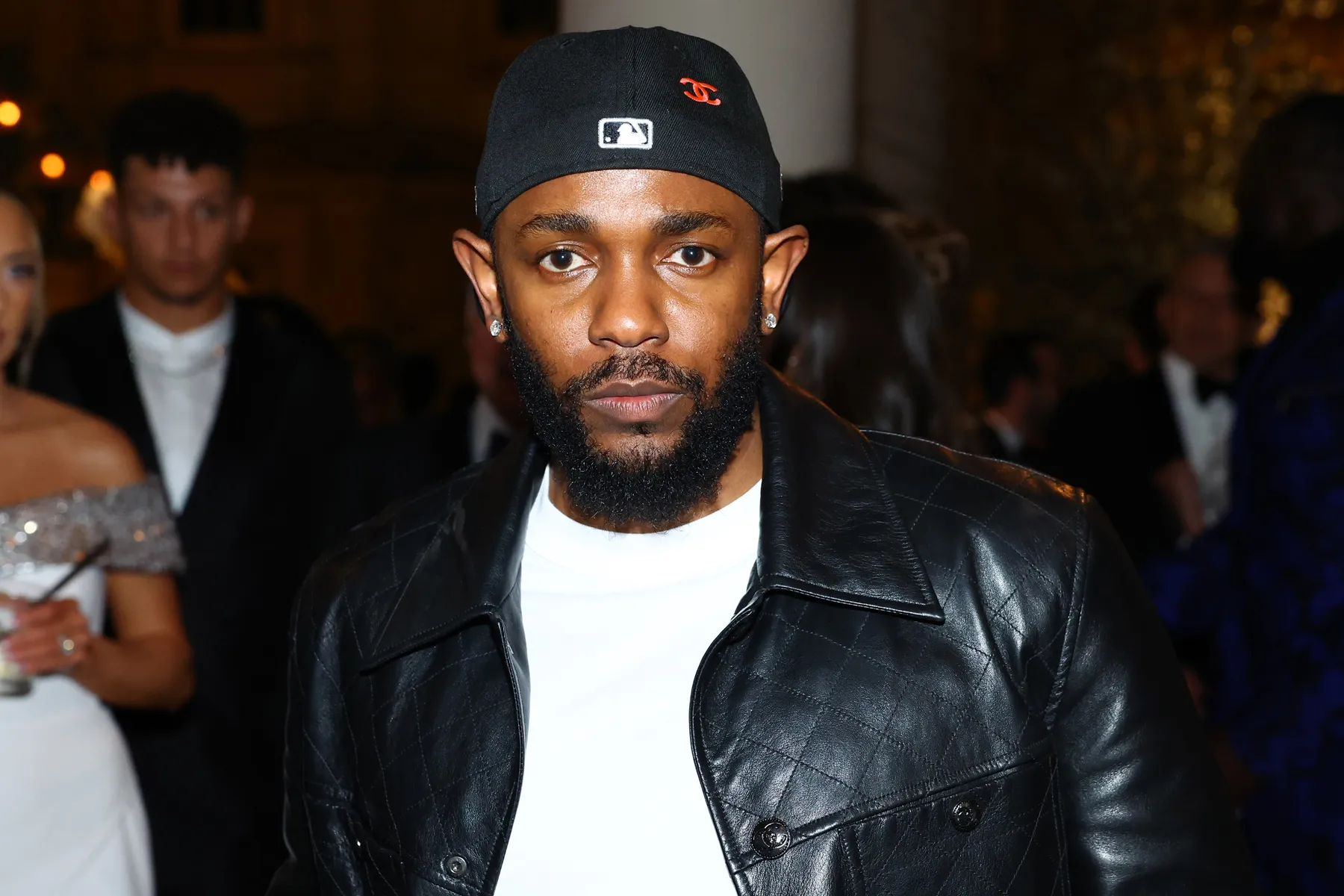
The conversation ignited from a now-viral clip during a podcast where two hip-hop enthusiasts debated the perceived “whiteness” of these two iconic rappers. One claimed that Kendrick Lamar, despite being a proud Black artist, presents more “white-coded behavior” than Eminem, who, despite being white, has always embraced the raw, rebellious, and unfiltered culture of Black hip-hop. The statement instantly triggered a firestorm of commentary, memes, think pieces, and TikTok duets — all trying to dissect this “whiteness paradox.”
Understanding the Term “Whiteness” in Hip-Hop
Before diving into the heart of this cultural explosion, it’s important to define what people even mean by “whiter.” In this context, the term is not strictly racial. Rather, it refers to cultural codes, behaviors, aesthetics, and societal alignment with mainstream white norms — such as academic speech, subdued rebellion, or a calculated public image.
Some fans argue that Eminem, despite being white, grew up in predominantly Black Detroit neighborhoods, immersed in hip-hop culture, poverty, and street life. His early music was raw, violent, chaotic — everything mainstream America feared about hip-hop. Kendrick Lamar, on the other hand, although hailing from Compton, presents himself as scholarly, poetic, spiritual, and increasingly philosophical in his albums and interviews — attributes more traditionally coded as “white” in America’s skewed cultural lens.
The irony isn’t lost on fans. It’s a jarring contradiction that forces people to confront their own assumptions about race, identity, and what it means to belong to hip-hop.
Kendrick Lamar: The Intellectual Prophet of the Culture
Over the past decade, Kendrick Lamar has crafted a reputation as the genre’s most intellectual and introspective figure. From “good kid, m.A.A.d city” to the Pulitzer-winning “DAMN.”, Kendrick has focused heavily on themes like Black trauma, spirituality, violence, and institutional oppression. His work resembles literature more than it does club music. His interviews are sparse, his public appearances rarer still, and his persona is guarded, refined, deliberate.
For many fans, Kendrick represents the new wave of Black artistry, one that seeks to dismantle the thug stereotype and replace it with a more thoughtful, socially aware archetype. But for others, that very transition has placed Kendrick further away from the rawness that birthed the genre.
It’s not uncommon to hear critics (often younger hip-hop heads or underground purists) argue that Kendrick Lamar’s image has been “gentrified” — that he no longer represents the visceral emotion of street rap, but rather the polished rhetoric of academia. He wears tailored clothes, recites spoken word at fashion events, and has even collaborated with philosophical visual artists and choreographers.
To some, that makes him admirable. To others, it makes him “whiter.”
Eminem: The White Rapper Who Refused to Code-Switch
When Eminem burst onto the scene in the late ’90s, he was an anomaly: a white rapper with unmatched lyrical talent, a chaotic persona, and a complete rejection of white middle-class sensibility. He rapped about poverty, addiction, violence, and mental health long before it became cool to do so. He never sought to be politically correct, and he certainly never tried to present himself as “respectable.”
What made Eminem revolutionary wasn’t just that he was a white rapper — it was that he was unapologetically gritty. He leaned into the chaos of hip-hop’s rebellious spirit, a spirit birthed by Black culture, and made himself a permanent resident of that world.
Despite being a global superstar, Eminem rarely conformed to white American expectations. He didn’t smile for cameras. He didn’t give family-friendly interviews. He cursed on live TV and got banned from multiple award shows. His rawness, in many ways, made him feel “blacker” to fans than many actual Black artists who were tailoring their image to suit corporate tastes.
That contrast — between Eminem’s authenticity and Kendrick’s refinement — is at the heart of this explosive conversation.
Fans React: Twitter Threads and TikTok Breakdowns
The reaction on social media has been immediate and chaotic. One viral tweet read:
“Kendrick might be the only rapper who could perform a TED Talk and a poetry slam back to back. Em would burn both down just to prove a point.”
Another fan responded:
“Eminem rapped about killing his mom and his wife. Kendrick raps about generational trauma and spiritual healing. One is therapy. The other is crime scene evidence. But which one do you feel more?”
On TikTok, creators broke down the contrast even further. Some pointed to Kendrick Lamar’s collaboration with classical musicians and live jazz ensembles as a move toward white-elite artistic spaces. Others highlighted how Eminem’s early beats — heavy with bass and aggression — were closer to gangsta rap roots, while Kendrick’s later work sounded like film scores or political documentaries.
Still, not everyone agrees with this framing. Many Black fans defended Kendrick’s approach, arguing that Black excellence doesn’t have to be loud or performative to be valid. They pointed out that Kendrick’s evolution mirrors that of Black intellectuals throughout history — from James Baldwin to Cornel West — and that reducing him to “white-coded” because he’s philosophical is a form of subtle racism in itself.
Others noted that Eminem’s privilege as a white man allowed him to be that chaotic without lasting consequences — something a Black rapper could never get away with in the early 2000s.
Cultural Identity and the Double Bind
What this controversy really uncovers is a deeper, more troubling issue within American culture: the double bind of Black expression. When Black artists are raw, angry, and unfiltered, they are seen as dangerous, uncivilized, or thuggish. When they are poetic, reflective, and philosophical, they risk being labeled as “less Black” or even “white.”
Kendrick Lamar exists in that precarious space. His artistry transcends typical genre conventions, but in doing so, it sometimes alienates listeners who want something more immediate, more emotional — more “hood.” But why should that burden fall on him? Why must Black artists constantly prove their “Blackness” through trauma, rage, or stylistic choices that align with stereotypes?
On the flip side, Eminem navigates the opposite bind. As a white man in a Black genre, he has had to overperform his aggression and authenticity just to be taken seriously. Every album he dropped felt like a reaffirmation of his “right” to belong in hip-hop — and that effort often came with intense vulnerability, hyper-violence, and shock tactics.
In some twisted irony, both Kendrick and Eminem are victims of cultural expectations — one judged for being too refined, the other for being too raw.
Art Is the Gray Zone
What makes this conversation so fascinating — and so difficult — is that it exposes just how broken the racial metrics of culture can be. The idea that one artist is “whiter” than the other, based on behavior rather than skin, shows how complicated identity has become in the age of globalized media.
Neither Kendrick Lamar nor Eminem fits cleanly into a racial box. That’s the point. They’ve both evolved past the initial shock of their personas. Kendrick is no longer just the Compton kid with a vision, and Eminem is no longer the wild white boy breaking the rules. They’re both legends. Both icons. And both human beings responding to the world through their unique lens.
Assigning “whiteness” or “blackness” to them based on behavior is reductive — yet it also reveals the power of image, perception, and the stereotypes we still haven’t escaped.
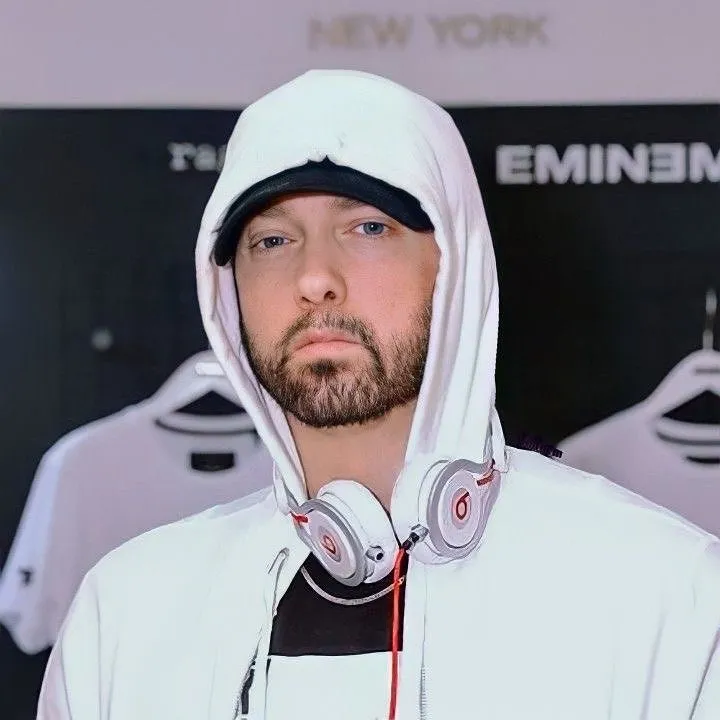
Final Thoughts: Who Really Came Out “Whiter”?
So, who came out ‘whiter’? The answer, ironically, says more about us than it does about either artist.
If we say Kendrick Lamar, we’re possibly revealing our own biases about what it means to be intellectual, poetic, or socially aware. If we say Eminem, we might be clinging to the idea that raw rebellion is still the ultimate measure of authenticity — even when it’s coming from someone outside the culture’s origin.
In truth, both artists have redefined hip-hop in their own ways. Both have defied expectations, challenged norms, and built discographies that will outlive the momentary noise of social media debates. They’ve each walked a tightrope between cultural critique and personal storytelling, and they’ve both used their platforms to speak uncomfortable truths.
The real question is not who is whiter, but rather:
Why are we still using whiteness as a measuring stick in a genre born from resistance to white norms?
Until we answer that, fans will keep losing it — not just over the music, but over what the music reveals about society itself.