







Terence Crawford Questions Legality of Jake Paul vs. Gervonta Davis Fight
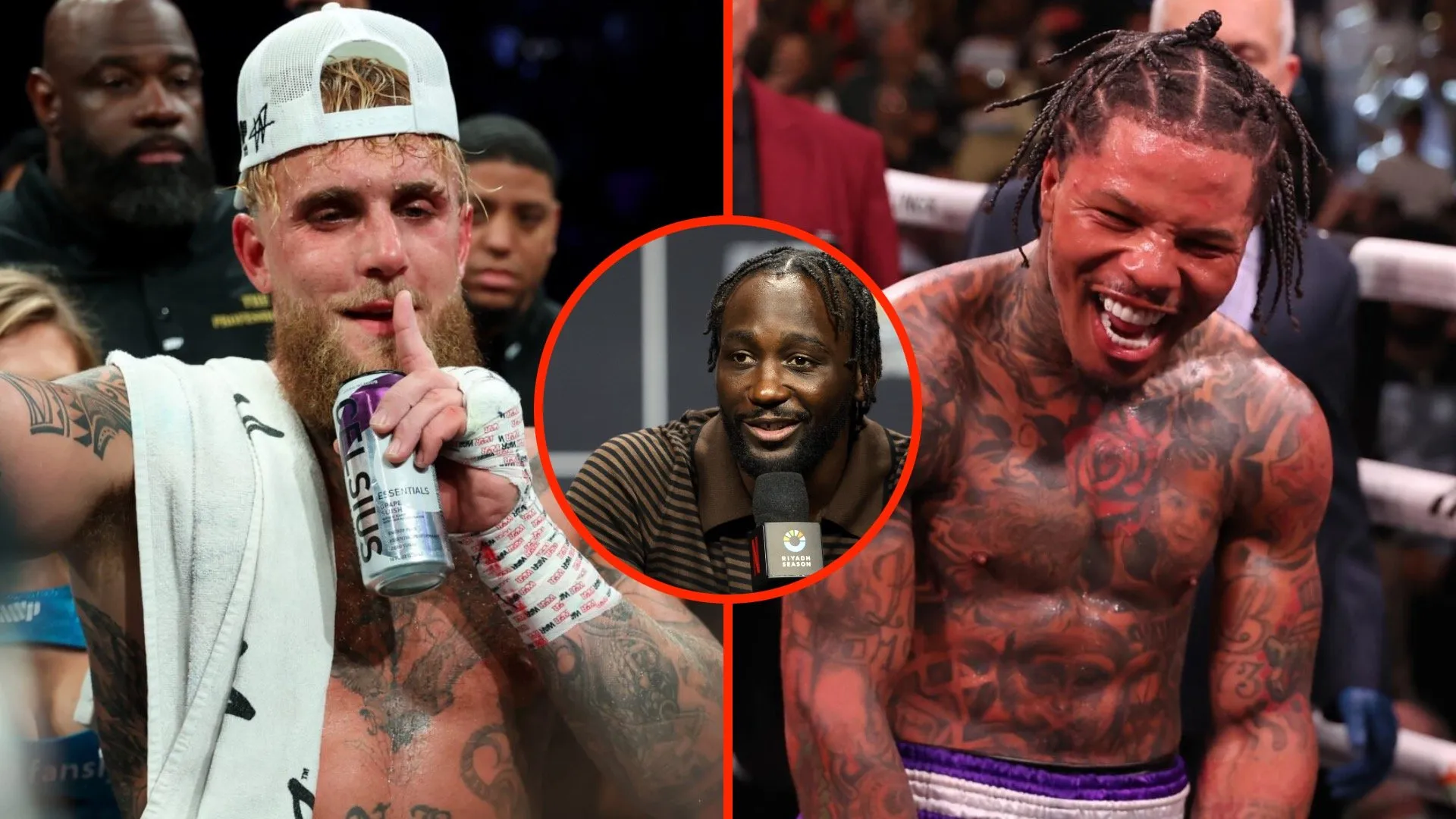
In the fast-evolving world of professional boxing, few matchups generate as much curiosity and controversy as the upcoming bout between Jake Paul and Gervonta “Tank” Davis. While the fight has captured mainstream attention, seasoned boxing veterans are raising critical questions about its authenticity. Among the most vocal skeptics is Terence “Bud” Crawford, a top-tier boxing champion, who openly doubts whether this clash can be considered a legitimate sporting contest.
In this article, we examine the factors that have led Crawford and other professionals to question the legitimacy of the Paul vs. Davis fight, exploring weight discrepancies, commercial motivations, community reactions, and the broader implications for boxing.
Terence Crawford’s Skepticism: “Is This a Real Fight?”
Terence Crawford, widely regarded as one of the best pound-for-pound fighters in the sport, recently expressed his doubts on the Full Send Podcast. According to Crawford, the matchup between Jake Paul, a social media celebrity turned professional boxer, and Gervonta Davis, a decorated lightweight champion, may not qualify as a serious boxing contest.

The primary concern, Crawford notes, lies in the dramatic weight difference between the two fighters. Paul typically weighs around 200 pounds (91 kg), whereas Davis has traditionally competed in the lightweight division, hovering around 135 pounds (61 kg). The gap of more than 60 pounds in a sport where even a few pounds can drastically affect performance raises red flags for many boxing professionals.
Crawford bluntly stated, “I think this isn’t a real fight… they’ll just go in there and… ‘let’s take the money’… it’s more commercial than athletic.” His commentary emphasizes that, from a professional standpoint, the bout appears designed to attract viewers and generate revenue rather than determine athletic supremacy.
Additionally, Crawford highlights the size advantage that Jake Paul brings to the ring: “Jake is too big for Tank. If he lands a good punch, it could all be over.” This assertion underscores the potential risk to Davis, suggesting that the fight could be decided by a single, fortuitous blow rather than by skill or strategy.
Fight Details: Logistics and Setup
Despite skepticism, the fight is officially scheduled for November 14, 2025, at the State Farm Arena in Atlanta, Georgia, with a global broadcast on Netflix. Notably, the match will not serve as a title defense due to the substantial weight discrepancy.
Jake Paul is expected to cut his weight from over 200 pounds down to 195 pounds, while Davis has never competed above 140 pounds. This adjustment highlights the extreme nature of the bout, as Davis would be facing an opponent substantially heavier and stronger than anyone he typically encounters in professional bouts. The mismatch intensifies concerns that the fight is engineered more for spectacle than sport.
Community and Professional Reactions
The boxing community has been vocal in its criticism of the Paul vs. Davis fight, signaling broader concerns about the commercialization of the sport.
Ryan Garcia’s Critique
Ryan Garcia, a rising star and peer of Davis, publicly denounced the matchup. Garcia likened the fight to WWE-style entertainment, questioning whether Davis would even agree to gain the necessary weight to meet Paul’s size. He remarked, “You have to be delusional to think this could happen.” Garcia’s comments reflect frustration with a trend in boxing where financial incentives are overshadowing competitive integrity.
Shakur Stevenson’s Perspective
On the other hand, Shakur Stevenson, another professional champion, offered a more measured analysis. While he believes Davis’s skill and experience give him a significant edge over Paul, Stevenson predicts a decision victory rather than a knockout. This viewpoint acknowledges Davis’s prowess while still recognizing the peculiar, almost artificial conditions of the matchup.
Analyzing the Legitimacy Question
Crawford’s doubts about the fight are grounded in several key factors:
Legitimacy Concerns
The size discrepancy raises fundamental questions about fairness and authenticity. In traditional boxing, matchups are carefully arranged to ensure competitors are in similar weight classes, minimizing the risk of injury and ensuring skill determines the outcome. Crawford’s assertion that the fight is “more commercial than athletic” highlights the potential conflict between spectacle and sport.
Professional Boxing Standards

From a technical perspective, Davis possesses superior boxing skills and experience. However, the weight and power differential could negate much of this advantage, allowing Paul to capitalize on physicality rather than technique. Crawford’s analysis suggests that a single punch from Paul could potentially determine the outcome, further distancing the match from standard professional boxing contests.
Community Sentiment
The skepticism isn’t limited to Crawford. Figures like Garcia highlight how the fight represents a departure from traditional boxing values, prioritizing entertainment and revenue over competitive integrity. Stevenson’s commentary, while supportive of Davis, still implicitly acknowledges the unconventional nature of the bout.
Commercial and Marketing Elements
The fight’s Netflix broadcast and heavy promotional campaign underscore its status as a commercial spectacle. Unlike championship fights that are meticulously arranged to showcase athleticism, this matchup seems aimed at maximizing viewer engagement and capitalizing on celebrity appeal. This commercial framing is central to Crawford’s critique that the match might lack genuine legitimacy.
Weight Discrepancies: A Critical Factor
One of the most significant points in Crawford’s skepticism is the unprecedented weight gap. Jake Paul’s reduction to 195 pounds still leaves him approximately 50 pounds heavier than Davis, a substantial advantage in terms of reach, strength, and punching power.
In professional boxing, such mismatches are extremely rare due to safety regulations and weight class protocols. The deviation from standard practices is a red flag for experts and fans alike, lending credibility to Crawford’s concerns.
Moreover, the fight will not feature any championship stakes, further suggesting that its primary purpose is financial and entertainment-driven rather than a legitimate test of boxing skill.
Media and Marketing Influence
The decision to air the fight on Netflix represents a broader shift in how boxing matches are monetized and marketed. Traditional pay-per-view models are giving way to streaming platforms, which aim to attract casual viewers with celebrity involvement rather than focusing solely on sporting competition.
This shift supports Crawford’s view that the fight is primarily a business venture, designed to generate buzz, subscriptions, and sponsorship revenue, rather than uphold the principles of competitive boxing.
Implications for Boxing as a Sport
The Paul vs. Davis matchup raises important questions about the future of professional boxing:
-
Commercialization vs. Athleticism: As high-profile exhibition-style fights gain traction, there’s a risk that boxing’s legitimacy as a competitive sport may be undermined.
-
Safety Concerns: Significant weight discrepancies introduce potential health risks, which traditional regulation seeks to mitigate.
-
Public Perception: Celebrity-driven bouts may attract new audiences but could alienate purists who value technical skill and merit-based competition.
Crawford’s criticism reflects these broader concerns, emphasizing the need for boxing to balance entertainment with genuine athletic competition.
Expert Opinions: Supporting Crawford’s View

Several boxing experts echo Crawford’s skepticism:
-
Ryan Garcia warns that such events are “fake fights” reminiscent of WWE-style performance rather than sport.
-
Shakur Stevenson acknowledges Davis’s likely dominance but still considers the circumstances unconventional.
-
Industry analysts note that weight manipulation and promotional theatrics further distance the match from standard professional protocols.
Collectively, these perspectives reinforce Crawford’s assertion that the fight may be more commercially motivated than a legitimate sporting event.
Public and Social Media Reactions
The fight has sparked intense discussion on social media platforms. Fans are divided between:
-
Supporters of entertainment value, who see the event as a fun spectacle and an opportunity to engage with boxing in a new, accessible format.
-
Traditionalists, who criticize the fight as a mockery of professional boxing, prioritizing celebrity over skill and integrity.
This polarization mirrors Crawford’s professional stance, highlighting the tension between sporting legitimacy and mass-market appeal.
Ultimately, Crawford, along with voices like Ryan Garcia and cautious support from Shakur Stevenson, underscores that the fight may prioritize profit and publicity over skill and sportsmanship. While fans eagerly anticipate the November 14, 2025, matchup, experts caution that it may represent more of a commercial exhibition than a legitimate test of boxing prowess.
Related News