




Why Did Yamaha “Put an End” to Miguel Oliveira’s Season Before It Even Finished?
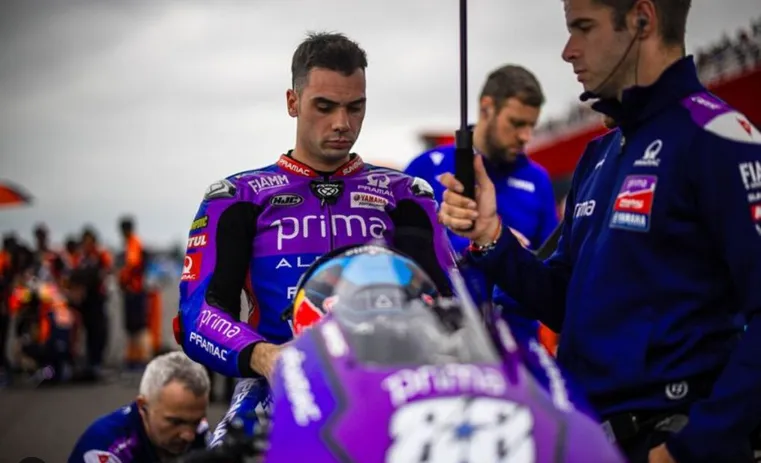
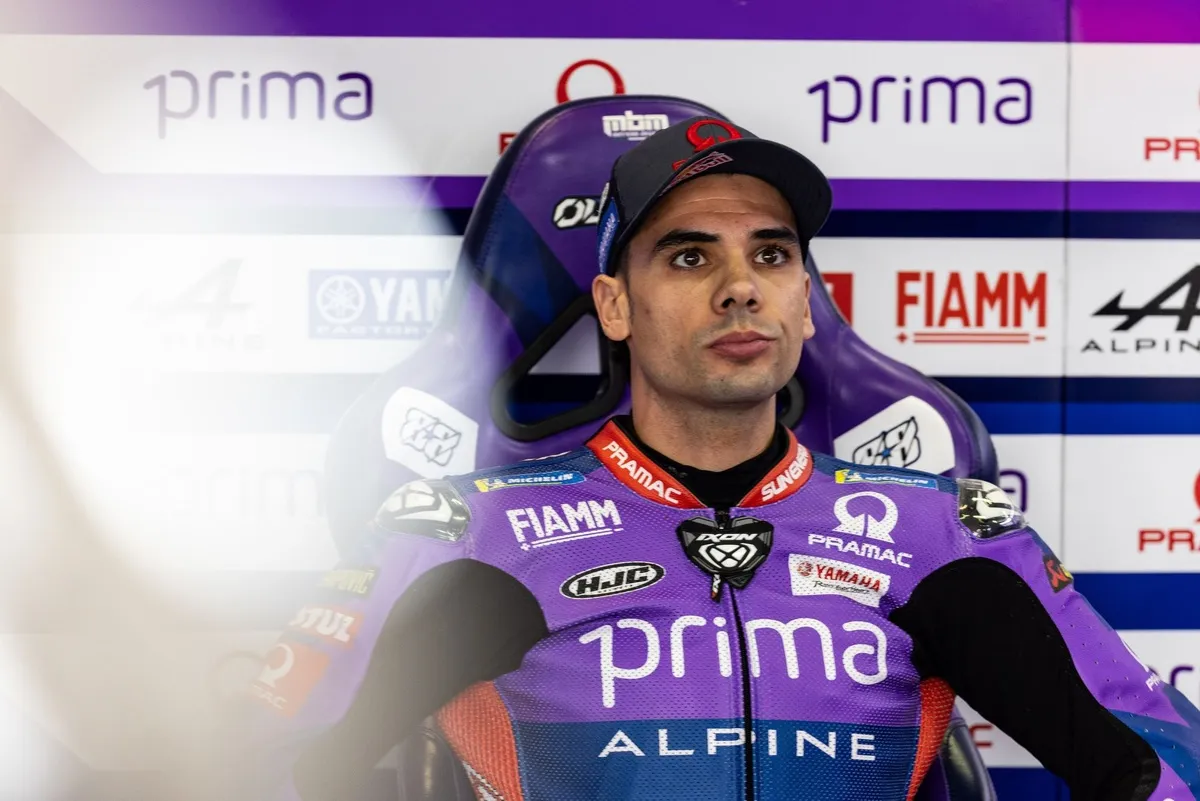
In what many fans viewed as an unexpected development, Yamaha appears to have prematurely ended Miguel Oliveira’s MotoGP 2025 season, long before the final race. While no formal public statement declared his season “over,” a series of internal moves, injuries, and contract decisions effectively drew the curtain on his year. So what really happened behind the scenes? Why did Yamaha move on from Oliveira when the season was still active? The answer lies in a perfect storm of injury setbacks, performance clauses, rider replacements, and shifting priorities within Yamaha’s MotoGP program.
The Crash That Changed Everything
It all began at the Argentine Grand Prix Sprint Race, where Miguel Oliveira suffered a heavy crash involving Fermin Aldeguer. The collision was brutal, resulting in Oliveira being thrown from his Yamaha and immediately clutching his shoulder in visible pain. Medical scans later confirmed a sternoclavicular joint dislocation and torn ligaments in his left shoulder. As a result, doctors recommended full immobilization of the arm for multiple weeks, effectively ruling him out of at least three races: the Americas GP, Qatar GP, and Spanish GP (Jerez).
This was a devastating blow not just to Oliveira, but also to Pramac Yamaha, who were counting on his experience and adaptability to help develop the 2025 M1. With recovery estimates pointing to 6–8 weeks minimum, Yamaha had no choice but to find a substitute.
Augusto Fernández Steps In – And Stays
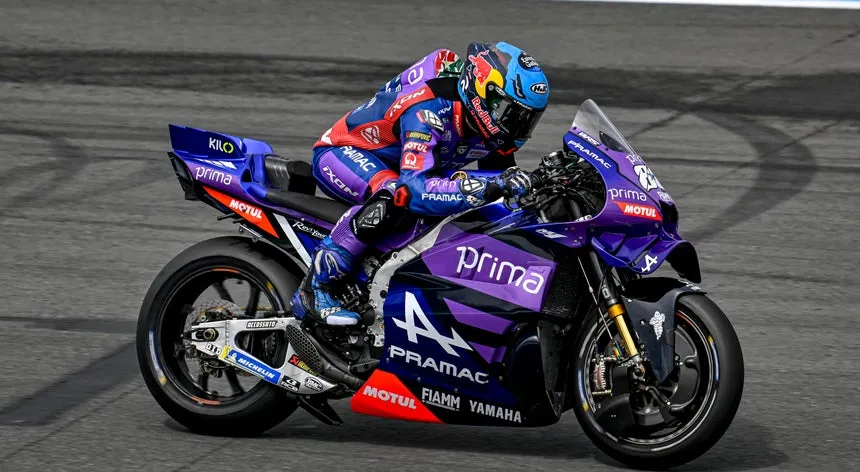
Enter Augusto Fernández, the Yamaha test rider, who was quickly called up to replace Oliveira for the GP of the Americas. What was initially seen as a short-term solution turned into an extended audition. Fernández showed strong pace, technical precision, and provided the factory with much-needed data during a tough development season.
Impressed with his ability to mesh with the Yamaha setup, the team kept him on for the Qatar and Jerez rounds, and there was growing internal support for letting him finish out the year. This didn’t just signal a temporary replacement—it marked a shift in Yamaha’s direction.
The Contract Clause That Sealed His Fate
While the injury kept Miguel Oliveira off the grid, another quiet but crucial factor contributed to Yamaha’s decision: a performance clause in his contract. Reports confirmed that Oliveira had signed a two-year deal with Pramac Yamaha, but it included a rider performance condition: he had to finish among the top three Yamaha riders in the standings by a certain point in the season to guarantee the second year of his contract.
By the midpoint of 2025, Oliveira had scored only six points across 15 races, making him the lowest-ranked Yamaha rider. Teammates such as Alex Rins and Fabio Quartararo were significantly ahead in both pace and consistency. Because Oliveira was last among the Yamaha-backed field, the manufacturer now had contractual flexibility to terminate the deal or shift focus elsewhere.
Though the clause did not officially “fire” Oliveira, it enabled Yamaha to sideline him and restructure its rider plans for 2026 and beyond. In MotoGP, such clauses are not uncommon, especially when performance is tied to long-term development goals.
Technical Struggles on the Yamaha M1
Even before his injury, Miguel Oliveira was facing an uphill battle on the 2025 Yamaha. The M1 has undergone major chassis and electronics overhauls in the past two years, and not all riders adapted well. Oliveira, who transitioned from Aprilia machinery in 2024, never quite looked comfortable aboard the Yamaha. He struggled with corner exit grip, acceleration stability, and couldn’t match the braking aggression of his rivals.
His best finish before the injury was a 13th place, and his average qualifying position sat in the lower midfield. Compared to his former race-winning pace with KTM in 2021–2022, Oliveira’s Yamaha stint was underwhelming by all standards. Combined with technical miscommunication and lack of consistent factory support, it was clear the chemistry wasn’t there.
A Crowded Rider Market Made It Easier
Another reason Yamaha moved on so quickly from Oliveira is the growing congestion in the MotoGP rider market. With names like Toprak Razgatlıoğlu, Jack Miller, and even young prospect Diogo Moreira being linked to Pramac or factory Yamaha seats, the pressure to finalize future line-ups increased. The team needed clarity and certainty going into 2026, especially with major sponsorship renewals looming.
Letting Oliveira finish the season while planning to release him later would have sent mixed signals internally. Instead, Yamaha chose to accelerate its transition, giving more seat time to Fernández and starting the evaluation process for long-term replacements.
Was This the End for Oliveira in MotoGP?
Not necessarily. While Yamaha may have drawn the curtain early on his 2025 season, Miguel Oliveira is still only 30 years old and has proven race-winning pedigree. Several independent teams may look to him for 2026 if they can provide competitive machinery. Rumors have linked him with possible returns to Aprilia via a customer team, or even wildcard options with Honda’s testing unit if a contract can be negotiated.
For now, Oliveira has focused on recovery and regaining full mobility in his shoulder. His camp has remained professional, issuing calm statements and thanking Yamaha for the opportunity—while also not ruling out a future move elsewhere.
Final Thoughts: A Season That Ended in Silence
In MotoGP, endings aren’t always marked with fireworks. For Miguel Oliveira, the 2025 season appears to have ended not with a crash or farewell announcement, but in a quiet fade-out—through a mix of injury, performance metrics, and organizational recalibration at Yamaha. As harsh as it may seem, this is a brutal reminder of how quickly fortunes can change at the highest level of motorcycle racing.
Yamaha did not explicitly “fire” Oliveira, nor did they officially announce his exit mid-season. But through technical moves, rider substitutions, and contractual clauses, they effectively closed the chapter on his time with them. It was, in all essence, a silent exit—perhaps one of the most clinical and calculated in recent MotoGP memory.
Related News