







Juan Soto Is Quietly Climbing Baseball’s All-Time Rankings — What He Just Did Against the Phillies Has Everyone Talking
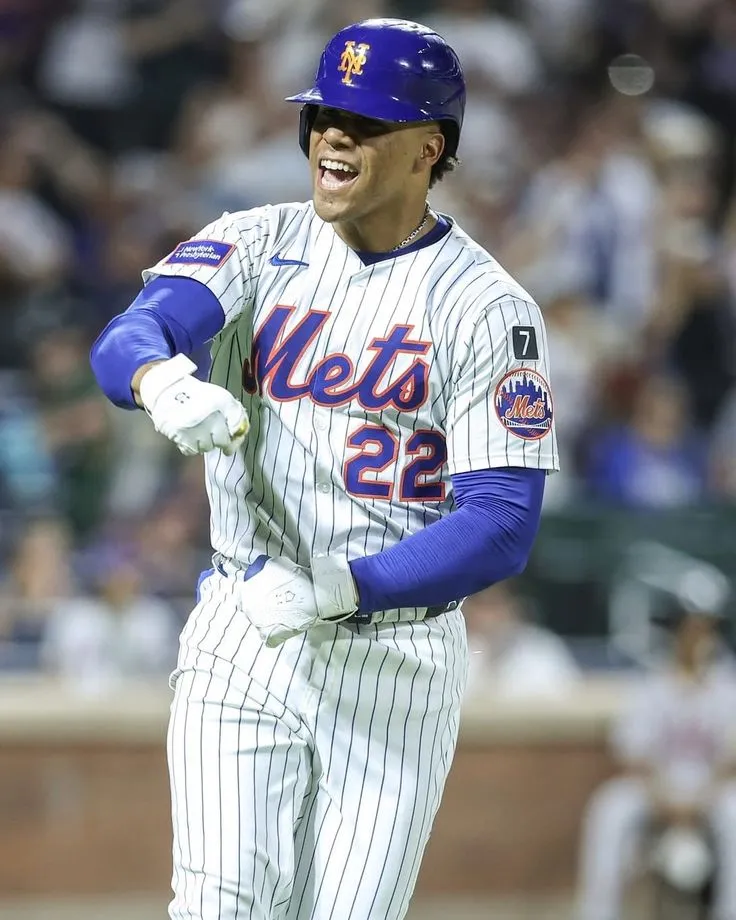
For years, Juan Soto has been a name whispered among baseball’s elite, his talent undeniable, his numbers surreal. But now, the whispers are turning into full-blown recognition. In a sport that often takes its time to crown a true great, Soto is accelerating the process. His recent performance against the Philadelphia Phillies has not only stunned fans but reignited conversations about his place in the game’s all-time rankings.
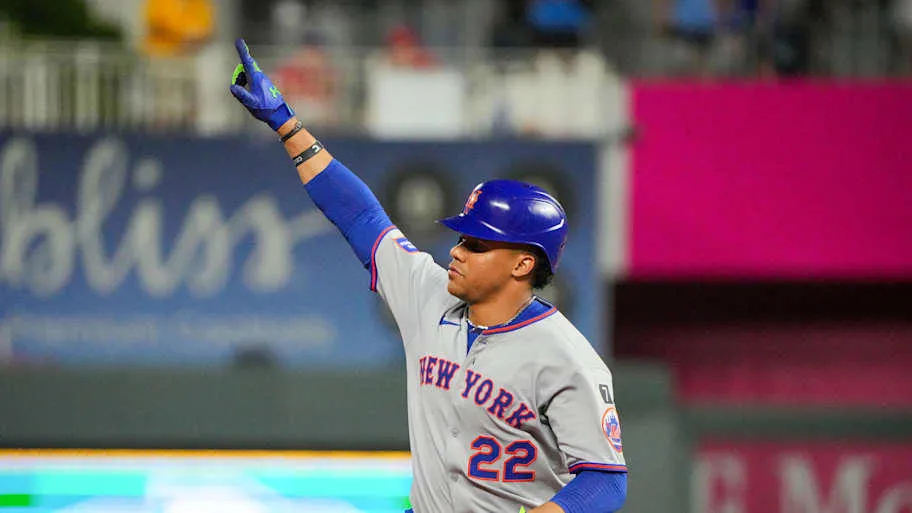
It wasn’t just a good night. It was a historic moment that cemented his reputation as one of the most dangerous hitters in Major League Baseball (MLB) today — and maybe ever. While it’s easy to get caught up in hot streaks, what Soto is doing isn’t a blip on the radar. It’s a sustained, calculated rise that now demands to be taken seriously.
Let’s unpack the significance of Juan Soto’s latest heroics, why his rise has been so “quiet,” and how his performance against the Phillies might have just changed that forever.
A Night to Remember: Soto’s Masterclass Against the Phillies
In what will likely go down as one of the most complete offensive performances of his career, Juan Soto dominated the Phillies in a way that few players in baseball history have ever done. Under the bright lights and with postseason-like intensity, Soto delivered a four-hit game, including two home runs, a walk, and five RBIs — all while displaying the plate discipline that’s made him legendary.
What set this performance apart wasn’t just the stats. It was how he did it. His first home run came on a full-count fastball just inches off the inside corner — a pitch that most hitters either foul off or watch go by. But Soto turned on it, sending it soaring into the second deck like he had read the pitch before it left the pitcher’s hand.
Later, facing a different pitcher and down in the count, he laid off three borderline pitches — pitches that the average hitter would swing at 60% of the time — before launching a hanging slider deep into right-center. It was the kind of plate discipline and power combination that has historically been reserved for only the most elite hitters.
And in between the homers? He ripped a double down the line, drew a walk after falling behind 1-2, and added a single to complete the cycle of domination. There was no weak at-bat, no moment where Soto seemed overmatched. Every pitch he saw, he seemed to own.
This wasn’t just a good game — it was a statement.
The Evolution of a Superstar
Juan Soto’s rise didn’t happen overnight, but it’s been rapid nonetheless. Since bursting onto the scene with the Washington Nationals as a teenager, Soto has been compared to the likes of Ted Williams, Barry Bonds, and Miguel Cabrera — not because of hype, but because of numbers.
Before turning 25, he had already amassed a career on-base percentage (OBP) north of .400, hit over 150 home runs, and drawn more walks than strikeouts — a feat that in the modern strikeout-heavy era is almost unheard of. His OPS+, a stat that adjusts offensive performance for league and ballpark factors, has consistently been above 150, placing him in the top 1% of hitters in every season he’s played.
But for all that success, Soto has often been overshadowed. Whether it was Bryce Harper’s loud resurgence in Philadelphia, Shohei Ohtani’s once-in-a-century two-way dominance, or Aaron Judge’s home run fireworks, the narrative often skipped over Soto’s consistency in favor of flashier storylines.
That, however, is beginning to change.
Why Soto’s Greatness Has Been So Quiet
To understand why Juan Soto’s greatness has felt “quiet,” one must understand the nature of how baseball rewards visibility. Soto has played much of his career in markets — Washington and San Diego — that aren’t typically the center of the baseball universe. While D.C. had its 2019 World Series moment, and the Padres made noise with their roster, neither franchise has had the media saturation of teams like the Yankees, Dodgers, or Red Sox.
Add to that Soto’s demeanor — calm, calculated, humble — and you have a superstar who lets his bat do the talking. He isn’t known for massive bat flips, Twitter battles, or headline-grabbing quotes. He’s known for getting on base, making pitchers work, and driving balls 450 feet.
He also plays a cerebral game. His ability to track pitches, avoid chasing, and manipulate at-bats into his favor is often appreciated more by analysts than casual fans. But as baseball gets smarter, more analytical, more attuned to why production happens rather than just what, Soto’s brilliance is finally getting its due.
Where Soto Stands Among the Greats
After his latest explosion against the Phillies, the question is no longer “Is Juan Soto great?” It’s “How great is he — historically speaking?”
Consider this: At his current pace, Soto could reach 200 home runs and 1,000 career walks before turning 27. Only Barry Bonds and Mel Ott reached that level of power and patience at such a young age. His career OBP remains one of the highest of any player through their first seven seasons in history. And his WAR (Wins Above Replacement) already places him above Hall of Famers like Tony Gwynn, Jim Rice, and Kirby Puckett at the same stage of their careers.
But perhaps more importantly, Soto’s skill set ages well. Unlike players who rely on speed or reflexes, Soto’s game is built around vision, patience, and swing efficiency. He doesn’t chase. He doesn’t strike out much. He doesn’t sell out for power. He simply hits — and walks — at a rate that projects well into his 30s.
In many ways, he’s the modern-day Ted Williams — a hitter obsessed with the strike zone, able to punish mistakes and smart enough to wait for them.
Impact on the Pennant Race and Beyond
The timing of Soto’s performance couldn’t be more crucial. As his team battles for positioning in a crowded National League playoff race, having a superstar playing at his peak can be the difference between a Wild Card berth and a deep October run. His latest outburst against a top-tier team like the Phillies sends a message not only to opponents but to teammates — that he’s ready to carry the load.
His leadership, often quiet but unshakable, sets a tone in the clubhouse. Players like Soto don’t just make teams better statistically. They raise the stakes. They show younger players how to prepare, how to grind out plate appearances, how to keep focus over 162 games. That’s the kind of intangible impact that doesn’t show up in a box score — but wins championships.
A Future Hall of Famer in the Making
There’s little doubt now that Juan Soto is on a Hall of Fame trajectory. He checks every box — elite production, postseason success, historical milestones, and an age curve that still trends upward.
But more than numbers, Soto is changing the perception of what a modern hitter can be. In an age obsessed with exit velocity and swing angle, he’s showing that intelligence, patience, and situational awareness still reign supreme. He’s proof that you don’t have to sell out for power to be powerful, that you don’t have to swing at everything to be feared, and that true greatness is built one at-bat at a time.
The Hall of Fame may still be years away, but the foundation is already solid. He’s not just knocking on the door — he’s building his own wing.
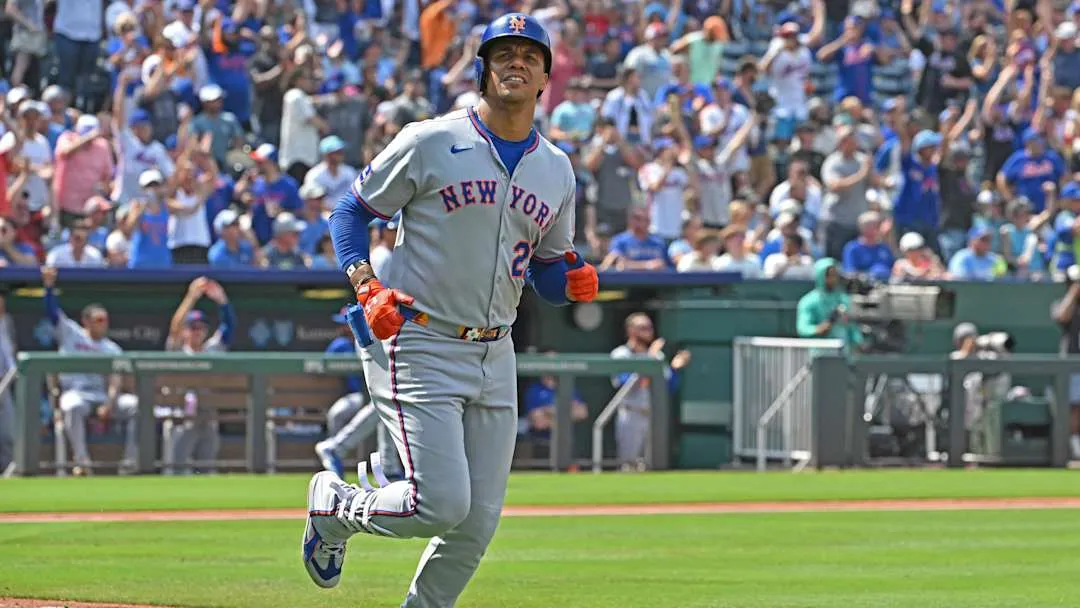
What’s Next for Juan Soto?
If there’s one thing history tells us, it’s that Juan Soto isn’t done. Not even close. At 25, he’s entering the true prime of his career. Whether he stays with his current team long-term or becomes the most sought-after free agent in recent memory, one thing is certain: wherever Soto goes, greatness follows.
The buzz surrounding his latest performance against the Phillies is not just a reaction to one night of dominance. It’s a recognition of something bigger — that we are watching a generational talent in real time, one who continues to evolve, impress, and rewrite expectations.
Conclusion: Silence No More
For years, Juan Soto has climbed baseball’s all-time rankings in relative silence, eclipsed by louder stars and flashier storylines. But after what he just did against the Phillies, silence is no longer an option.
The baseball world is watching. And finally, it’s talking. Juan Soto isn’t just great. He’s historic.