







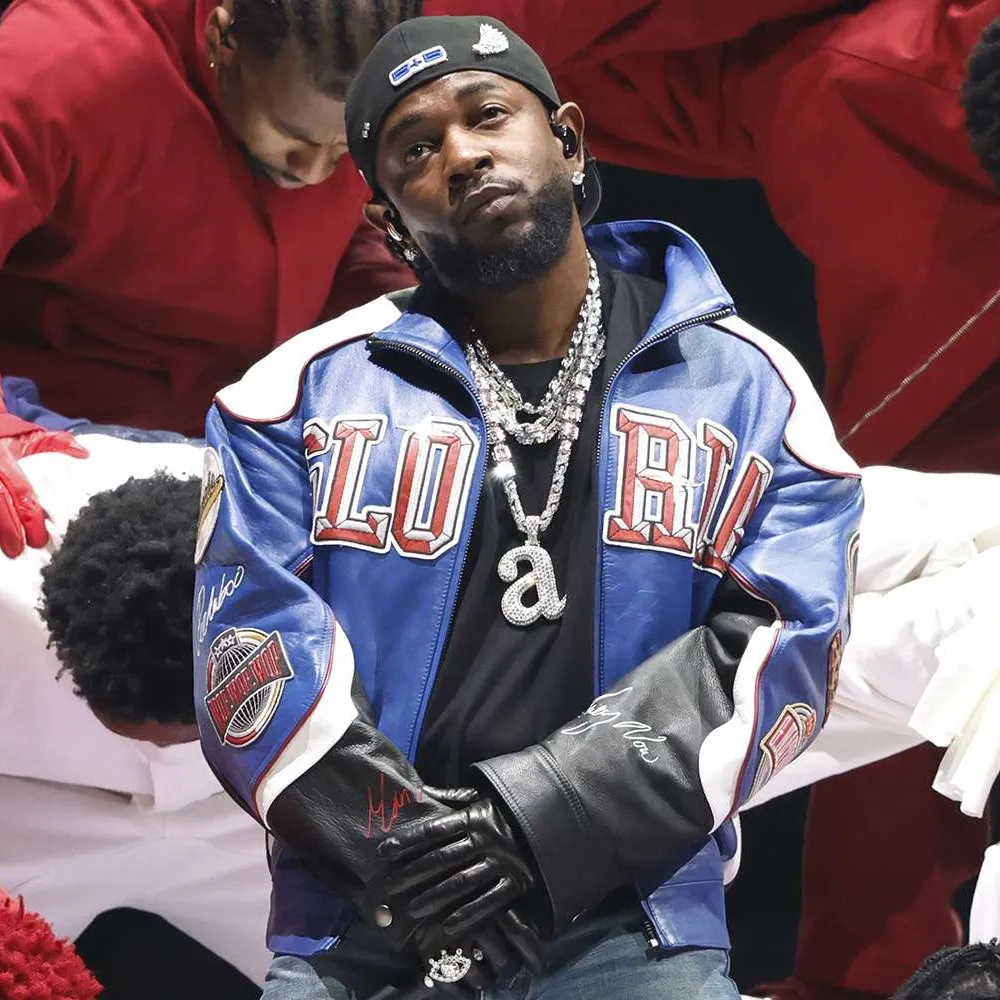
Kendrick Lamar and SZA Set the Principality Stadium on Fire with a Mind-Blowing Show Fans Are Calling ‘Pure Art’
When Kendrick Lamar and SZA stepped onto the massive stage at Principality Stadium in Cardiff, no one expected the explosion of emotion, artistry, and cultural commentary that would unfold over the next two hours. What was billed as a simple joint concert between two of Top Dawg Entertainment’s brightest stars quickly transformed into a night that fans and critics alike are already hailing as “pure art”. The show wasn’t just a performance — it was a deeply cinematic, politically-charged, and emotionally raw experience that burned into the minds of everyone lucky enough to be in attendance.

As the stadium lights dimmed and thousands of voices roared in anticipation, there was a collective sense that something rare was about to happen. That sense was right. Kendrick Lamar and SZA didn’t just play hits — they tore down and rebuilt the emotional architecture of everyone present, proving once again that hip-hop, R&B, and performance art are inseparably intertwined in their capable hands.
An Opening Full of Tension, Beauty, and Meaning
The evening began not with fireworks or overblown introductions, but with a carefully designed visual and sonic narrative. A minimalist screen displayed flickering images of cracked concrete, rainfall, and blooming flowers — symbols of struggle and growth. As the first ambient notes of “PRIDE.” echoed through the stadium, Kendrick Lamar emerged slowly from a silhouette of smoke, dressed in stark black, his face unreadable yet commanding.
This was not a moment of hype. It was a moment of reflection — the calm before a storm.
The audience stood frozen as Kendrick glided through early verses, letting the weight of his words settle. The production was crisp, but not showy. Every sound, every light cue, every camera angle seemed intentional. And then, without warning, the bass dropped, and the entire venue ignited into energy with “DNA.” It was cinematic, explosive, and surgical. You weren’t watching a concert. You were inside a statement.
SZA’s Arrival: A Goddess Descends
When SZA joined Kendrick after his solo opener, it felt like the evening shifted from a monologue to a dialogue. She descended from above — quite literally — on a suspended flower-shaped platform, draped in flowing white and bathed in purple light. The crowd screamed. She didn’t need an introduction.
With her signature raspy vocal, she launched into “Love Galore,” and the emotional tenor of the event changed instantly. Where Kendrick had brought fire and precision, SZA brought softness, mystique, and vulnerability. The contrast was striking, yet the harmony between the two artists was undeniable.
As she performed “Good Days,” the visuals turned dreamlike: floating jellyfish, broken clocks, handwritten diary entries flickering across the screen behind her. It felt intimate, even in a stadium packed with tens of thousands. And when Kendrick returned for their joint performance of “All The Stars,” the stadium roared like a beating heart — pulsating with rhythm, beauty, and the inescapable power of Black artistry.
The Crowd as a Living Instrument
One of the most remarkable aspects of the show was how the audience became an active participant in the experience. During “Alright,” Kendrick held out his mic, and the crowd didn’t just echo the words — they screamed them with a conviction that felt born of lived experience. It became clear that this show wasn’t about passive consumption. It was a shared expression, a communal act of resistance and hope.
Fans waved flags. Some cried. Others held hands and jumped as if in a trance. The energy was magnetic. It was more than music — it was ritualistic, communal, and cathartic.
SZA’s softer anthems like “Supermodel” invited a different type of interaction. In these moments, the audience swayed, lit phone flashlights, and sang with trembling voices. There was something beautifully collective about thousands of strangers whisper-singing the same heartbreak anthems into the humid night air.
Unapologetically Political and Emotionally Raw
Both Kendrick Lamar and SZA have built their careers not just on melody and lyricism, but on social commentary. That commitment was on full display at Principality Stadium. At various points, Kendrick’s stage backdrop displayed footage of protests, newspaper clippings, and street murals. During his performance of “The Blacker the Berry,” a chilling silence fell between each verse, only broken by the echo of the words: “I’m African-American, I’m African / I’m black as the moon, heritage of a small village.”
These moments weren’t easy. They weren’t designed to entertain. They were meant to provoke, to unnerve, to make the audience feel the deep wound of racial injustice and the beauty of Black resilience.
SZA’s political notes were quieter but no less powerful. With songs like “20 Something” and “Blind,” she unpacked the unique pressures on young Black women navigating identity, love, and self-worth in a world that often erases them. Her vulnerability felt revolutionary. Her silence between verses was just as powerful as Kendrick’s fury between bars.
Visual Storytelling Like No Other
Part of what elevated the night into the realm of “pure art” was the visual mastery of the entire production. The lighting shifted like seasons — from deep reds and oranges during high-energy tracks to cool blues and muted pastels during introspective moments. Projections displayed symbolic imagery: melting clocks, marching feet, broken mirrors, open mouths with no voice — all lending themselves to the unspoken narrative of time, struggle, and rebirth.
Even the choreography felt thematic. Dancers moved like ghosts, like warriors, like children playing in the streets. At one point, during Kendrick’s “FEEL.,” the entire stage tilted forward, giving the illusion that Kendrick was rapping uphill — fighting gravity, fighting history, fighting himself.
An Emotional Climax That Left the Audience Breathless
The final act of the concert was as emotionally rich as the beginning was mysterious. After two hours of building tension, catharsis arrived not in fireworks, but in a soft piano melody. Kendrick and SZA stood side by side, under a single spotlight. No visuals. No dancers. Just two artists, two microphones, and one final song: “Mirror.”
As Kendrick rapped about choosing himself, the audience grew quiet. And when SZA joined in, harmonizing without overpowering, it felt like closure. It wasn’t triumphant, but honest, human, and necessary.
When the last note ended, they bowed not to thunderous applause — though there was plenty — but to a moment of complete silence. That’s how powerful it was. A stadium of 70,000 people went quiet out of respect. Then came the roar.
Fans React: “This Wasn’t a Concert. This Was an Experience.”
Walking out of Principality Stadium, the atmosphere felt almost spiritual. Fans looked at each other as if trying to find the words. Social media quickly lit up with reactions ranging from stunned disbelief to grateful tears. One user posted: “That wasn’t a show. That was a damn revelation.” Another wrote: “Kendrick and SZA just reminded the world what Black excellence looks like when it’s unfiltered and free.”

Critics agreed. Multiple UK publications called it “a masterclass in live performance” and “a poetic and political triumph.” Some even likened it to legendary concerts like Beyoncé’s Homecoming or Prince at Montreux — shows that shift the very definition of what a concert can be.
Redefining What Live Music Can Be
In an industry saturated with overproduced tours and shallow spectacles, the Kendrick Lamar and SZA Principality Stadium performance was a rare gem. It proved that artists can be bold, unflinching, and deeply artistic while still thrilling a crowd. It showed that intellect and emotion, politics and poetry, grief and joy — all can coexist in a concert space if the vision is honest and the intention is pure.
More than anything, it reminded us that music is still one of the most powerful tools for connection, healing, and truth-telling.
For those who were there, it wasn’t just about hearing “HUMBLE.” or “Kill Bill” live. It was about witnessing two of the most important voices of our time come together and create something timeless. And in doing so, Kendrick Lamar and SZA didn’t just perform. They transformed.
Related News