






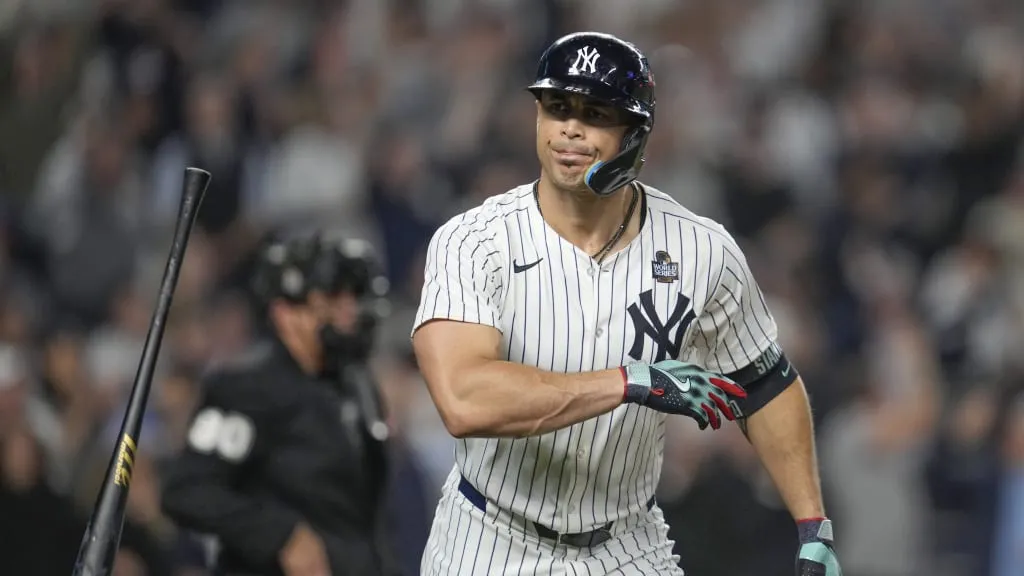
Yankees take Stanton out – but here’s their real concern
When the New York Yankees made the unexpected decision to reinsert Giancarlo Stanton into the outfield, it immediately lit up the baseball community. For a player long known for his massive power at the plate but equally for his injury history, the idea of Stanton covering right field again drew mixed responses. Some hailed it as a strategic masterstroke to keep his bat in the lineup. Others called it reckless, questioning whether the Yankees were gambling with a fragile star during the most crucial stretch of the season.
But beyond the headlines, one truth resonated across MLB circles: the Yankees’ move reflects a bigger picture—balancing risk, necessity, and ambition in pursuit of postseason success.
This article takes a deep dive into the strategy behind Stanton’s new role, the reasoning of the coaching staff, and the reaction of fans and analysts alike. Is this a temporary fix, a dangerous gamble, or a glimpse into the Yankees’ evolving blueprint?
The Strategy Unveiled: Stanton Returns to the Outfield
According to the New York Post, the Yankees deployed Stanton in right field against the Tampa Bay Rays at Steinbrenner Field—his first appearance in the outfield since late 2023.
The decision was not made lightly. Boone and the coaching staff emphasized that Stanton’s offensive firepower made him too valuable to be confined to the bench or used sparingly. With Aaron Judge limited to designated hitter (DH) duties due to an elbow strain, the Yankees needed Stanton’s bat in the lineup daily.
-
Offensive Impact: Stanton remains a dangerous slugger when healthy, consistently ranking among MLB leaders in exit velocity and slugging percentage. Removing him from regular play would diminish the Yankees’ lineup depth.
-
Defensive Limitation: The risk, of course, is his mobility. Stanton has battled leg and muscle injuries for years, raising concerns about whether he can handle the quick reads and sprints required in right field.
By sending him back into the outfield, the Yankees essentially declared: we cannot afford to waste one of our biggest weapons.
Revisiting Familiar Ground—But with Controlled Risks
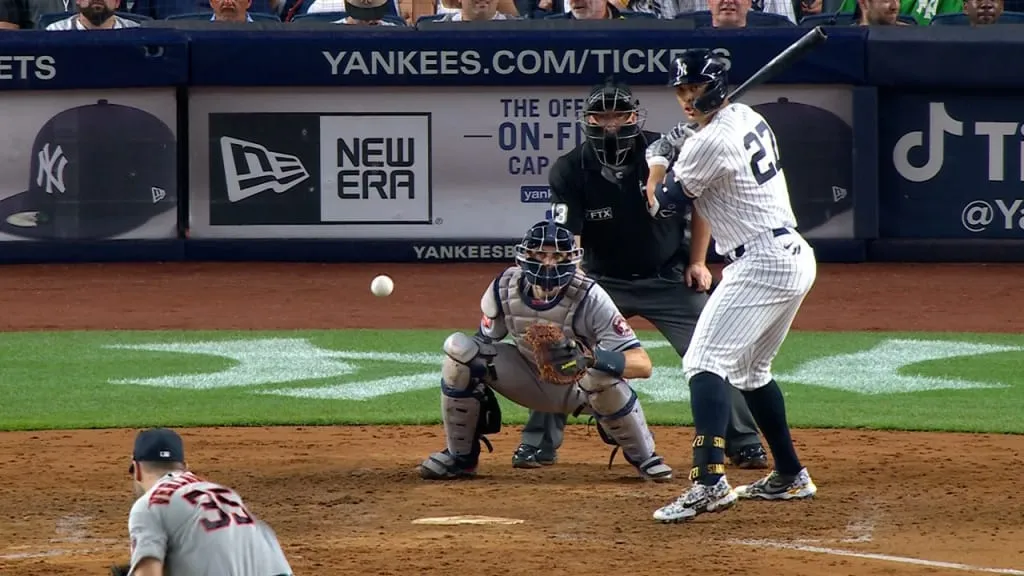
Sportsnet compared the move to a Spring Training experiment—an incremental reintroduction rather than a permanent shift. Stanton’s playing time in the field is expected to be carefully managed, with the coaching staff closely monitoring how his body responds.
-
Load Management Approach: Stanton won’t be deployed every game. Boone stressed that his assignments will depend on Stanton’s health signals and post-game evaluations.
-
Risk vs. Reward: While critics argue that the Yankees are tempting fate, the club views this as a “calculated gamble.” The reward—keeping Stanton’s bat consistently in play—may outweigh the risk of an injury setback.
-
Player Confidence: Stanton himself has shown eagerness to rejoin the outfield, suggesting a level of confidence in his conditioning and recovery.
The Yankees’ decision reflects the modern MLB trend of risk-managed experimentation, where player health metrics and workload data guide coaching choices.
Context Matters: Aaron Judge’s DH Role
The true driver behind Stanton’s shift lies in the Yankees’ captain. Aaron Judge, recovering from a right elbow flexor strain, has been limited to designated hitter (DH) duties since returning from the injured list.
This has created a lineup bottleneck:
-
One DH Slot, Two Sluggers: With Judge confined to DH, Stanton would be squeezed out unless he returned to the outfield.
-
Protecting Judge’s Arm: Boone and the Yankees’ medical staff insist Judge will not rush back to throwing from the outfield until fully cleared.
-
Keeping Stanton Active: By moving Stanton to right field, the Yankees maintain both players’ offensive production without sidelining one.
Thus, what looks like a bold gamble is actually a practical solution: an alignment born out of necessity rather than luxury.
Reaction from the MLB Community
The baseball world wasted no time in weighing in on the Yankees’ move. Across talk shows, social media, and fan forums, the debate raged:
Supportive Voices
-
Analysts praised the creativity, noting that a stagnant Yankees lineup needed fresh solutions.
-
Fans of Stanton celebrated his willingness to embrace the challenge, calling it proof of his commitment.
-
Optimists framed it as a morale booster, energizing both the player and the roster.
Critical Voices
-
Skeptics pointed to Stanton’s injury history, warning that one awkward sprint could derail the experiment.
-
Old-school purists questioned why the Yankees seemed desperate, comparing it to “plugging leaks” rather than executing a championship plan.
-
Rival fans mocked the move as a sign of instability.
Yet amid the noise, one consensus emerged: the Yankees cannot afford mediocrity. Bold risks are the only way to stay in contention.
Stanton’s Historical Relationship with the Outfield
To understand the weight of this move, one must recall Stanton’s past.
-
Prime Years in Miami: Stanton was once a full-time outfielder for the Marlins, showcasing both a strong arm and surprising agility.
-
Post-2018 Transition in New York: Injuries slowly pushed him toward DH duties. From 2019 onward, his time in the field declined dramatically.
-
2023 as the Last Marker: His final notable stint in the outfield came in late 2023, before recurring leg injuries forced him into near-permanent DH status.
Bringing Stanton back now is almost like turning back the clock, asking him to rediscover an old rhythm under very different physical circumstances.
Manager Aaron Boone’s Calculated Gamble
Manager Aaron Boone addressed the media cautiously:
-
He emphasized the need to “balance long-term health with short-term gains.”
-
Boone acknowledged that Stanton’s presence in the outfield is “not a permanent fixture” but a situational adjustment.
-
The decision, Boone insisted, is based on constant communication with Stanton and medical staff.
This highlights Boone’s broader strategy: a flexible, adaptive approach to lineup management. Rather than locking into rigid roles, he is experimenting to maximize roster potential.
Numbers Don’t Lie: Stanton’s Offensive Firepower
To grasp why the Yankees are taking this risk, look at Stanton’s numbers:
-
Exit Velocity Leader: Stanton has consistently ranked in the top five in exit velocity since Statcast tracking began.
-
Power Bat: Even during injury-shortened seasons, he delivers 20–30 home runs.
-
Postseason Importance: His October performances have often been clutch, reinforcing his value as a high-pressure hitter.
The Yankees are essentially saying: his bat is worth the gamble.
Comparing the Yankees’ Move to MLB Trends
The Yankees are not alone in reconfiguring star players:
-
Shohei Ohtani (Dodgers): Managing dual-role workloads through strict schedules.
-
Bryce Harper (Phillies): Transitioning between first base and DH post-surgery.
-
Mookie Betts (Dodgers): Shifting between infield and outfield to maximize lineup flexibility.
In this light, Stanton’s move is less reckless experiment, more aligned with MLB’s broader adaptability philosophy.
Fan Sentiment: Divided but Engaged
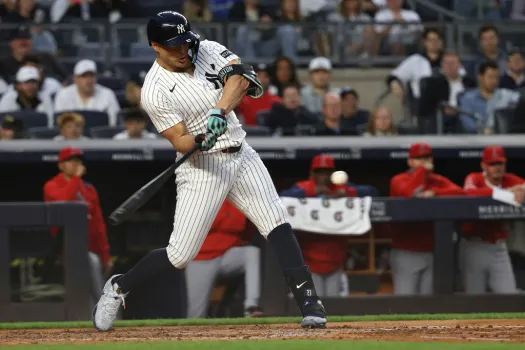
On fan forums, three camps emerged:
-
The Realists: “It’s risky, but what choice do we have without Judge in the outfield?”
-
The Pessimists: “This will end in another IL stint. We’ve seen this movie before.”
-
The Optimists: “If it keeps Stanton hitting bombs, I’m all in.”
Regardless of stance, one thing is undeniable: the decision has re-energized the conversation around the Yankees.
Looking Ahead: What This Means for the Yankees’ Season
The success of this experiment hinges on three factors:
-
Stanton’s Durability: Can he hold up physically over multiple games in the field?
-
Judge’s Recovery Timeline: Once Judge returns to full outfield duties, Stanton may return to DH—but until then, his versatility matters.
-
Postseason Push: If Stanton thrives in this role, the Yankees could enter October with a more dangerous lineup than expected.
Failure, however, could mean another injury setback—and another season defined by “what ifs.”
Quick Recap Table
| Key Point | Takeaway |
|---|---|
| Stanton’s Outfield Return | First since 2023; driven by necessity |
| Strategy Type | Modeled after Spring Training load management |
| Context | Judge stuck at DH due to elbow strain |
| Fan Reaction | Divided—supportive, skeptical, but highly engaged |
| Bigger Picture | Yankees balancing risk and ambition to chase playoffs |
Conclusion
The Yankees’ bold decision to place Giancarlo Stanton back in the outfield is more than a lineup adjustment—it’s a statement. It signals that New York is willing to take calculated risks to maximize offensive firepower, even if it means revisiting old vulnerabilities.
Across MLB, the move has sparked debate, but one sentiment stands out: this is the Yankees’ identity—ambitious, daring, and never content with playing it safe.
If Stanton thrives, this gamble could rewrite the trajectory of the Yankees’ 2025 season. If it backfires, critics will point to it as the risk that never should have been taken.
Either way, the baseball world will be watching closely—because bold decisions often define great teams.
Related News