Why Keeping Dalton Knecht in the Rotation Is Key for the Lakers
The Los Angeles Lakers are heading into their first full season with the LeBron James–Luka Doncic pairing, a duo that has generated buzz across the NBA. Fans and analysts alike are eager to see how the mix of Doncic’s brilliant playmaking and James’s legendary leadership will shape the team’s fortunes. Doncic enters the season looking leaner and more agile, determined to silence critics who previously mocked his conditioning. James, nearing the twilight of his career, is preparing for what could be his final push toward another championship — a general ready to lead one last battle.
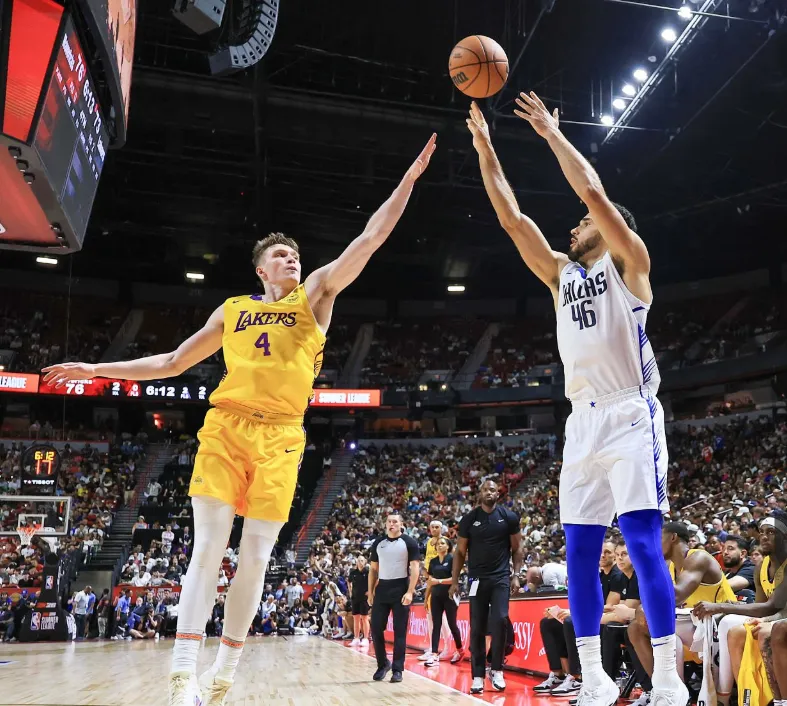
While James and Doncic naturally dominate headlines, they’re not the only Lakers worth discussing. Austin Reaves’s contract situation has been a topic of speculation, Bronny James’s rookie development remains under close watch, and fans have also turned their attention to Dalton Knecht, the sharpshooting wing drafted in 2024. Unfortunately for Knecht, his spot in the rotation has been questioned in recent weeks — a scenario the Lakers can’t afford to let happen.
Why Dalton Knecht Must Stay in the Rotation
The Lakers’ star power often masks their roster limitations, but one glaring issue is clear: they lack enough reliable off-ball shooters. Among the current roster, only four players have shot at least 37% from three-point range for their careers — Knecht, Reaves, Jake LaRavia, and Rui Hachimura.
Within that group, Reaves is more than just a shooter; he’s a tertiary playmaker and often has the ball in his hands. LaRavia and Hachimura primarily play power forward, limiting their ability to fill a traditional wing shooter role. That leaves Knecht as the only true wing who specializes in off-ball scoring and floor spacing.
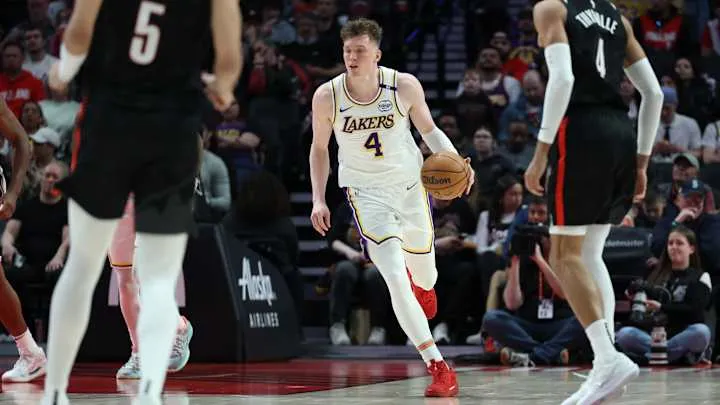
History shows that LeBron James thrives alongside wings who can consistently hit from deep. Whether it was Shane Battier in Miami, Ray Allen with the Heat, J.R. Smith in Cleveland, or Kentavious Caldwell-Pope and Danny Green with the Lakers in 2020, a knockdown wing shooter has been a constant in James’s title-winning teams. The formula works — so why abandon it now?
The Value of Corner Three Specialists
Corner threes are one of the most valuable shots in basketball, and so-called “corner boys” have a massive impact on spacing. Their presence changes the geometry of the court, forcing defenses to stretch and creating driving lanes for playmakers like James and Doncic.
Hachimura has been deadly from the corners, hitting 39.5% for his career. Reaves is effective overall (37.6%), though his right-corner shooting (45.2%) far outpaces his left-corner numbers (31.5%). LaRavia is particularly lethal from the left corner, connecting at 43.2%.
Knecht brings another dimension. While he can certainly hit corner threes, he’s also effective above the break, from the midrange, and at attacking the rim. His scoring versatility makes him more than just a stationary shooter. He has the ability to go on scoring outbursts, evidenced by his seven games in the 2024–25 season where he scored 20+ points with three or more threes made.
Interestingly, Knecht’s shooting actually improved as the season progressed — he shot 40.7% from deep after the All-Star break, compared to 36.0% before. This suggests that with more reps and confidence, he could become one of the most efficient shooters in the league.
Addressing the Defensive Concerns
Knecht’s biggest hurdle is on the defensive end. Playing alongside Doncic and Reaves — neither considered strong defenders — means his own lapses are magnified. Opponents will target weak points, and Knecht will need to prove he can hold his ground.
One major improvement area is defensive awareness. Too often, Knecht is caught ball-watching, losing sight of his man. Film study could be his greatest ally here, helping him anticipate plays, read opposing tendencies, and position himself more effectively.
Lateral quickness will likely never be his strength, so anticipation becomes even more critical. By recognizing patterns earlier, he can beat offensive players to their spots or at least contest effectively. Knecht also needs to stay in a proper defensive stance consistently — an adjustment that can prevent blow-bys and allow him to recover more quickly against quick guards or wings.
Despite his flaws, it’s not accurate to say Knecht can’t defend. He made several highlight defensive plays last season — the challenge is simply doing it more consistently. With better habits, he could at least become a neutral defender, which would be enough given his offensive value.
Why Benching Knecht Would Hurt the Lakers
Removing Knecht from the rotation would not only strip the Lakers of one of their few elite shooters, but it would also disrupt the spacing that James and Doncic need to operate at their best. Without him, defenses can collapse more aggressively in the paint, knowing there’s one less perimeter threat to punish them.
Moreover, young players like Knecht offer energy and unpredictability that can change the momentum of games. A timely shooting burst from him could be the difference between a loss and a win in a tight playoff battle.
This isn’t to say he should get a free pass — he must improve defensively and adapt to the team’s schemes. But considering the Lakers’ limited shooting depth, keeping him engaged and confident is far better than letting him stagnate on the bench.
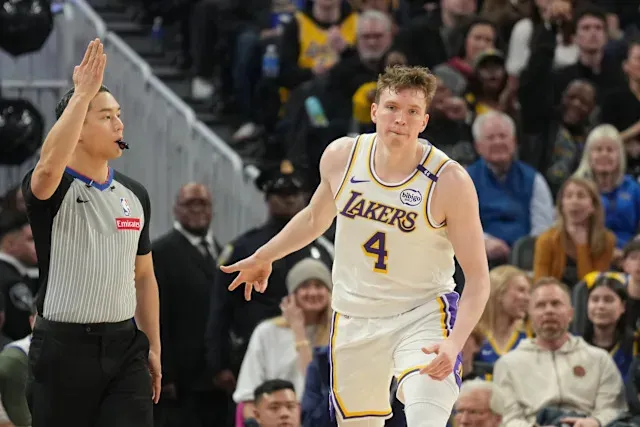
The LeBron Factor
Finally, there’s the LeBron factor. James has spent his career elevating shooters and using their spacing to open up the floor. A player like Knecht fits seamlessly into the role that has worked for over a decade in James-led teams. If the goal is to maximize James’s final seasons while preparing Doncic to eventually take over as the primary leader, surrounding them with shooting is non-negotiable.
When the playoffs arrive and every possession counts, having a trusted floor spacer can make all the difference. If the Lakers want to stay true to the blueprint that has brought James championships before, Dalton Knecht has to be part of the plan.
Conclusion
The Lakers’ ambitions rest on the shoulders of LeBron James and Luka Doncic, but role players like Dalton Knecht will determine how far they can go. His shooting ability, versatility, and potential to swing games make him a vital piece of the rotation. Defensive improvement is necessary, but the benefits of keeping him in the lineup far outweigh the drawbacks.
In short, Dalton Knecht should remain a core rotation player. The Lakers simply can’t afford to lose one of their few elite shooters — especially when he fits so perfectly into the formula that has made LeBron’s teams successful time and time again.
Related News