









Which is Armin’s most controversial musical transformation?
Few names in electronic dance music carry the weight and global recognition of Armin van Buuren. With a career spanning over two decades, the Dutch DJ and producer has become synonymous with uplifting trance, massive festival anthems, and the iconic radio show A State of Trance (ASOT). But while his influence is undeniable, so is the backlash that came with one of the most controversial musical transformations of his career—a bold artistic pivot that divided fans and redefined his identity.
The Trance Purist vs. the Crossover Innovator
For many longtime fans, Armin van Buuren represented the heart and soul of trance. His early classics like “Communication,” “Shivers,” and “Burned With Desire” became staples in the genre, helping shape the euphoric, melodic sound that characterized trance in the 2000s.
But as EDM exploded into mainstream consciousness during the early 2010s, Armin began experimenting outside his traditional lane. Tracks like “This Is What It Feels Like” featuring Trevor Guthrie were massive commercial hits—earning Grammy nominations and radio play—but they also marked a clear departure from his trance roots.

The Breaking Point: ‘Embrace’ and the Sound Shift
In 2015, Armin released “Embrace,” an album that would become the center of his most polarizing musical evolution. Rather than sticking strictly to trance, “Embrace” incorporated elements of rock, indie pop, house, and even jazz. Tracks like “Another You” featuring Mr. Probz and “Heading Up High” with Kensington showcased Armin exploring genres far outside what fans expected.
Many listeners praised the effort for its bold artistic risks and genre-bending ambition. But others—particularly hardcore trance purists—felt alienated. Forums, social media, and YouTube comment sections erupted in debate. Was Armin selling out? Was trance dead? Or was he simply evolving?
Armin’s Defense: “Music Has No Boundaries”
In numerous interviews, Armin defended his musical pivot by emphasizing his desire for creative freedom. “I never want to feel boxed in,” he stated. “I’m a DJ first, but I’m also a music lover. I want to explore, to try new things, and to evolve. That’s what ‘Embrace’ is about—embracing all sounds, all emotions.”
He also reminded fans that even his earlier albums weren’t strictly trance. His 2008 record “Imagine” already contained hints of pop and progressive house influences. But with “Embrace,” those influences became front and center, forcing fans to reconsider their expectations.
The Fans React: Split Down the Middle
While some fans appreciated Armin’s genre experimentation and viewed it as a natural artistic evolution, others were far less forgiving. Many long-time listeners accused him of abandoning trance in favor of radio-friendly pop. The most common criticisms included:
-
Too many vocal collaborations with pop artists
-
Overuse of progressive house and big-room elements
-
Less focus on melodic builds and emotional crescendos
-
Simplified songwriting aimed at mass appeal
On Reddit, TranceAddict forums, and other platforms, heated threads titled things like “Is Armin Still a Trance DJ?” and “I Miss the Old Armin” were commonplace.
Yet others argued that the hate was unfair. They pointed out that artists need space to grow, and that Armin had continued to support trance through his ASOT radio show and side projects.
The Birth of GAIA and a Dual Identity
To appease both creative desires and fan expectations, Armin continued performing and producing under the GAIA alias, a collaboration with Benno de Goeij. Unlike his mainstage sets, GAIA was pure trance—minimal visuals, stripped-down production, and a focus on hypnotic rhythms and atmospheric depth.
This allowed Armin to balance two musical worlds: one for experimentation and mainstream outreach, the other as a love letter to the genre that made him a legend.
Still, fans remained divided. Was this a clever compromise or a sign that even Armin knew his core fans weren’t satisfied?
The Aftermath: A Career Still Standing Strong
Despite the controversy, Armin van Buuren remains one of the most respected DJs in the world. He has headlined Tomorrowland, Ultra, and EDC, and continues to broadcast ASOT to millions of listeners across the globe every week. He’s also collaborated with everyone from David Guetta to Aloe Blacc, proving his reach extends far beyond the boundaries of any one genre.
In 2019, Armin released “Balance,” an album that once again walked the line between trance, house, and pop. It showed that his controversial transformation wasn’t a phase, but part of a larger journey toward musical diversity.
Interestingly, “Balance” was received more warmly, even by skeptical fans. Perhaps it was because by then, the shock of “Embrace” had worn off, or because the album struck a better balance—pun intended—between new sounds and old-school roots.
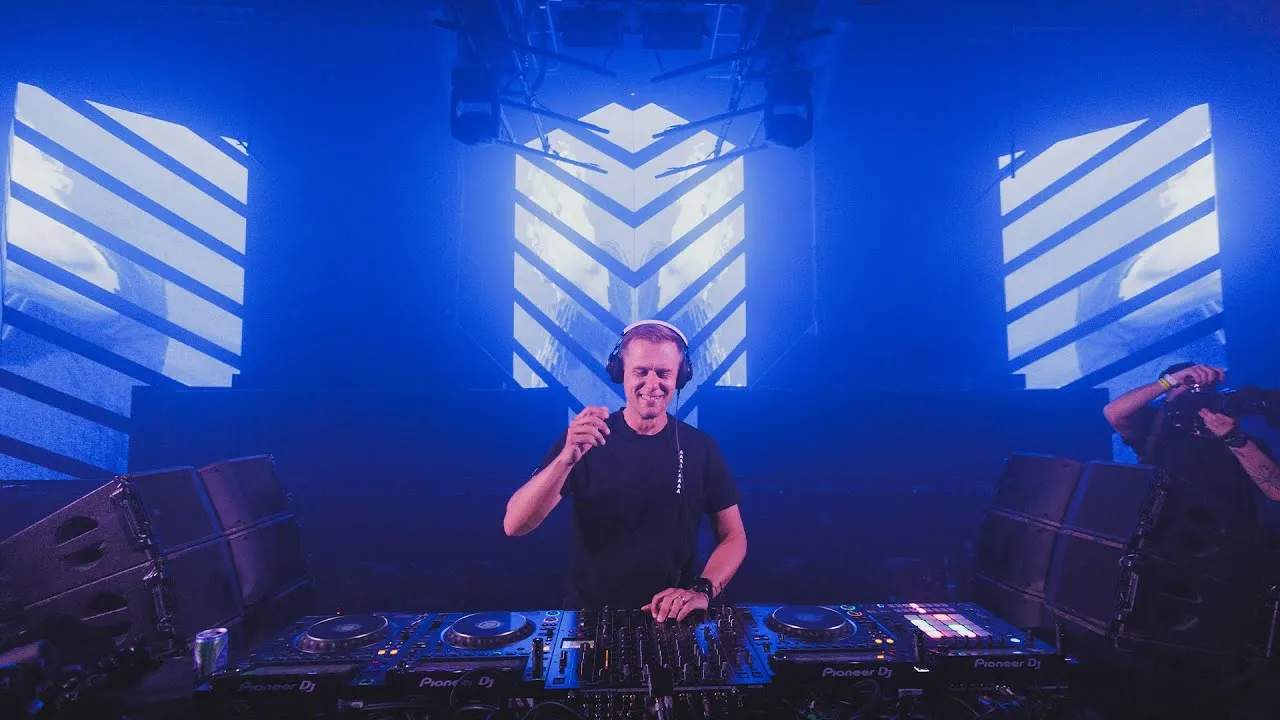
Legacy of a Risk-Taker
What makes Armin’s transformation so important is that it reflects the larger story of EDM’s growth. As electronic music went global, the need to evolve became essential for survival. Armin didn’t just adapt to trends—he challenged them, even at the risk of alienating his base.
And in doing so, he sparked essential conversations about genre purity, artist integrity, and the limits of fan expectations.
Was it controversial? Absolutely.
Was it necessary? Arguably yes.
Because without transformation, there’s stagnation—and in music, stagnation is death.
Conclusion: The Courage to Embrace Change
Armin van Buuren’s controversial musical transformation was more than just a stylistic shift—it was a defining moment in his career that tested both his creativity and his audience’s loyalty.
By choosing to embrace risk over routine, Armin proved that staying true to oneself sometimes means stepping away from the comfort of familiar sounds. Whether you loved or hated his evolution, one thing is clear: it sparked conversation, challenged assumptions, and redefined what it means to be an electronic artist in the modern era.
In the end, Armin didn’t abandon trance—he expanded his universe. And like any true pioneer, he continues to move forward, refusing to stay still.