







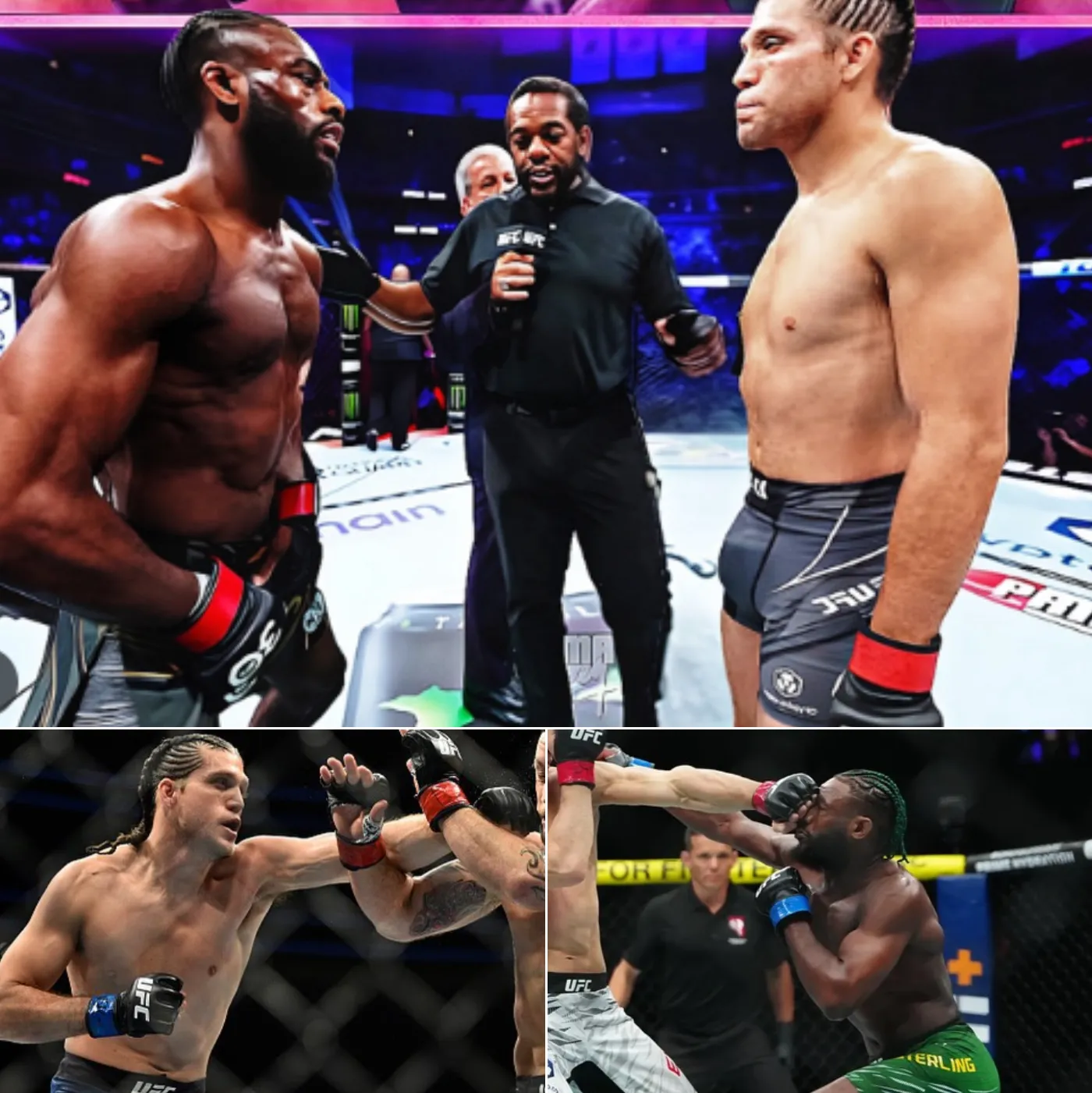
Tactical Analysis: Ortega vs Sterling – Who Will Rule the Ground Fight in Shanghai?
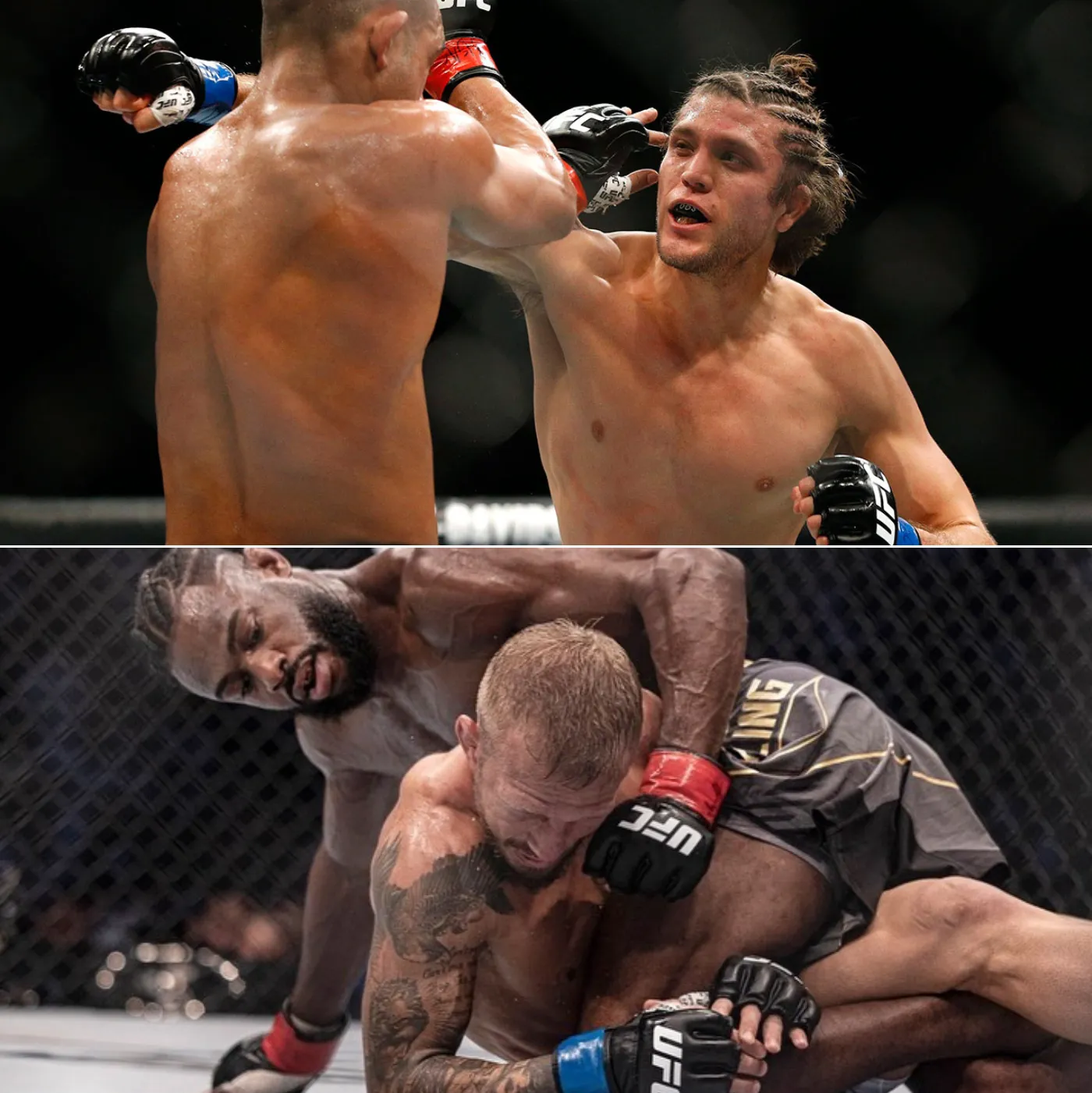
When Brian Ortega and Aljamain Sterling meet inside the Octagon at UFC Fight Night Shanghai this August, it won’t just be another high-stakes featherweight clash—it’ll be a masterclass in ground fighting. Both fighters have carved out reputations as dangerous grapplers, but their approaches, strengths, and mentalities couldn’t be more different. So, when the cage door closes, who truly has the edge when the fight hits the mat?
Two Grappling Titans, Two Philosophies
Let’s start by acknowledging the obvious: Brian Ortega and Aljamain Sterling are both black belts in Brazilian Jiu-Jitsu. But how they use that black belt is where the difference lies.
Ortega, known for his nickname “T-City” (short for Triangle City), is the embodiment of pure submission artistry. His fights are littered with highlight-reel finishes—think about his iconic guillotine against Cub Swanson or that hail-mary triangle choke on Diego Brandao. | ORTEGA: “I don’t look for points. I look to end your night.”
Meanwhile, Sterling, dubbed “The Funk Master,” blends unorthodox scrambles with suffocating top control and intelligent positional dominance. His performance against Cory Sandhagen, where he executed a lightning-fast takedown and seamlessly transitioned into a rear-naked choke, proved that he doesn’t just grapple—he controls, outthinks, and finishes.
| STERLING: “I like to drown guys. Slowly. One position at a time.”
Positional Preference: Top vs Bottom
In pure positional terms, Sterling prefers the top. His MMA wrestling base gives him the ability to dictate where the fight goes. He uses his hips, wrists, and relentless pressure to maintain mount or back control, forcing opponents into bad decisions. Against Petr Yan, Sterling showed just how tactical and calculated he can be when grappling defensively and offensively.
Ortega, on the other hand, is one of the few elite fighters in modern MMA who is completely comfortable on his back. He doesn’t mind pulling guard. If you end up in his closed guard, the threat level spikes. Armbar? Triangle? Guillotine? You name it, he’s got it—usually in rapid succession.
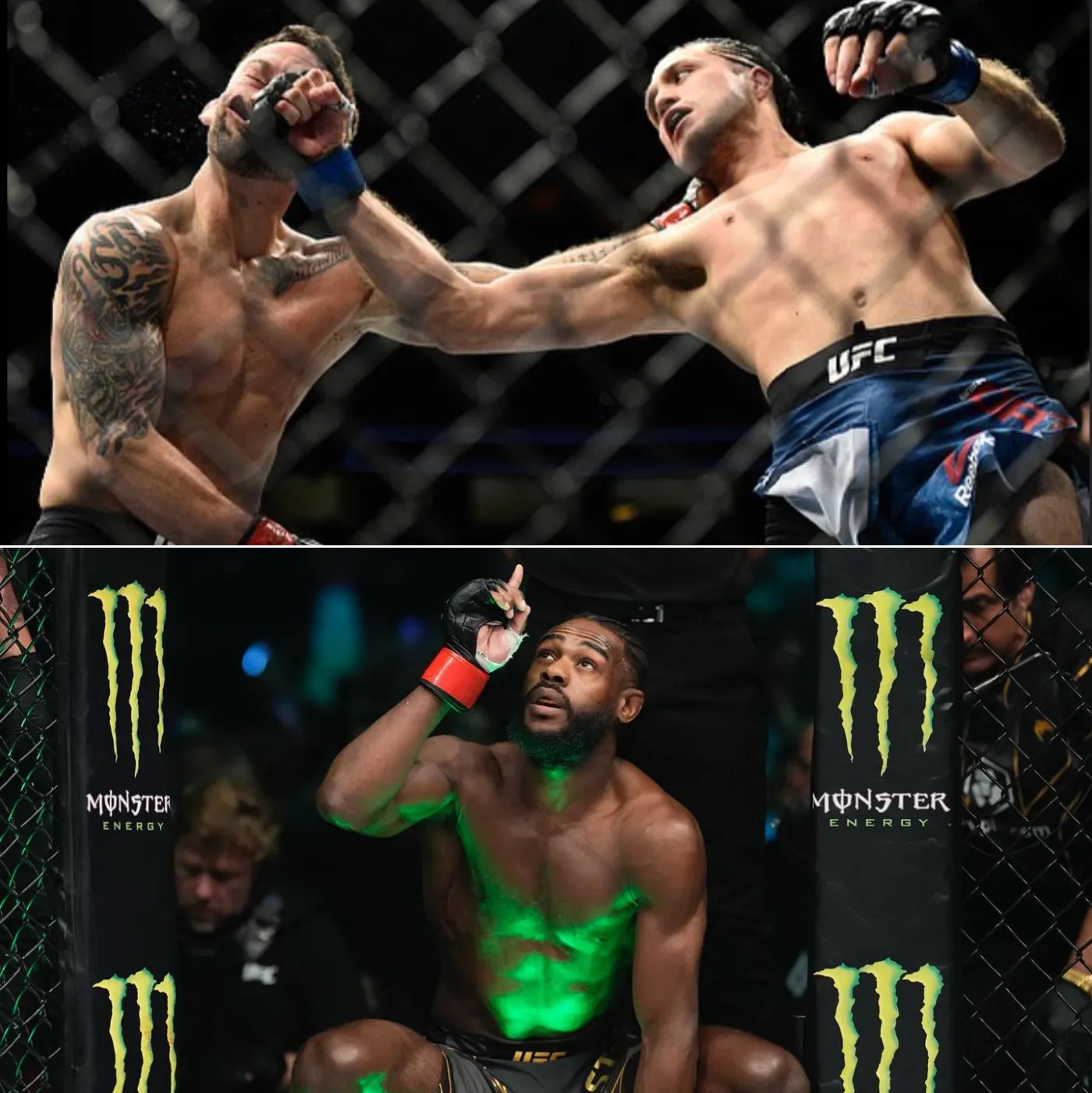
That presents a fascinating stylistic clash: If Sterling gets top position, can he stay safe long enough to score points or land damage without getting caught in a trap? Or will Ortega use his bottom game to turn the tables?
Scrambles and Transitions
One area where Sterling shines is in scrambles. His grappling resembles a wrestler’s flow with the submission awareness of a BJJ black belt. He uses funk-style wrestling roots to transition between positions that most fighters struggle to maintain or escape.
| DANIEL CORMIER: “What makes Aljo dangerous is that he doesn’t stop moving. He turns defense into offense faster than anyone in that division.”
Ortega, by contrast, is more methodical. He doesn’t scramble as often—but when he does, it’s usually to sink in a choke or trap a limb. His transitions are lethal but rare; he capitalizes on the smallest mistake with predator-like calm.
This means Sterling might win the early exchanges in scrambles, but the longer he stays entangled with Ortega, the more danger he risks.
Takedown Offense and Defense
Here, Sterling clearly holds the advantage. His offensive wrestling has improved dramatically since his early UFC days. Against fighters like Pedro Munhoz and TJ Dillashaw, Sterling landed takedowns with both power doubles and trips from the clinch.
Ortega’s takedown defense has always been a liability. Against fighters like Max Holloway and Alexander Volkanovski, he struggled to keep the fight upright—or to dictate where it occurred at all. While his submission threat from the ground makes him dangerous even off his back, the inability to initiate takedowns or stuff them consistently could be his undoing.
If Sterling gets the takedown early and establishes control, he could set the tone for the entire bout. Ortega will either need to catch something quick—or risk losing round after round on control time.
Cardio and Ground Game Longevity
Ground control isn’t just about skill—it’s also about cardio. Grappling exhausts the body faster than striking. And in this aspect, Sterling again seems to have the upper hand. His high-output style, especially in five-round fights, has proven sustainable.
Ortega, though extremely tough, has shown signs of fatigue in grappling-heavy matches. His fight against Volkanovski was a perfect example—after attempting multiple submissions and eating heavy ground and pound, his pace dropped noticeably.
| JOE ROGAN: “Ortega is as tough as they come, but toughness doesn’t always beat smart pacing. Sterling knows how to push without drowning.”
This factor could be critical, especially if the fight goes deep into the championship rounds.
Mental Game and Fight IQ
Another layer to this tactical battle is mentality. Sterling is analytical and strategic—he studies tape, game plans meticulously, and sticks to the script. That served him well in his title run and in handling elite opponents under pressure.
Ortega, on the other hand, fights with emotion. He’s a warrior who thrives in chaos. But that can be a double-edged sword. If he gets too comfortable trying to “create magic” from bad positions, he might end up giving away rounds he can’t afford to lose.
| DC: “Brian’s heart is his biggest weapon—and sometimes, his biggest weakness.”
Submission Arsenal: Creativity vs Control
If we break down their submission tools:
-
Ortega excels in: triangle choke, guillotine, armbar, anaconda choke.
-
Sterling excels in: rear-naked choke, body triangle control, leg rides.
This suggests that Ortega is more dangerous in the moment, while Sterling is more dangerous over time. Ortega can end a fight in 10 seconds. Sterling will make you suffer for 15 minutes.
So, the question becomes: Will Ortega find that moment? Or will Sterling deny him the opportunity?
Statistical Edge
Let’s compare some numbers:
| Fighter | Takedown Accuracy | Submission Attempts (Avg) | Control Time (Avg) |
|---|---|---|---|
| Brian Ortega | 21% | 1.5 per 15 min | 0:45 per 15 min |
| Aljamain Sterling | 34% | 0.8 per 15 min | 3:10 per 15 min |
These stats support the narrative—Sterling is a positional grappler, Ortega is a finisher.
The X-Factor: Fight Location and Emotion
This bout takes place in Shanghai, where Ortega suffered a devastating loss to Korean Zombie in 2020. The psychological weight of returning to the site of failure could either motivate him—or haunt him.
| ORTEGA: “I’ve made peace with the past. This time, I’m walking in with no ghosts.”
But emotional clarity doesn’t always translate into tactical execution.
Final Verdict: Who Has the Ground Advantage?
If we’re talking pure submission threat, Ortega takes the crown. But if we’re talking complete ground game, with takedowns, control, cardio, and strategy, Sterling might edge him out.
This fight might not come down to who’s better—but to who gets their game going first. If Ortega snatches a neck early, it’s lights out. But if Sterling imposes his rhythm, Ortega could find himself stuck under a blanket of control with no chance to breathe.
This is the chess match within the war. And it may just define who earns the next title shot in a stacked division.
In a clash of pure submission brilliance versus calculated positional dominance, fans are in for a clinic in grappling warfare. The ground game won’t just be a part of the fight—it’ll be the entire story.
Related News