






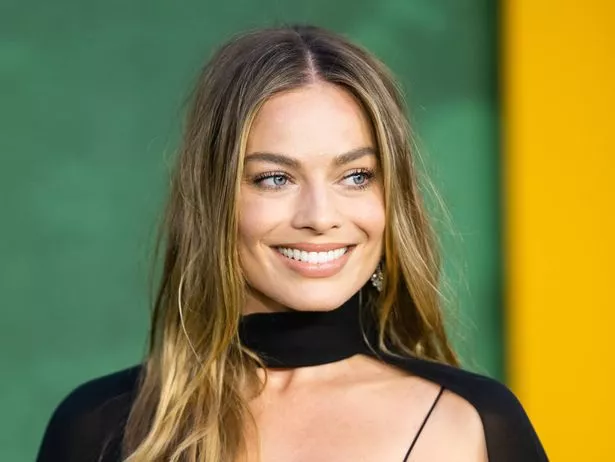
Margot Robbie’s new movie has caused a lot of controversy just after the trailer was posted, and social networks have mixed opinions
When a new adaptation of a beloved classic hits the screen, audiences usually fall into two camps: those eager to see a fresh interpretation and those fiercely protective of the original material. But in the case of Margot Robbie’s new film, Wuthering Heights, the line between artistic innovation and controversy is blurrier than ever.
The first trailer for the movie has only just been released, and yet it’s already ignited an explosion of debate across social media, film forums, and literary communities.
So what’s causing all the drama?
A Bold and Unexpected Direction for a Gothic Classic
Directed by Emerald Fennell, known for her fearless storytelling and provocative visuals, this version of Wuthering Heights isn’t your grandmother’s Brontë adaptation. The trailer reveals a strikingly sensual, emotionally intense portrayal of the doomed romance between Catherine Earnshaw and Heathcliff, played by Margot Robbie and Jacob Elordi, respectively.
But it’s not just the casting or visuals that are stirring emotions—it’s the whole tone of the film.
Set against the backdrop of 18th-century England, the story seems to focus more on eroticism, passion, and toxic intimacy than past adaptations, with aesthetic cues that evoke the likes of Bridgerton or Marie Antoinette, rather than the bleak Yorkshire moors most associate with Emily Brontë’s masterpiece.
The Trailer That Shocked the Internet
From the moment the trailer opens, viewers are thrown into a whirlwind of intense glances, forbidden touches, and poetic longing. Elordi’s shirtless stable scene, the kneading of bread as fingers intertwine, and the moment Robbie’s Catherine whispers “No” after Heathcliff asks if he should stop—these aren’t the quiet, subtle signals of restrained Victorian love. This is pure cinematic heat.
Overlayed with the moody, sensual pop track Everything Is Romantic by Charli XCX, the trailer announces clearly: this is not your standard period drama.
And while some have praised the stylistic departure, calling it a refreshing, feminist, or modernized take, others are accusing the film of oversexualizing a literary work never meant to be viewed through that lens.
Controversial Casting: Is Margot Robbie “Too Blonde and Too Old” to Play Catherine?
Arguably, the most divisive aspect of the film so far has been the casting of Margot Robbie as Catherine. At 35 years old and with her unmistakable blonde bombshell appearance, many fans of the novel were left scratching their heads.
In Emily Brontë’s book, Catherine is portrayed as a dark-haired, fiery teenager, full of wild energy and emotional contradictions. Robbie’s version appears more poised and mature—an interpretation some feel clashes with the original character’s youthful volatility.
When images of Robbie in a glimmering off-the-shoulder wedding dress surfaced online, it only intensified the backlash. Critics complained that the costume looked more red carpet than Regency, describing it as more fitting for a modern fantasy than a historical drama set in rural England.
But are these criticisms fair, or are they rooted in outdated expectations about how adaptations “should” look?
Heathcliff and the Accusation of “Whitewashing”
If the casting of Catherine stirred debate, the choice of Jacob Elordi as Heathcliff has sparked even more serious conversations—this time about race and representation.
In Brontë’s original text, Heathcliff is repeatedly described as “dark-skinned,” “gypsy-like,” and “a little Lascar.” Scholars and readers alike have long interpreted this to mean that Heathcliff was likely a person of color, possibly of South Asian, Middle Eastern, or Roma descent. His outsider status, along with his ambiguous background, is central to his narrative.
That’s why casting a white Australian actor in the role has triggered accusations of whitewashing, with many asking why a character so defined by his racial and social marginalization was not portrayed by an actor of color.
In response, casting director Kharmel Cochrane dismissed the concerns, stating: “It’s just a book.” Her comment, meant perhaps to downplay the outrage, has instead added fuel to the fire.
Is This Adaptation Faithful—or Just Fashionably Edgy?
There’s no denying that Wuthering Heights is a story steeped in passion, revenge, and obsession. But while Brontë’s novel is emotionally intense, it’s also a deeply dark and psychological work, dealing with generational trauma, classism, and internalized pain.
This adaptation seems to favor visual spectacle over subtlety, replacing long monologues with whispered pleas and poetry with pop lyrics. While some critics argue this makes the story more accessible to younger audiences, others believe it risks stripping away the depth of the original.
Still, one could argue that every generation deserves its own version of Wuthering Heights. And perhaps that’s exactly what Fennell and her team are trying to create—a 21st-century Heathcliff and Catherine, grappling with the same emotional chaos, but in a way that resonates with modern viewers.
Margot Robbie Responds: “It’s Bananas. It’s Brilliant.”
Robbie herself seems unfazed by the criticism. In an interview with MTV, she described the project enthusiastically: “Just you wait. It’s bananas. It’s great. It’s brilliant.”
Known for taking bold roles and working with provocative directors, Robbie has built a career around defying expectations, from I, Tonya to Barbie. Her portrayal of Catherine may be another step in that evolution—one that sparks discomfort but also opens dialogue about what adaptation really means.
Will Audiences Embrace or Reject This Version?
Ultimately, the real test will come when the film hits theaters. Will fans of Brontë’s novel embrace this new highly stylized, sensual take? Or will purists turn their backs on what they see as an over-produced and under-thought adaptation?
Early audience reactions remain divided. Some have called the trailer “electric,” praising the chemistry between the leads and the bold creative choices. Others have called it “tone-deaf” or “unrecognizable” as Wuthering Heights at all.
Whatever the case, the film has achieved something that all marketing departments dream of: people are talking—a lot.
Final Thoughts: A Risky Retelling That Refuses to Be Ignored
Whether it becomes a cult favorite, a critical darling, or a controversial misstep, Margot Robbie’s Wuthering Heights is sure to leave a mark. With its stunning cinematography, magnetic cast, and willingness to challenge tradition, this adaptation isn’t afraid to ask big questions—or upset long-held assumptions.
In a world saturated with safe remakes and repetitive formulas, perhaps there’s something admirable about a film that dares to shock, seduce, and split the room.
So what do you think?
Is this version of Wuthering Heights an exciting evolution—or a betrayal of Brontë’s legacy?
Related News