







Harry Styles Channels Full Bowie Energy in His Most Audacious Era Yet
HARRY STYLES ISN’T JUST A POP STAR. HE’S A SONIC TIME MACHINE.
While most artists chase viral trends and algorithm-driven sounds, Harry Styles seems to have turned his back on the noise—and in doing so, created a sound that feels both nostalgic and impossibly fresh. With his meteoric rise from boyband fame to solo superstardom, there’s one truth fans and critics can’t ignore: Harry’s music isn’t just “inspired” by the past. It resurrects it.
And no, this isn’t just another pop album wrapped in retro aesthetics. This is strategic audio engineering—a careful rebirth of the swaggering confidence of ‘70s rock and the emotional sheen of ‘80s pop. The result? A distinctive sound that doesn’t just set him apart—it rewrites the rulebook.
But how exactly does Styles walk the razor-thin line between reinvention and recycling? Let’s unpack the blueprint behind his biggest hits… and the controversy that’s been simmering underneath it all.
FROM FLEETWOOD TO PRINCE: HARRY’S SONIC DNA EXPOSED
You don’t need perfect pitch to hear the rock fingerprints all over Harry’s House, Fine Line, or Harry Styles (his debut solo record). But beneath the glitter and Gucci suits lies something deeper—an intentional resurrection of the eras that built music history.
Let’s break it down.
‘70s Rock Swagger
Think Led Zeppelin. Think Fleetwood Mac. Think Bowie in his glam-rock glory.
Harry’s “Kiwi” and “Only Angel” from his debut solo record are pure ‘70s chaos—raw guitar riffs, aggressive vocals, and a kind of unapologetic masculinity that’s rare in 2020s pop.
Even “As It Was,” while sonically brighter, owes its emotional emptiness and rhythmic drive to the new wave detachment of late ‘70s UK acts like Joy Division and the early Cure.
And then there’s “Music for a Sushi ”Restaurant”—with its punchy brass and chaotic funk—sounding like something Prince would’ve jammed to at 3 a.m. in Paisley Park.
Harry isn’t just borrowing. He’s rebuilding genres inside out.
‘80s Pop Gloss
Take a closer listen to “Late Night Talking” or “Adore You.” The production is slick, but the emotion is deliberately exaggerated, dripping with the kind of polished heartbreak that could’ve come straight from a Phil Collins ballad or a George Michael single.
The synths? Pure nostalgia. The melodies? They play like long-lost B-sides from Duran Duran. And yet, it all feels like it belongs in 2025.
That’s not an accident. That’s a formula.
THE METHOD BEHIND THE MADNESS: HARRY’S SECRET RECIPE
Here’s what makes Harry’s retro revival so controversial: he never admits it.
There are no explicit samples. No credited interpolations. No nostalgic liner notes giving credit where credit’s due. Instead, Styles lets the sound do the talking—and critics have noticed.
Industry insiders whisper about “sonic plagiarism.” Hardcore fans of ‘70s rock legends accuse him of whitewashing the rebellion of classic rock into a soft-boy aesthetic. Others claim he’s doing exactly what the industry rewards: rehashing proven formulas for TikTok virality.
But the numbers don’t lie.
Harry Styles is charting, trending, and dominating global stages—not despite his retro palette, but because of it.
He’s packaging old-school authenticity into algorithm-ready content, and Gen Z—who never lived through the ‘70s or ‘80s—are eating it up like it’s brand new.
WHY THIS SOUND IS WORKING NOW — AND WHAT IT SAYS ABOUT POP MUSIC’S FUTURE
Here’s the kicker: we’re living in the era of aesthetic nostalgia.
From fashion to film to filters, the youth aren’t chasing the new—they’re obsessed with the idea of the past. But only in doses they can digest.
Harry Styles gives them that. He curates the past without making it feel like homework.
No long guitar solos. No political rage. No analog-only recording. Just the vibe, distilled.
Spotify can’t get enough of it. Neither can TikTok. The algorithm loves predictability wrapped in emotional fantasy. Styles delivers both in perfect sync.
But there’s a darker truth underneath: is this the death of originality? Or is Harry actually creating something new by disguising it as old?
THE BACKLASH BUILDING UNDER THE SURFACE
Not everyone is clapping.
There’s a growing wave of online backlash—especially among legacy music fans—who accuse Harry of “aesthetic theft” without cultural context.
They argue that by cherry-picking sonic elements from rebellious eras while stripping away the politics and grit, Harry sanitizes the past for easy commercial consumption.
And then there are the Bowie comparisons.
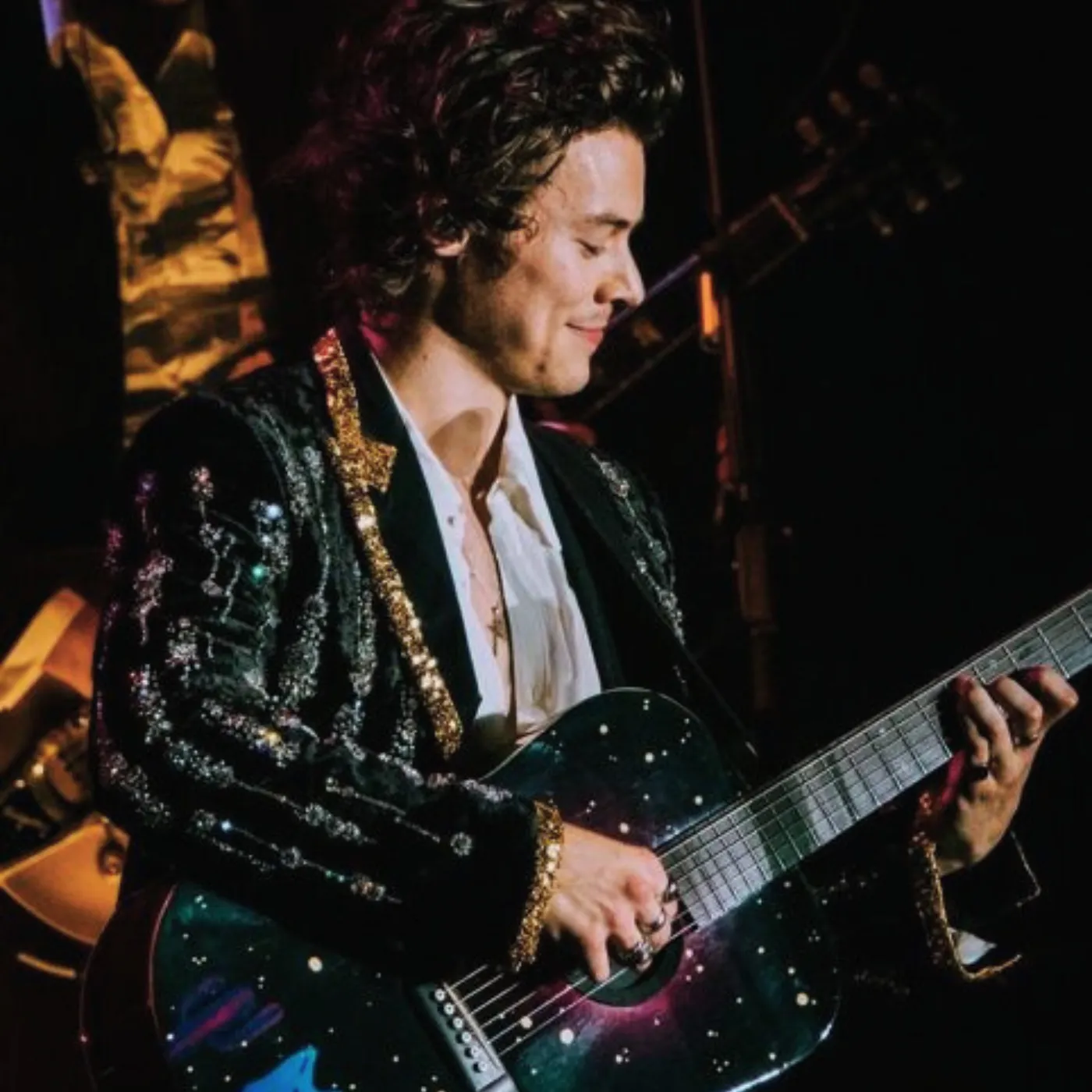
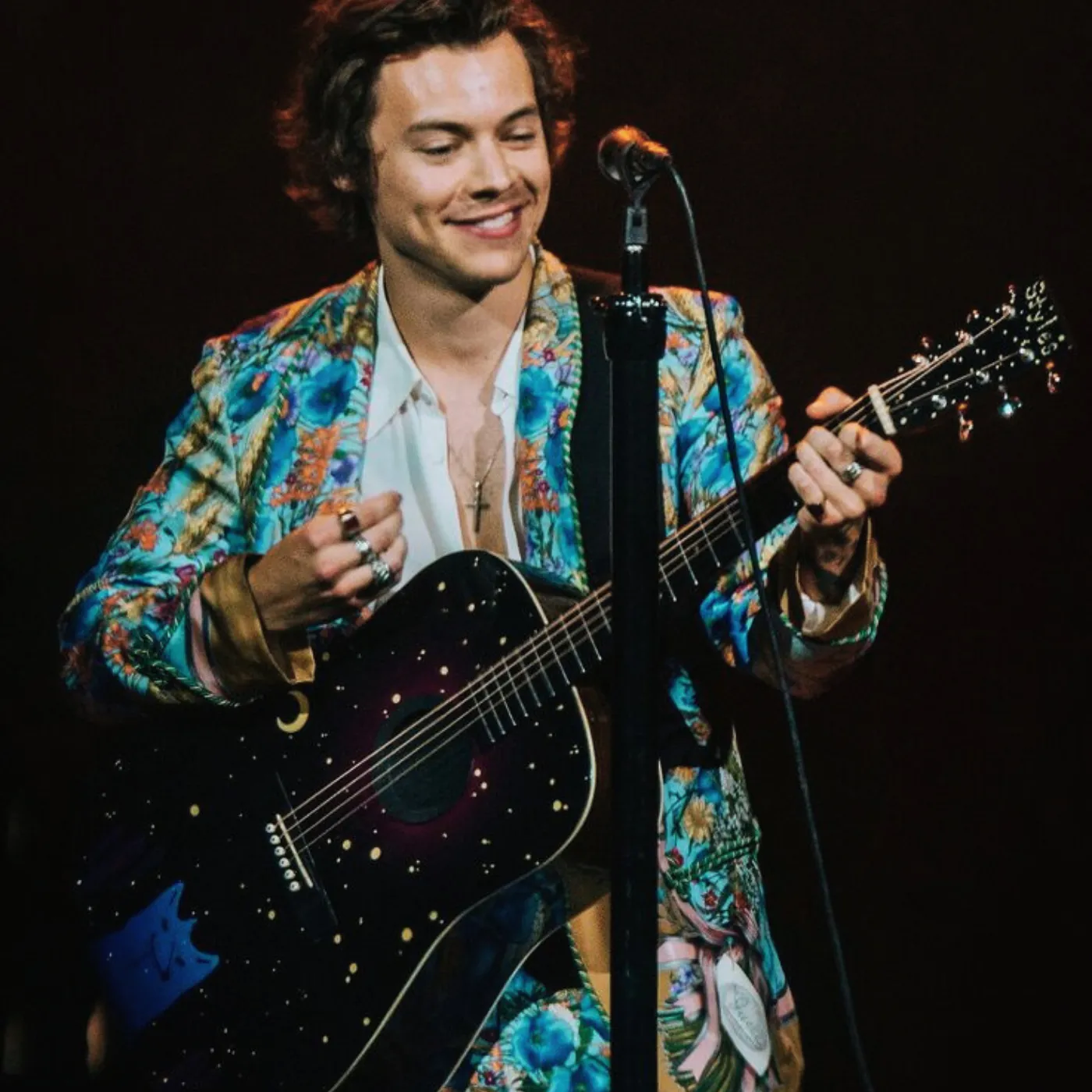
Every time Harry hits the stage in sequins and eyeliner, Twitter explodes with cries of “poser,” “wannabe Ziggy,” and even accusations of brand cosplay.
The criticism? Bowie challenged systems. Harry merchandises ambiguity.
But maybe that’s the point.
SO WHY DOES IT STILL SLAP?
In a world where every sound feels engineered, every drop optimized, and every chorus tested for virality, Harry Styles’ music feels lived-in.
It taps into something deeper: a longing for the past, a desire for real texture, and a hunger for something that doesn’t sound like every other Spotify-core artist on the planet.
And even when he borrows? He bends it. Warps it. Makes it his.
That’s not imitation—that’s strategy.
WHAT COMES NEXT: DOES HARRY EVOLVE OR EXPLODE?
With each album, Styles leans harder into this musical universe he’s building—a place where time loops, guitars cry, and drama sells.
But how long can the formula last?
Insiders whisper that Harry’s next release might veer into ‘90s Britpop territory, referencing Oasis, Blur, and even early Radiohead. Others predict a country-rock reinvention, complete with dusty boots and Nashville sessions.
One thing’s for sure: he’s not playing it safe.
FINAL THOUGHT
Harry Styles’ sound isn’t a glitch in the system—it is the system.
A hybrid of old-school emotion and new-school polish.
A brand, a myth, a blueprint.
And whether you think he’s a genius or a glorified cover artist, the result is impossible to ignore:
He’s not just chasing the charts. He’s reshaping the sound of modern pop—one vintage chord at a time.
So the next time you hear a Harry Styles hit and think, “Wait, haven’t I heard this before?”
You have.
But not quite like this.