Breaking Down Topuria’s Evolution: Technical Mastery or Lucky Knockouts?
In the modern era of mixed martial arts, few fighters have captured the imagination of fans and analysts as quickly as Ilia Topuria. The Spanish-Georgian featherweight stormed into the UFC spotlight with an undefeated record, fearless attitude, and a fighting style that blends brutal knockout power with technical precision. When Topuria dethroned Alexander Volkanovski to claim the UFC Featherweight Championship, it wasn’t just another title change—it marked the arrival of a new era.
But what makes Topuria special goes beyond the highlight reels. His striking is refined, his grappling remains elite, and his fight IQ has evolved dramatically over the years. Now, the burning question is not just how long he can rule featherweight, but whether he can step into the shark tank of the lightweight division and thrive among killers like Islam Makhachev, Arman Tsarukyan, and Dustin Poirier.
Topuria’s Precision Striking – The Science Behind the Knockouts
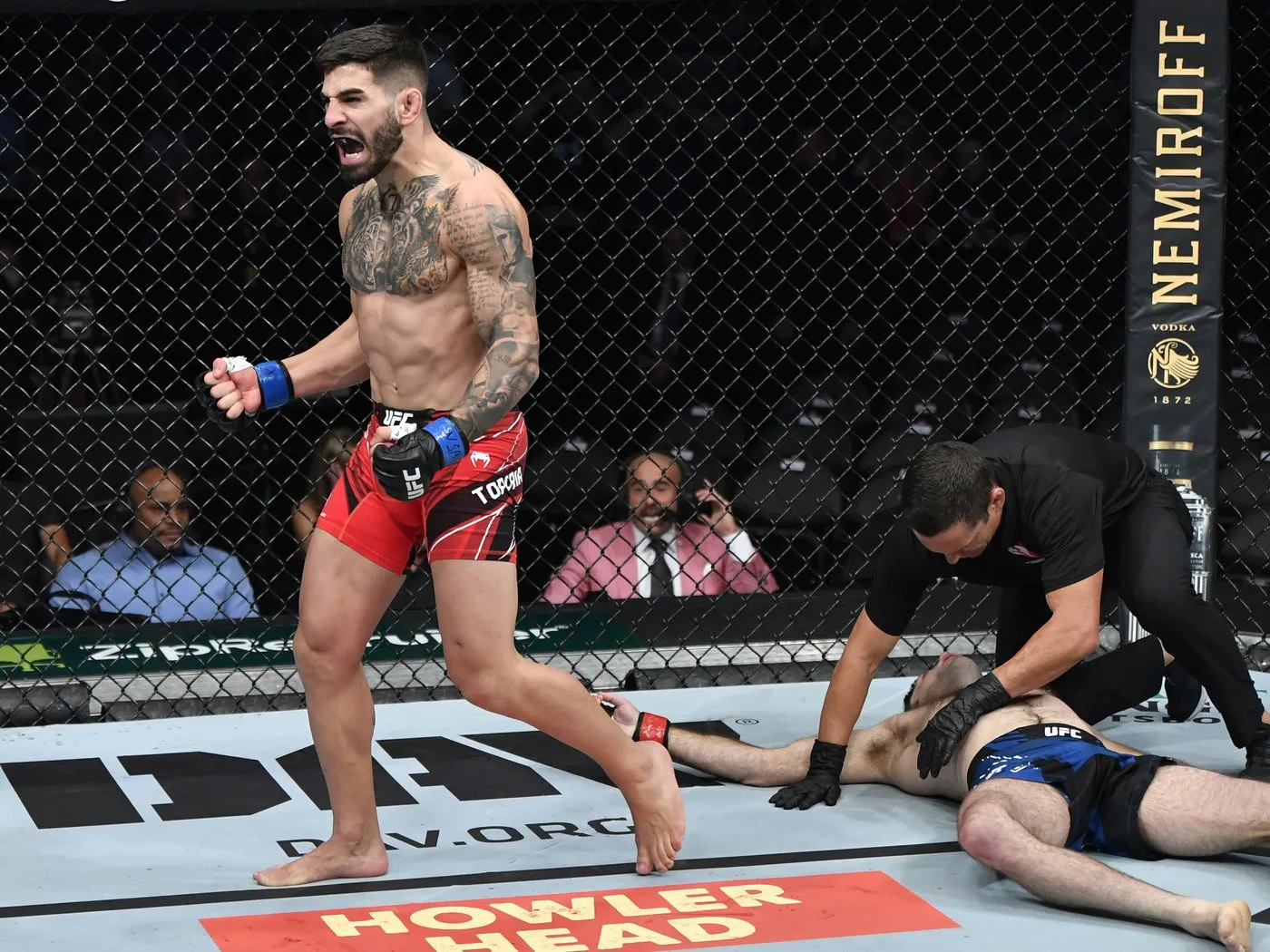
Ilia Topuria has developed a reputation as one of the most dangerous punchers in the featherweight division. But unlike brawlers who rely solely on raw power, Topuria’s striking is built on timing, accuracy, and setup.
From Grappler to KO Artist
Interestingly, Topuria entered MMA with a grappling-heavy background. With a strong base in Brazilian Jiu-Jitsu, he often sought submissions early in his career. Yet, as he matured, his hands became a weapon of destruction. Instead of abandoning his grappling, he integrated it—threatening takedowns to open striking windows. Opponents never know if they’re facing Topuria the grappler or Topuria the striker, and that unpredictability multiplies his effectiveness.
Mechanics of His Punching Power
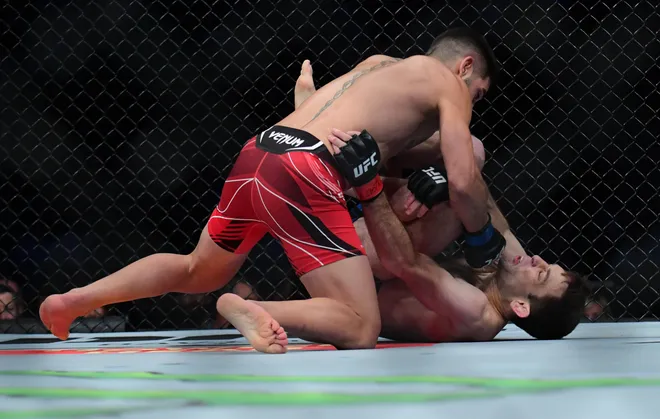
What makes his knockouts so emphatic? Analysts point to several key elements:
-
Compact Technique: Topuria’s punches are short and efficient, minimizing wasted motion. He doesn’t “load up” but generates power through hip rotation and perfect leverage.
-
Shot Selection: Rather than throwing in volume, he chooses the perfect punch at the perfect time. This explains his high finishing rate despite relatively low output compared to pressure fighters.
-
Counterpunching Ability: One of his favorite tactics is luring opponents in, slipping just outside their strikes, and landing devastating counters. His KO of Jai Herbert at lightweight is a perfect example.
-
Body to Head Transitions: He often attacks the body early, forcing opponents to drop their guard, then capitalizes with overhands or hooks upstairs.
The Volkanovski Fight – A Masterclass
In his title-winning performance against Alexander Volkanovski, Topuria displayed the pinnacle of his striking evolution. He pressured patiently, cut angles, and used subtle feints to draw reactions. The finishing sequence—precise punches that stunned and then dropped the longtime champion—was the culmination of years of refining his craft.
It wasn’t wild aggression that dethroned Volkanovski. It was surgical precision.
Can Topuria Handle the Lightweight Sharks?
Now that Topuria has reached the pinnacle at featherweight, speculation naturally shifts to his future. The lightweight division is arguably the most stacked in MMA history. Fighters like Islam Makhachev, Arman Tsarukyan, Justin Gaethje, Charles Oliveira, and Dustin Poirier represent a murderer’s row of talent.
Physical Considerations
At 5’7” with a 69-inch reach, Topuria is slightly undersized compared to many lightweights. Moving up means facing opponents who are not only taller but also naturally heavier and stronger. Yet, we’ve seen fighters like Frankie Edgar and even Volkanovski compete successfully against larger men by relying on speed, footwork, and cardio.
Topuria’s advantage? His power has already translated at lightweight—just look at his KO over Jai Herbert, a fighter with a significant size advantage. If he maintains his speed while carrying more muscle, his striking could remain a nightmare for bigger opponents.
Matchup with Islam Makhachev
Perhaps the most intriguing debate centers on a potential clash with Islam Makhachev, the current lightweight champion. Makhachev’s suffocating wrestling and elite grappling make him a stylistic nightmare for most strikers. But Topuria isn’t just any striker—he has legitimate submission skills.
The question becomes: can Topuria stop Islam’s takedowns long enough to land his precision strikes? Few have managed it, but Topuria’s compact frame and low center of gravity may give him a surprising defensive edge. Still, Makhachev’s size and grappling dominance would make this one of the toughest challenges of Topuria’s career.
Matchup with Arman Tsarukyan
If Makhachev is the king of sambo, Arman Tsarukyan is his young heir. Explosive, well-rounded, and relentless, Tsarukyan represents the next wave of lightweight elite. Against Topuria, this fight would likely come down to pace—could Ilia keep up with Tsarukyan’s cardio-heavy pressure style?
Tsarukyan thrives in scrambles, while Topuria excels in capitalizing on mistakes. The clash would be a chess match of speed vs. timing.
Matchup with Dustin Poirier and Justin Gaethje
While grapplers may test Topuria’s takedown defense, strikers like Dustin Poirier and Justin Gaethje would push his chin and composure. Poirier’s boxing combinations and Gaethje’s leg kicks are legendary weapons. The intrigue is whether Topuria’s precision and counters could break through, or if the sheer volume and durability of these veterans would overwhelm him.
The Evolution of Ilia Topuria’s Fight IQ
Early Career – The Aggressive Finisher
In his early UFC fights, Topuria leaned heavily on aggression. His debut showcased a relentless pace, constant forward pressure, and a willingness to brawl. While effective against lower-tier competition, this approach risked exposing him to counters against elite opposition.
Adapting Against Elite Strikers
The turning point came when he fought Jai Herbert. In the first round, Herbert’s length and striking created real problems for Topuria. Instead of panicking, he adjusted—using body shots, improved head movement, and measured entries. By round two, he landed the picture-perfect KO. That fight demonstrated his growing ability to read, adapt, and execute mid-fight.
The Champion’s Composure
By the time he fought Volkanovski, Topuria was no longer just a dangerous fighter—he was a composed champion-in-the-making. He didn’t rush, didn’t overcommit, and didn’t allow himself to be frustrated by feints or movement. His patience reflected a fighter who had matured beyond raw athleticism.
What’s Next for His Fight IQ?
The greatest champions—Georges St-Pierre, Jon Jones, Khabib Nurmagomedov—were defined not just by skills but by their ability to continuously evolve. For Topuria, the next test of his fight IQ will come in five-round wars against bigger, more diverse opponents. If he can outthink lightweights the same way he outthought featherweights, his legacy could stretch far beyond a single division.
A Champion Today, A Legend Tomorrow?
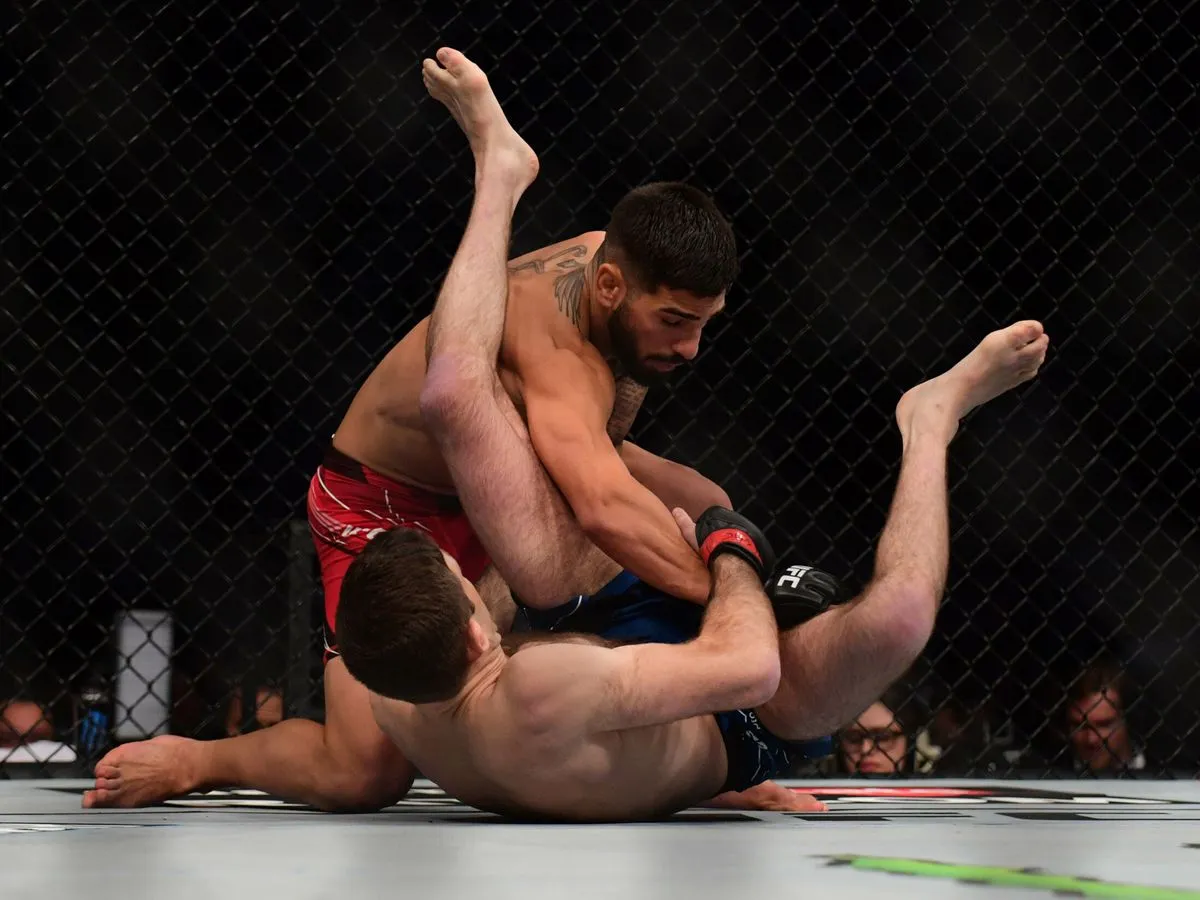
Ilia Topuria’s story is only just beginning. From his early days as a grappling-heavy prospect to his current reign as a featherweight champion, he has proven himself adaptable, precise, and lethal. His striking is a blend of artistry and destruction, his fight IQ continues to grow, and his ambitions hint at even greater challenges ahead.
The looming question remains: can he conquer lightweight, the deepest division in MMA? While opinions vary, one fact is undeniable—Ilia Topuria has the tools, the mindset, and the star power to shake up the sport for years to come.
Whether you’re a fan marveling at his knockouts or an analyst breaking down his technical brilliance, one thing is certain: Ilia Topuria is no longer just a rising star. He’s the standard-bearer for the new generation of UFC champions.
Related News