







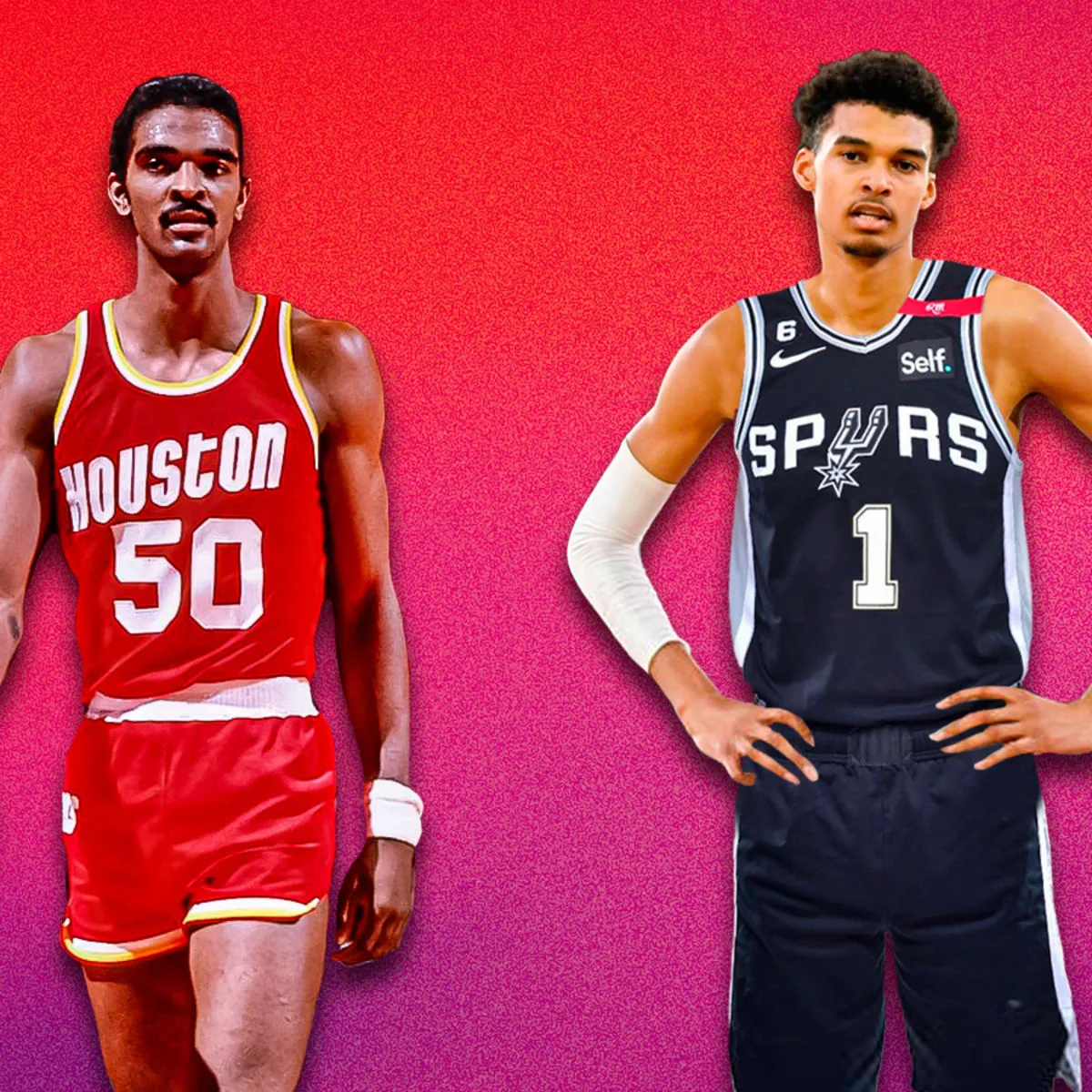
A basketball player says that Victor Wembanyama’s talent is nothing but a copy of himself
Is Victor Wembanyama truly a once-in-a-generation talent, or is he simply walking the path that Ralph Sampson paved decades ago? In a recent interview, the Houston Rockets legend boldly claimed that today’s NBA phenom is nothing more than a continuation of what he himself started — a towering, versatile big man who could dribble, shoot, and dominate inside. As the basketball world debates whether Wembanyama is redefining the game or just reviving an unfinished legacy, one question lingers: is his greatness authentic innovation, or merely a copy of Ralph Sampson 2.0?
Introduction: A Debate Between Eras
When Victor Wembanyama entered the NBA, he was labeled as a once-in-a-generation prospect, a player whose rare blend of size, mobility, and skill had never been seen before. Standing at 7’4’’ with the agility of a guard, he immediately captured the imagination of fans and analysts worldwide. But now, a voice from the past has sparked a debate: is Wembanyama really the first of his kind, or just a modern echo of someone who came before?
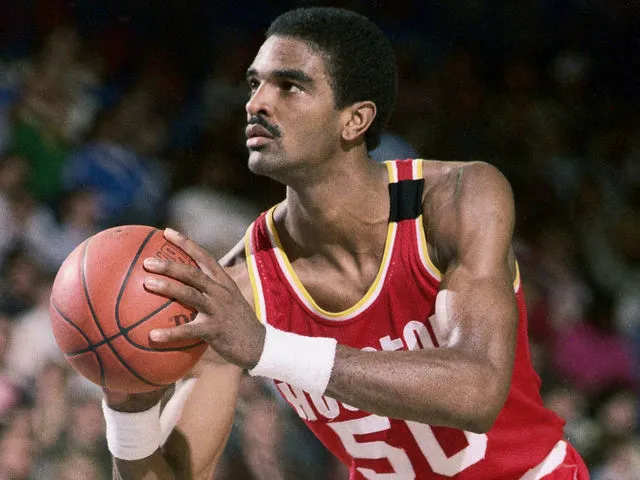
That voice is Ralph Sampson, a Hall of Fame big man and four-time NBA All-Star from the 1980s. Recently, Sampson told ClutchPoints:
“They say I’m Wemby, the first; he’s Wemby, the second. But I’m Ralph the first, he’s Ralph the second.”
With those words, Sampson reignited the discussion about whether today’s NBA superstar is truly revolutionary — or simply standing on the shoulders of a pioneer who was limited by the era in which he played.
This article explores Ralph Sampson’s claim, the parallels and contrasts between the two players, and what this intergenerational debate means for basketball’s future.
Ralph Sampson: The Forgotten Prototype
A College Legend Turned NBA Star
Before Wembanyama, before the idea of a 7’4’’ player crossing over defenders or hitting outside jumpers, there was Ralph Sampson. A towering force at the University of Virginia, Sampson won three consecutive Naismith National Player of the Year Awards (1981–1983). By the time he entered the NBA, he was already considered a generational talent.
Drafted No. 1 overall by the Houston Rockets in 1983, Sampson made an immediate impact. In his rookie season, he averaged 21 points, 11 rebounds, and 2.4 blocks per game, winning Rookie of the Year honors. The next year, the Rockets paired him with Hakeem Olajuwon, creating the legendary “Twin Towers” frontcourt.
A Game Ahead of Its Time
What set Sampson apart was not just his height, but his versatility. At 7’4’’, he was capable of dribbling, running the floor, and shooting from mid-range — skills that big men of the 1980s rarely displayed. In his own words:
“I could post up, I could dribble, and I could shoot outside. We didn’t shoot many 3s when I played, but I’m sure my mindset would’ve been really tough to play at an elite level of the game today.”
Unfortunately, injuries derailed his career. After four All-Star appearances, his production declined sharply. Still, Sampson’s brief peak showed a glimpse of what a “modern” big man could look like decades before Wembanyama.
Victor Wembanyama: The Modern Evolution
From Prodigy to NBA Star
Victor Wembanyama entered the NBA with more hype than perhaps any international prospect in league history. Born in France, he dominated European competition with his unique skill set: a true unicorn who could block shots on one end and drain step-back threes on the other.
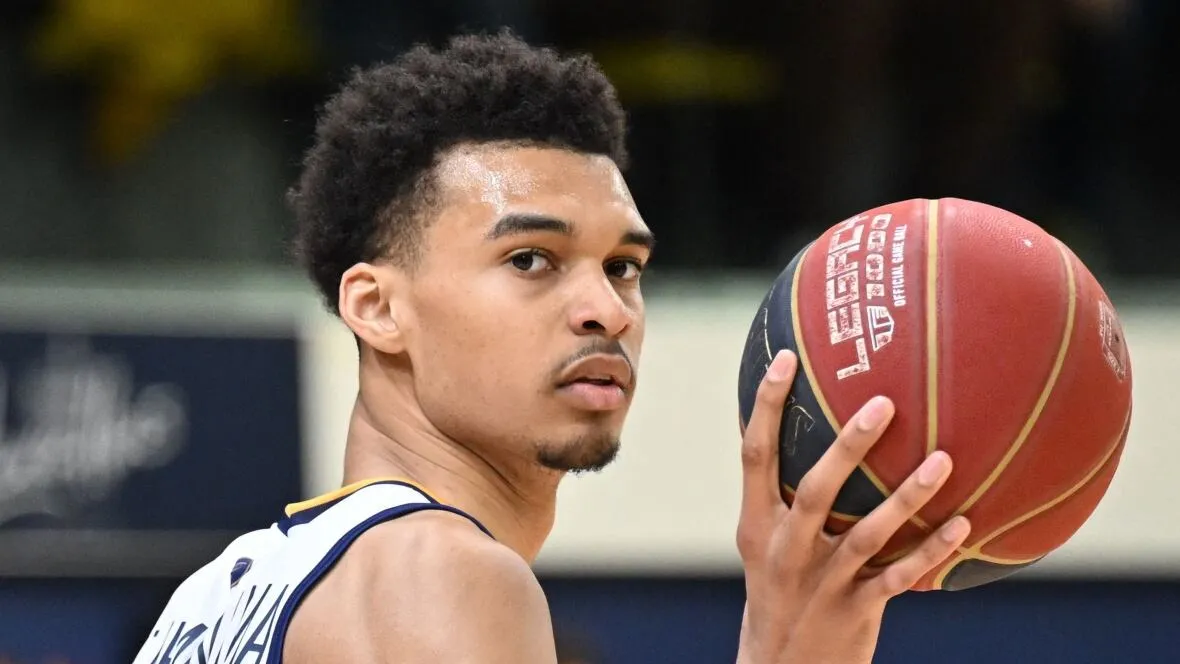
Drafted No. 1 overall by the San Antonio Spurs in 2023, Wembanyama quickly validated the hype. His rookie season featured jaw-dropping highlights, from blocking three-point shots on the perimeter to crossing over guards half his size. By his second season, sportsbooks like FanDuel had already placed him in the top 5 MVP odds, despite his youth and limited experience.
Why He’s Different
While Sampson hinted at versatility, Wembanyama lives in an era where such skills are celebrated and nurtured. The modern NBA encourages big men to handle the ball, shoot threes, and defend multiple positions. Wemby’s physical gifts, combined with modern training and tactical freedom, have allowed him to fully realize the potential that Sampson only glimpsed.
In short, Wembanyama is not just tall and skilled — he’s playing in a league built to maximize his talent.
Head-to-Head Comparison: Sampson vs. Wembanyama
Physical Similarities
-
Height: Both stand 7’4’’ — a rare measurement even in NBA history.
-
Mobility: Each was surprisingly nimble for his size, able to run the floor with guards.
-
Skill Set: Ball-handling, outside shooting, shot-blocking, and rebounding.
Career Context
-
Sampson (1980s): Played in a league dominated by post-up big men and mid-range shooting. The three-point shot was barely utilized, and teams rarely encouraged centers to dribble or play on the perimeter.
-
Wembanyama (2020s): Competes in a league that rewards spacing, ball-handling, and three-point shooting. His style is not only accepted but demanded in today’s NBA.
Statistical Glimpse (Early Career)
According to LandOfBasketball.com:
-
Wembanyama’s rookie defensive metrics (blocks, steals per game) already outpaced Sampson’s.
-
Sampson, however, had a stronger immediate impact as a scorer and rebounder, averaging over 20 points in his first season.
The Quote That Sparked the Debate
Ralph Sampson’s playful but pointed remark — “I’m Ralph the first, he’s Ralph the second” — carries layers of meaning. On one level, it’s a proud veteran reminding fans that he pioneered this style decades ago. On another, it’s a subtle suggestion that Wembanyama’s greatness may be less revolutionary than it appears.
Sampson’s statement also reflects a common theme in sports: the desire of past legends to be remembered as innovators, not relics. Just as Oscar Robertson once argued that Russell Westbrook’s triple-doubles were not unprecedented, Sampson wants recognition for laying the groundwork that Wembanyama is now elevating.
Fan and Media Reactions
Reddit Discussions
On platforms like Reddit, fans quickly jumped in to compare the two:
-
“They’re both 7’4’’, both surprisingly limber, both drafted #1, both played in Texas, both can shoot.”
-
Others noted that while the parallels are striking, Wembanyama’s skill set appears more advanced, particularly in perimeter defense and offensive creativity.
Media Analysis
Basketball analysts have largely framed Wembanyama as the evolution of Sampson, not a copy. ESPN, The Ringer, and Bleacher Report have emphasized that while Sampson’s injuries cut his career short, Wembanyama has the tools and medical resources to sustain a much longer peak.
Legacy and Evolution: Standing on Shoulders
The debate over “copy vs. original” reveals an important truth: innovation in basketball is rarely about a single player. Instead, it’s a continuum. Ralph Sampson expanded the idea of what a 7’4’’ center could be. Victor Wembanyama is building on that foundation, enhanced by a modern era that rewards creativity.
If anything, Sampson’s comments underline the continuity of basketball progress. Wemby is not a clone, but he is undeniably part of a lineage — one that stretches from Sampson to Dirk Nowitzki, Kevin Durant, Kristaps Porziņģis, and beyond.
The Cultural Impact of the Debate
Respect Across Generations
Sampson’s statement is not a dismissal, but rather a form of recognition. By linking himself to Wembanyama, he is inserting his legacy into today’s narrative. It’s a reminder that every superstar, no matter how unprecedented they seem, has historical echoes.
The Marketing of “Unicorns”
The NBA thrives on stories of uniqueness. Wembanyama has been branded as a “never-before-seen” phenomenon. But debates like this complicate that marketing, showing that the seeds of today’s unicorns were planted long ago.
The Path Forward: Can Wemby Avoid Sampson’s Fate?
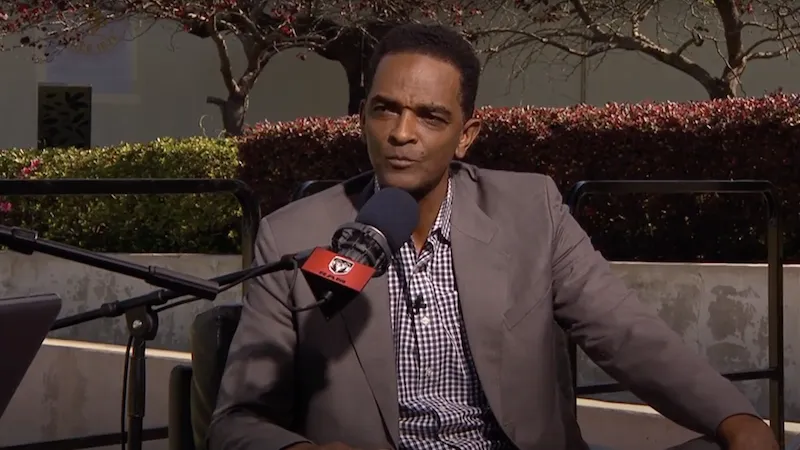
The greatest cautionary tale in this comparison is injuries. Ralph Sampson’s career trajectory plummeted after knee and back issues, preventing him from realizing his full potential. For Wembanyama, durability will be the key factor in whether he becomes an MVP or a “what if” story.
Modern sports science, load management, and training methods give Wembanyama advantages that Sampson never had. If he can stay healthy, the “Ralph the second” label may eventually fade, replaced by his own unique identity as one of the game’s greatest.
Conclusion: Copy, Evolution, or Both?
So, is Victor Wembanyama simply a copy of Ralph Sampson? The answer is both yes and no.
-
Yes, because Sampson was indeed a prototype, a precursor who showed glimpses of what Wembanyama is now fully realizing.
-
No, because Wembanyama exists in a completely different ecosystem — one where his skills are not only accepted but celebrated.
In truth, Wembanyama is less a copy than an evolution. He is what Sampson could have been, had he played in today’s NBA and avoided injuries.
Ralph Sampson deserves credit as the “original unicorn,” but Victor Wembanyama is the player turning that blueprint into reality.
And maybe that’s the beauty of it: greatness in basketball is rarely born in isolation. It is passed down, reshaped, and reborn through generations.
Related News