








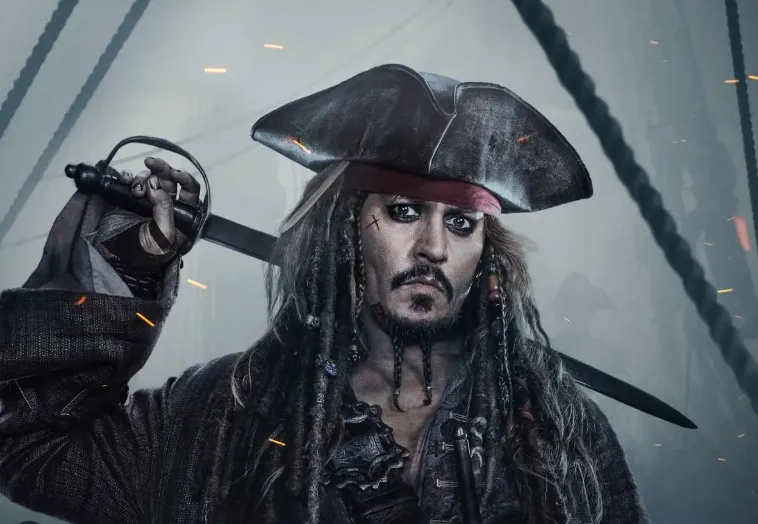
The Dark Side of Jack Sparrow: Johnny Depp Opens Up on Post-Role Depression
Johnny Depp has long been celebrated as one of Hollywood’s most transformative actors, able to completely disappear into characters that linger in the hearts of audiences worldwide. From Edward Scissorhands to the Mad Hatter, Depp has consistently pushed the boundaries of performance. Yet, it is his eccentric, unpredictable, and endlessly charming portrayal of Captain Jack Sparrow in Disney’s Pirates of the Caribbean franchise that stands as his most defining role. With swaggering mannerisms, slurred brilliance, and a magnetic unpredictability, Depp reinvented what a pirate could be, turning Jack Sparrow into a modern cinematic legend.
Depp’s Emotional Bond With Jack Sparrow
When Pirates of the Caribbean: The Curse of the Black Pearl debuted in 2003, no one could have predicted its massive cultural and commercial impact. The film not only breathed new life into the adventure genre but also propelled Depp into superstardom. With the franchise grossing over $4.52 billion at the global box office, Jack Sparrow became synonymous with Depp himself. For many fans, it was impossible to separate the actor from the role, as his performance was the very heartbeat of the saga. Yet behind this massive success lay an emotional burden few expected: Depp confessed that playing Sparrow brought on post-role depression that lingered long after filming ended.
In a candid reflection, Depp admitted that his deep connection to Jack Sparrow came with an unexpected toll. Speaking in an interview, the actor revealed that after the completion of The Curse of the Black Pearl, he experienced a sense of emptiness. “I really loved being the character so much,” Depp confessed. “At the end of the film, when they wrapped the end of the film – and this has happened to me before – you go through a sort of decompression and a depression.”

For Depp, the struggle was tied to the immersive nature of embodying such a vivid character for months at a time. “You feel like, ‘God, I’ve just been this other guy for six months or seven months. I’ll never see him again,’” he explained. Playing Sparrow wasn’t just a job; it was living inside another identity so deeply that leaving it behind felt like losing a part of himself.
The Strange Void of Post-Character Life
Depp’s reflection sheds light on a lesser-seen aspect of acting: the psychological aftermath of stepping out of an iconic role. While audiences only see the finished product on the big screen, actors often spend months — sometimes years — fully immersed in the lives of fictional characters. For Depp, Captain Jack Sparrow wasn’t simply a costume and an accent. The character had become second nature.
“It’s very strange,” Depp admitted. “I’m not real spooky about that whole, ‘you become the character,’ that’s not it at all. Just knowing someone so well and having played them, having them be second nature, it just happens naturally.” He went on to describe how foreign it felt to his body and mind when he suddenly stopped being Sparrow after filming ended. That sense of loss created an emotional vacuum, one that could spiral into depression.
Why Jack Sparrow Was Different
What makes Depp’s admission even more compelling is how different Jack Sparrow was compared to any other character he had played. While Depp had always embraced unconventional roles, from eccentric misfits to dark antiheroes, Sparrow struck a unique balance between comedy, chaos, and heart. The character became larger than life — not only in film history but also in Depp’s own artistic identity.
For many actors, once the cameras stop rolling, it’s easier to shake off a role. But for Depp, Sparrow’s spirit seemed to linger. This was likely due to the fact that Depp shaped much of the character himself. Disney executives initially questioned his offbeat choices, from the slurred speech inspired by Keith Richards to the flamboyant gestures and whimsical unpredictability. Yet those very decisions made Jack Sparrow unforgettable, and Depp’s personal fingerprints were all over the performance. Letting go of Sparrow meant letting go of a creation that felt deeply his own.
The Legacy and the Emotional Burden
Johnny Depp’s candidness about post-role depression not only humanizes him but also underscores the emotional cost of truly transformative performances. While fans saw only the joy, laughter, and thrills of Jack Sparrow’s adventures, Depp was quietly dealing with the aftermath of leaving behind such a vibrant persona. It wasn’t just about finishing a movie; it was about saying goodbye to someone who had lived inside him for months and who resonated with audiences worldwide.
Even years later, Depp’s portrayal of Sparrow remains untouchable in the eyes of fans and critics alike. Whenever discussions arise about rebooting Pirates of the Caribbean with a new actor, backlash is swift. The general consensus is clear: no one else can wear Jack Sparrow’s boots the way Depp did. His admission of the depression that followed only adds another layer of authenticity to the bond he had with the role.
A Glimpse Into the Actor’s Commitment
Depp’s struggles reveal the dedication and vulnerability required in acting at the highest level. Immersing oneself so deeply in a role inevitably leaves scars when the time comes to let go. This also explains why Depp has often sought roles that are both transformative and challenging — each one a chance to escape into another world, but also a risk of losing a piece of himself once it’s over.
His honesty about the “dark side” of playing Jack Sparrow opens a broader conversation about the mental health of actors. The glamour of Hollywood often hides the psychological challenges performers face when transitioning between roles. Depp’s experience shows that the line between art and self can blur, leaving emotional consequences long after the final take.
Conclusion: The Price of Greatness
Johnny Depp’s portrayal of Captain Jack Sparrow is undeniably one of the greatest cinematic performances of modern times. Yet, as Depp himself revealed, greatness came with a hidden price. The depression he faced after leaving the character highlights both the depth of his commitment and the profound emotional connection he had to Sparrow.
For fans, Sparrow will always be a mischievous, rum-loving pirate sailing across the high seas. But for Depp, the role was far more than entertainment — it was a part of his identity that was hard to let go of. His honesty not only adds weight to the legend of Jack Sparrow but also reminds us of the unseen emotional toll behind the magic of cinema.
In the end, Depp’s journey with Jack Sparrow is a testament to how art can blur into life, leaving a lasting impact on both the performer and the audience. While the world continues to celebrate the swashbuckling captain, Depp’s story reveals the vulnerability that lies beneath the surface of even the most iconic performances.