Mets Face High-Stakes Offseason: Pete Alonso’s Contract Drama Could Decide the Team’s Future
The New York Mets enter this offseason standing at a crossroads, burdened by expectations, financial commitments, and the looming uncertainty surrounding their franchise cornerstone, Pete Alonso. For a team that began 2023 with World Series aspirations only to stumble into mediocrity, this winter is about more than simply reshaping the roster. It is about defining the team’s identity for years to come. At the center of it all is Alonso, the slugger whose power bat has made him a fan favorite and one of baseball’s premier home run hitters. Whether the Mets choose to extend him, trade him, or allow his contract situation to linger, the decision will reverberate across the league and perhaps chart the course of the franchise’s future.
Pete Alonso’s Role as the Mets’ Cornerstone
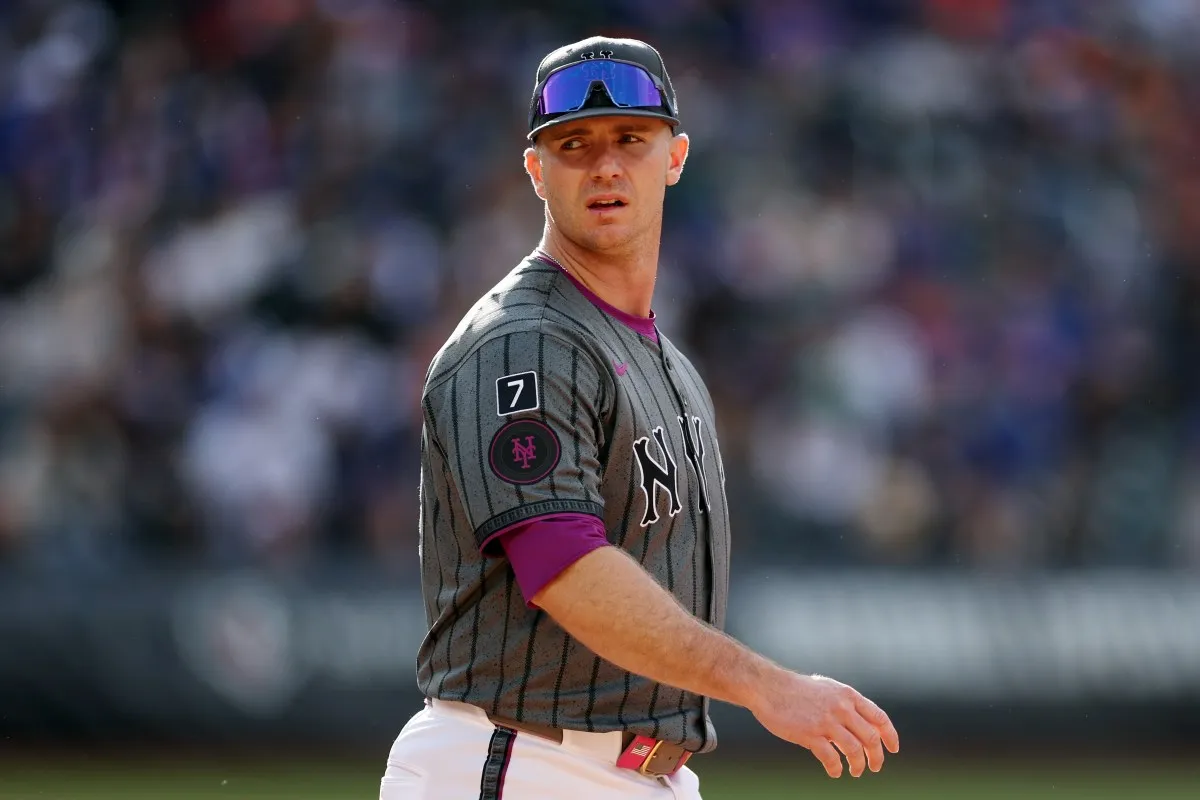
Since debuting in 2019, Pete Alonso has been synonymous with the Mets’ power and resilience. Nicknamed the “Polar Bear,” Alonso immediately established himself as one of the game’s most feared hitters, smashing a rookie-record 53 home runs and capturing the National League Rookie of the Year Award. Over the past five seasons, his consistency has been one of the few constants for a team plagued by inconsistency.
Alonso’s offensive production has been remarkable. He has routinely posted 35-plus home runs, eclipsed 100 RBIs, and carried the Mets’ lineup during stretches when other stars faltered. Beyond the numbers, his presence has provided the Mets with a recognizable face of the franchise, someone who embodies both the grit of New York and the excitement of modern baseball.
Yet, despite his impact, Alonso’s long-term future remains unsettled. Entering his final year of arbitration eligibility, he is on the cusp of free agency, and his price tag is expected to soar. For the Mets’ front office, led by Steve Cohen and David Stearns, the decision on Alonso represents not just a financial calculation but also a philosophical one: should they tie their long-term future to a power-hitting first baseman, or should they pursue flexibility in reshaping the roster?
The Contract Drama Unfolds
The tension surrounding Alonso’s contract negotiations has only grown louder as the offseason progresses. Alonso’s camp has made it clear he seeks to be compensated like one of the elite sluggers in the game, potentially looking at deals similar to those of Freddie Freeman or Paul Goldschmidt, both of whom secured contracts exceeding $100 million. Given Alonso’s power numbers, such expectations are reasonable.
However, the Mets’ situation is complicated. They already boast one of the highest payrolls in baseball, fueled by Cohen’s willingness to spend aggressively. Despite that financial muscle, the results have been mixed. The 2023 season was a glaring reminder that money alone does not guarantee success, as high-priced pitchers struggled and the team’s chemistry unraveled.
This reality places extra weight on the Alonso decision. If the Mets extend him, they commit significant resources to a player whose skill set—while invaluable—comes with questions about aging curves and defensive limitations. If they trade him, they risk alienating a fanbase that has embraced Alonso as the heart and soul of the club. Allowing the situation to linger without resolution could invite distraction and instability during the 2024 season.
The Fanbase’s Emotional Connection
For Mets fans, Pete Alonso is more than just a player. He has been the embodiment of their hopes, frustrations, and joys since 2019. His dramatic home runs, exuberant celebrations, and willingness to embrace the New York spotlight have endeared him to a loyal fanbase hungry for success.
Trading Alonso, even for a significant haul of young talent, would feel like a betrayal to many. Fans view him as the natural leader of the next contending Mets team, someone whose bat can change the game with a single swing. In a city where loyalty is cherished and icons are remembered for decades, moving on from Alonso could create a public relations disaster.
On the other hand, Mets fans are not blind to the team’s broader issues. They understand that the roster needs balance, pitching depth, and a long-term vision. Some acknowledge that moving Alonso, while painful, might be necessary if the return brings in multiple building blocks for the future. Still, the emotional attachment makes this decision unlike any other the front office faces.
The Cohen Era and Expectations
When Steve Cohen purchased the Mets, he promised a new era of ambition and sustained contention. With his immense financial resources, Cohen quickly became the wealthiest owner in Major League Baseball, setting the stage for blockbuster signings and a win-now philosophy. Yet, even with the acquisitions of stars like Max Scherzer, Justin Verlander, and Francisco Lindor, the Mets have struggled to achieve the consistency fans crave.
The Alonso decision will test Cohen’s leadership style. Does he prioritize the emotional connection with fans and the stability of keeping a star, or does he lean into the cold calculus of long-term roster construction? Either way, Cohen’s ability to navigate this drama will shape how his ownership tenure is judged in the coming years.
Trade Possibilities and Market Interest
Around the league, teams are watching closely. A slugger of Alonso’s caliber rarely becomes available, and contenders in need of power would line up with offers. Clubs like the Chicago Cubs, Boston Red Sox, or Seattle Mariners could emerge as potential suitors, offering young pitching or top prospects in exchange. For the Mets, such deals would provide an infusion of future talent while clearing financial obligations.
But trades of franchise cornerstones are fraught with risk. History shows that even when teams receive multiple prospects, the return often fails to equal the impact of the star they traded away. For the Mets, trading Alonso would mean betting on a future that may not materialize, while sacrificing their present offensive anchor.
The Importance of Timing
Timing is everything in baseball transactions, and for the Mets, the clock is ticking. If they hold onto Alonso without extending him, they risk losing him in free agency for only a compensatory draft pick. If they rush into a trade, they may not maximize his value. The optimal path requires shrewd negotiation and a clear vision of the team’s trajectory.
Stearns, newly installed as the Mets’ president of baseball operations, faces his first major test. His reputation for building competitive rosters with the Milwaukee Brewers suggests he values sustainability over sentiment. Yet, New York is a different market, one where fan expectations and media scrutiny amplify every move. How he balances those pressures will reveal much about his leadership.
How Alonso’s Future Shapes the Mets’ Identity
The Mets’ handling of Alonso will define the team’s identity in the years to come. Keeping him signals a commitment to star power and continuity, assuring fans that the team values loyalty and stability. Trading him could mark the beginning of a new era focused on flexibility, youth, and long-term planning. Letting the situation drag on without clarity risks leaving the team in limbo, undermining cohesion and focus.
Beyond the baseball implications, Alonso’s contract drama is a cultural moment for the Mets. It is about how they see themselves—as a big-market powerhouse willing to invest in their stars, or as a franchise still grappling with its identity in the shadow of the New York Yankees.

Looking Ahead
As the offseason unfolds, the Mets face difficult choices that will ripple across the organization. Pete Alonso’s contract situation stands as the defining storyline, but it intersects with larger questions about payroll, competitiveness, and vision. In many ways, the decision about Alonso is the decision about the Mets’ future: will they be a team built around proven star power, or one that takes the painful step of recalibration in pursuit of sustained success?
The stakes could not be higher. Every swing Alonso takes in 2024 will be viewed through the lens of his uncertain future. Every statement from Cohen or Stearns will be parsed for hints of the team’s direction. And every fan in Queens will be watching, hoping the franchise makes the choice that finally leads them to the championship glory that has eluded them for decades.
One thing is certain: this offseason is not just another winter for the Mets. It is a turning point, and the way they handle Pete Alonso’s contract drama will decide not just the team’s immediate competitiveness but also its long-term legacy.