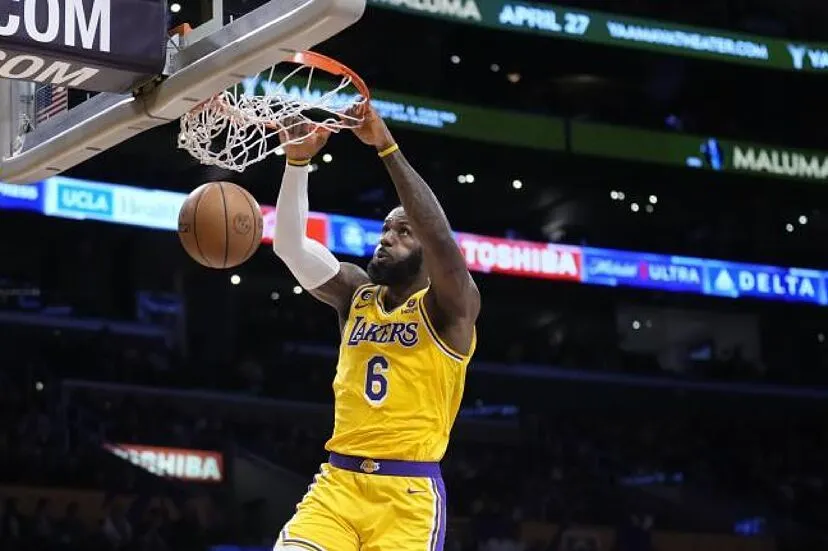
LeBron James: The Silent Revolution — How He Redefined the Three-Point Era and Is Now Chasing a Legacy No Shooter Has Ever Touched
LeBron James has never been labeled just a shooter, yet his quiet transformation is reshaping the very foundation of the three-point era. While the NBA spotlight often shines on names like Stephen Curry or Klay Thompson when it comes to long-range dominance, LeBron has been rewriting the narrative in his own subtle, calculated way. The question now isn’t whether he belongs in the conversation—it’s whether he is on the verge of creating a legacy no shooter has ever touched.
The Evolution of a King
When fans think of LeBron James, their minds immediately race to explosive dunks, clutch blocks, and a basketball IQ that transcends generations. But in the quiet corners of his career, a subtle revolution has been unfolding: LeBron’s mastery of the three-point shot.
Once criticized for being inconsistent from deep, LeBron has gradually redefined what it means to be a forward in the modern NBA. In an era dominated by perimeter shooting, he has evolved his game to not just adapt, but to thrive—reshaping how future generations view the role of shooting in a superstar’s legacy.
This article unpacks how LeBron’s three-point transformation became a silent revolution, the milestones along the way, and the unique legacy he is now chasing—one no other shooter has ever touched.
LeBron’s Early Relationship with the Three-Point Shot
-
In high school and early NBA years, LeBron was more of a slasher and mid-range attacker.
-
Critics frequently cited his shaky perimeter game as the one hole in his arsenal.
-
Teams often sagged off him at the arc, daring him to shoot.
Key Stat: In his rookie season (2003–04), LeBron shot just 29% from three-point range—a figure that mirrored the skepticism around his perimeter skills.
Yet, even in those early years, LeBron hinted at something more: his relentless work ethic and ability to evolve his game season by season.
The Gradual Evolution: From Weakness to Weapon
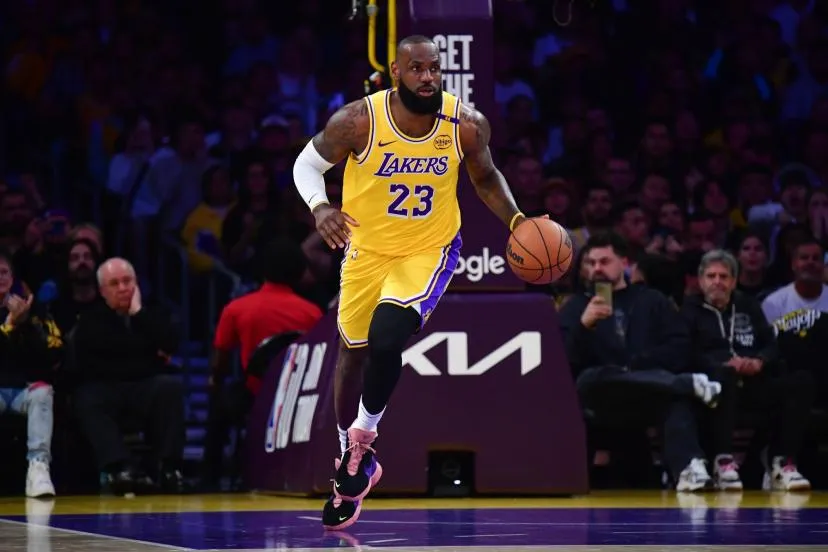
LeBron’s career arc showcases one of the most significant skill developments in NBA history.
-
2009–2013 (Cleveland/Miami Years): Focused on refining mechanics, learning from shooters like Ray Allen and Mike Miller.
-
2016 (Cleveland Championship Run): Proved he could hit threes in high-stakes moments, including dagger shots in the Finals.
-
2020–Present (Lakers Years): Transformed into a high-volume, efficient deep shooter, extending his prime well into his late 30s.
The Numbers Behind the Revolution
Breaking down LeBron’s statistical climb:
-
Career 3PT attempts and percentages.
-
Peak seasons where he averaged more than 8 attempts per game.
-
Comparison to other great shooters of his generation.
Notable Milestone: By 2023, LeBron had surpassed 2,200 career three-pointers made, placing him among the NBA’s all-time leaders—a feat unimaginable in his rookie days.
Redefining the Role of the Forward
Traditionally, small forwards and power forwards dominated inside the paint. LeBron, however, blurred the lines:
-
Acting as a point forward while stretching the floor.
-
Becoming a matchup nightmare—too strong for guards, too skilled for big men.
-
Forcing defenses to guard him from 30 feet out, opening lanes for teammates.
This transformation wasn’t loud like Steph Curry’s revolution, but it was no less impactful. LeBron proved that a forward could age gracefully by extending range, a roadmap future stars now follow.
Comparisons: LeBron vs. the Great Shooters
LeBron isn’t typically placed in the same category as Steph Curry, Klay Thompson, or Reggie Miller when discussing pure shooters. But in terms of impact and volume, his presence in the conversation is undeniable.
-
Steph Curry: Revolutionized shooting with volume and accuracy.
-
Klay Thompson: Known for catch-and-shoot efficiency.
-
Ray Allen/Reggie Miller: Elite marksmen who thrived in clutch moments.
-
LeBron James: Transformed from a non-shooter into one of the most dangerous deep threats at his position.
The Silent Revolution Explained
Why is it called “silent”? Because unlike Curry’s seismic shift in NBA offenses, LeBron’s evolution was gradual, almost unnoticed until the numbers became undeniable.
-
He didn’t change the league’s style single-handedly, but he redefined what it meant for a forward to survive in a shooter’s league.
-
His three-point development was less about flash, more about longevity—allowing him to maintain All-Star status well into his 20th season.
The Legacy He’s Chasing
Beyond titles and MVPs, LeBron is quietly climbing the all-time three-point leaderboard.
-
Potential to retire top-5 in career three-pointers made.
-
The first superstar forward with a balanced résumé of scoring inside, outside, and facilitating.
-
Could become the only player in history to combine 40,000+ points with 2,500+ made threes.
This balance of scoring versatility is what sets him apart—no other player has ever touched this dual dominance.
Challenges Along the Way
-
Age & Durability: How long can LeBron maintain shooting efficiency?
-
Defensive Adjustments: Opponents increasingly tailor defenses to his deep range.
-
The Shadow of Curry: Even with his achievements, comparisons to Steph’s revolution may limit recognition.
Fan and Media Perspectives
-
Fans: Divided between those who see LeBron as a shooter and those who still define him as a slasher.
-
Media: Acknowledges his transformation but often underplays it compared to Curry’s revolution.
-
Social Media: Clips of LeBron’s logo threes go viral, proving his deep shot is no longer an afterthought—it’s entertainment.
Conclusion: The Legacy Beyond the Arc
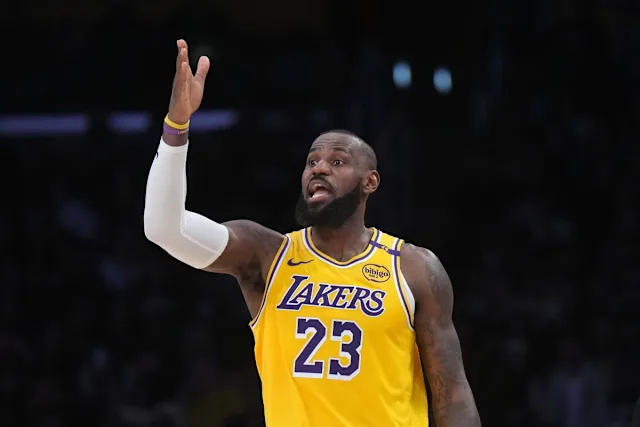
LeBron James’s silent revolution has reshaped the narrative of his career. Once doubted as a shooter, he now stands as one of the most complete offensive players in basketball history. His journey isn’t just about proving critics wrong—it’s about chasing a legacy untouched by any shooter before him.
As he climbs leaderboards and redefines expectations, one truth becomes clear: LeBron didn’t just adapt to the three-point era—he redefined it in his own way.
The question now is not whether he belongs among the great shooters, but whether his balanced, all-around legacy will outlast even the specialists of the arc.
Related News