Stephanie McMahon: Inside the Power-Driven, Calculated Relationship With Her Own Mother
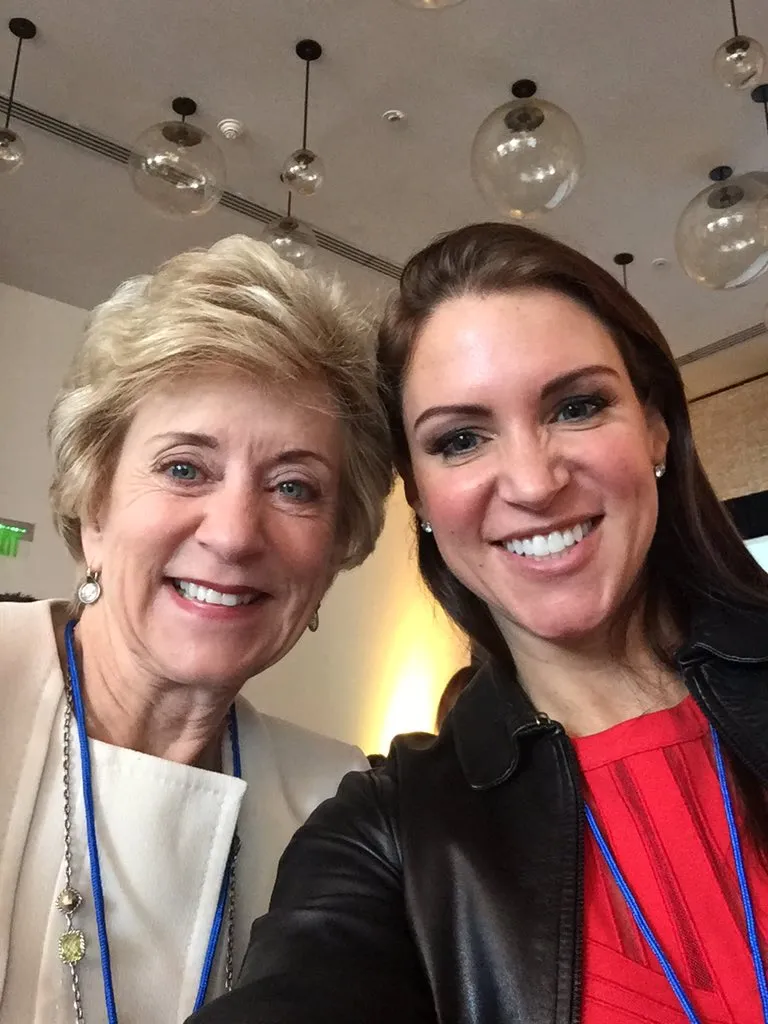
Behind the glittering lights of the WWE empire, behind the theatrics, the championships, and the billion-dollar branding, lies a family story few fans truly know. At the center of this complex web is Stephanie McMahon, a woman born into wrestling royalty and raised under the pressures of ambition, legacy, and influence. While her professional identity is synonymous with dominance, strategy, and control, Stephanie’s relationship with her mother, Linda McMahon, reveals a quieter but no less intense battle — one of generational vision, maternal expectations, and emotional restraint.
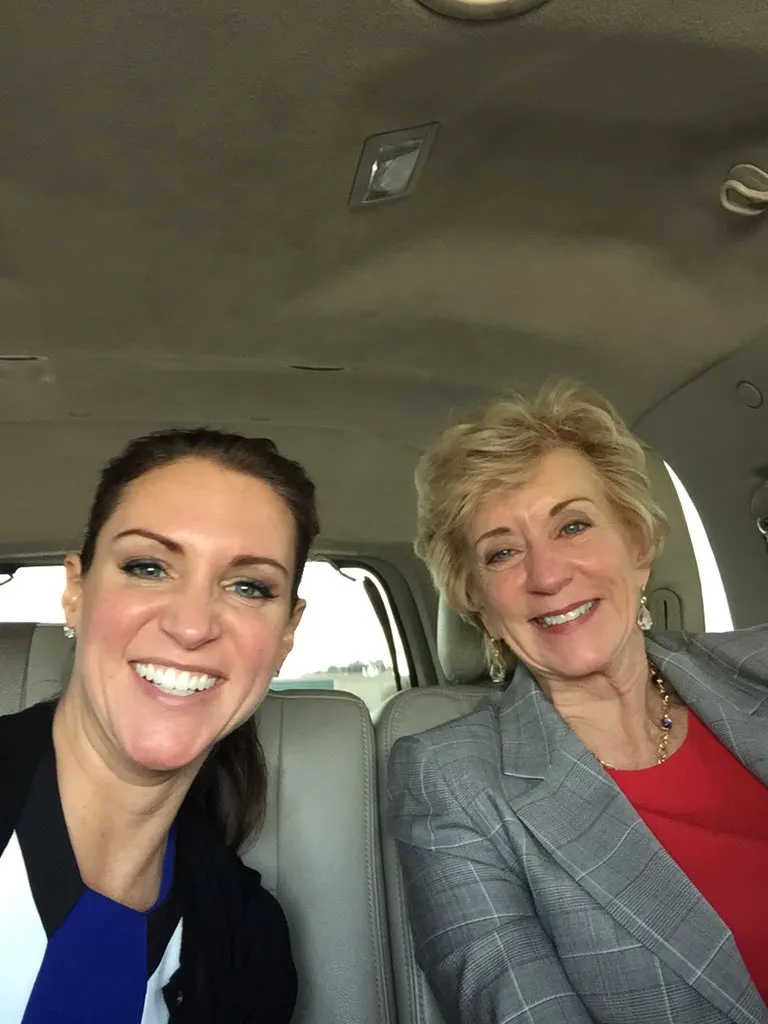
Stephanie McMahon is not just Vince McMahon’s daughter or Triple H’s wife; she is the product of two fiercely driven individuals — Linda and Vince McMahon — who didn’t just build a wrestling company, but constructed a cultural behemoth. While Vince’s presence was loud, larger-than-life, and undeniably theatrical, Linda McMahon was the calm executive force, often behind the scenes but never far from the power core. This balance of personalities shaped Stephanie’s worldview. But it also cultivated a tension that would define her dynamic with her mother in deeply calculated and emotionally distant ways.
The Making of a Power Daughter
Stephanie McMahon’s ascent through the WWE ranks wasn’t accidental. Born in 1976, she was immersed in WWE from childhood. Her earliest memories were not of bedtime stories, but of boardrooms and locker rooms, arenas and scripts, backstage politics and brand deals. While her father’s influence on her path has been widely acknowledged, Linda’s role as a mentor, rival, and emotional benchmark has often been understated. Yet it is in the shadows of Linda’s precise business style and political ambitions that Stephanie learned to navigate power — not just through charisma, but through calculation.
Linda McMahon served as CEO of WWE for over two decades. Unlike Vince, who represented chaos and creative flamboyance, Linda embodied stability and corporate sensibility. Stephanie, torn between these two models, chose a hybrid route: charismatic like her father, but boardroom-savvy like her mother. However, this hybridization wasn’t without friction, especially with the parent who emphasized discipline, structure, and image above everything.
The mother-daughter relationship between Linda and Stephanie was never about emotional closeness. Those close to the family often described Linda as “deliberate” and “measured” in her parenting, particularly with Stephanie. Her focus was never on doting affection but on molding a future leader — someone who could carry the McMahon legacy into the future. As Stephanie matured, she began to see this not as maternal support but as performance expectation, a constant need to prove herself worthy in both name and capability.
Conflict Behind Closed Doors
The professional collaboration between Linda and Stephanie often masked an emotional chasm. Publicly, they were aligned: pushing women’s wrestling, managing corporate affairs, and navigating WWE’s transition into a publicly traded company. But privately, the bond was tense. Stephanie, known for her boldness and risk-taking, often clashed with Linda’s more conservative and calculated approach to decision-making.
This contrast came to a head in the early 2000s when WWE began to pivot toward edgier content. Stephanie’s increasing involvement in the creative team — especially in pushing boundaries in storylines — often drew internal criticism, not least from Linda, who feared the brand’s long-term reputation. While Vince admired Stephanie’s bravado, Linda reportedly urged restraint, cautioning her daughter about the perils of blurring lines between reality and fiction.
These were not just creative disagreements; they reflected fundamental differences in ideology and identity. Linda believed in structured governance, in linear progress, and in calculated expansion. Stephanie believed in disruption, evolution, and instinct. At stake wasn’t just the direction of a company — but the psychological upper hand in a family where power was the ultimate currency.
Insiders often recounted moments where Linda would challenge Stephanie in meetings, not overtly, but with the kind of passive resistance that undermines authority subtly: quiet corrections, redirections, or simply withholding endorsement. For Stephanie, every such instance became a test of her legitimacy, forcing her to outmaneuver, outshine, and outperform not only peers but her own mother.
Emotional Distance and Unspoken Expectations
Despite their high-profile positions, Stephanie and Linda rarely appeared together in emotionally vulnerable settings. Interviews were corporate. Appearances were scripted. Behind the curtain, the silence between them spoke volumes. Stephanie once mentioned in passing during a panel discussion that she “learned to stay three steps ahead in every room,” a telling remark that many interpreted as a subtle nod to her upbringing under Linda’s tutelage.
Linda McMahon was not a cruel mother — but she was distant, professional, and demanding. She didn’t coddle; she instructed. Her version of love came through expectation. To her, preparing Stephanie for a male-dominated, high-stakes world required emotional fortitude and strategic sharpness, not warmth. As a result, Stephanie grew up learning to measure success not in affection, but in respect and recognition.
But the cost of this mentorship-as-parenting model was emotional clarity. To this day, Stephanie rarely discusses her mother in depth. When she does, it is often framed through a business lens: her respect for Linda’s political career, her admiration for Linda’s role in WWE’s IPO, or her acknowledgment of her mother’s discipline. What’s strikingly absent is language of closeness, warmth, or vulnerability.
The few times when emotion did surface — such as during Linda’s U.S. Senate campaigns — it was Stephanie who often appeared as the most polished surrogate, delivering carefully measured endorsements. Their interactions were framed more like political allies or corporate partners, not a mother and daughter bonded by shared emotion.
Power as a Substitute for Intimacy
One of the most telling aspects of their relationship is how Stephanie internalized power as a form of connection. With her mother emotionally distant, Stephanie learned to seek validation through achievements. Becoming WWE’s Chief Brand Officer, leading women’s empowerment initiatives, and representing the company on global platforms — these weren’t just career milestones. They were silent conversations with Linda, coded messages that said, “See, I’m enough.”
And yet, even as Stephanie rose, the distance never narrowed. Some who know the family suggest that Linda admired Stephanie’s accomplishments but rarely expressed it. Her generation viewed praise as a potential crutch; her model of parenting saw strength in silence. Stephanie, for her part, compensated by becoming increasingly self-assured, controlling, and perfectionist, a pattern that mimicked Linda’s own professional demeanor but intensified it.
Ironically, the more Stephanie became like her mother — powerful, polished, and respected — the more elusive a genuine emotional bond became. Each woman, surrounded by yes-men and corporate formality, rarely found space to just be mother and daughter. Their love, if it existed in the traditional sense, was filtered through power structures, brand loyalty, and unspoken mutual expectations.
Legacy and the Unresolved Rift
Today, Linda McMahon’s presence in WWE is minimal, with her focus shifted toward politics and public service. Stephanie, after a dramatic return and departure from her role in 2023, remains a symbolic figure in the WWE narrative, often discussed in terms of her impact on the brand and its future direction. But what remains unresolved is the emotional landscape between mother and daughter.
Unlike the more publicized father-daughter dynamic with Vince, which has included onscreen battles and offscreen admiration, the Stephanie-Linda relationship is cloaked in quiet complexity. There are no emotional interviews, no behind-the-scenes reconciliations, no open memoirs. Just a lingering sense that beneath the titles, strategies, and brand deals, there remains a mother and daughter whose bond was defined more by structure than softness.
Some speculate that this calculated distance was by design. That Linda never wanted Stephanie to rely on sentiment, that she viewed emotions as distractions in a world where female leaders are constantly scrutinized. If so, she succeeded — Stephanie McMahon is one of the most formidable women in global entertainment, shaped by exacting standards and fearless leadership.
But others wonder about the cost. The quiet moments never shared. The words of affection never spoken. The holidays missed for boardrooms. The rituals replaced with strategy calls. Behind the towering achievements and public personas, two women — bound by blood but divided by ambition — remain emotionally apart, their legacy entangled in power, but not necessarily in love.
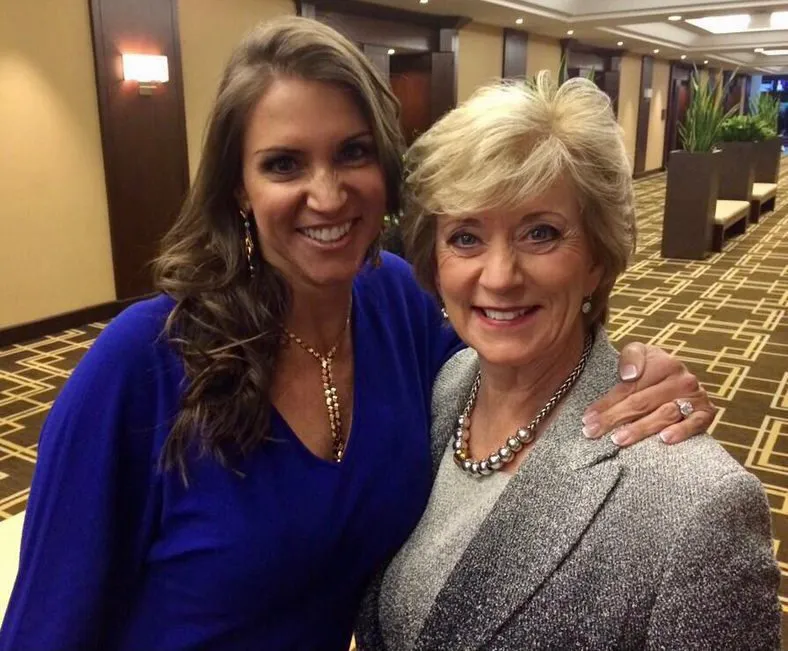
Conclusion: Calculated Love, Unspoken Loyalty
In many ways, the relationship between Stephanie and Linda McMahon is a mirror of the WWE brand itself: driven, scripted, strategic, and fiercely protective of legacy. It resists softness in favor of performance. It avoids vulnerability in favor of optics. Yet behind all the press releases and executive titles is a daughter who inherited her mother’s steel and her silence — and a mother who, in shaping an empire, perhaps sacrificed the intimacy that could have made that empire more human.
Stephanie McMahon’s story, then, is not just about success, nor about wrestling, nor even about family business. It is about how power can both connect and separate, how ambition can be both gift and burden, and how the most defining relationships in our lives may never be fully understood — only survived, strategized, and silently endured.
Related News