The truth behind Miguel Oliveira’s recent disappointing races
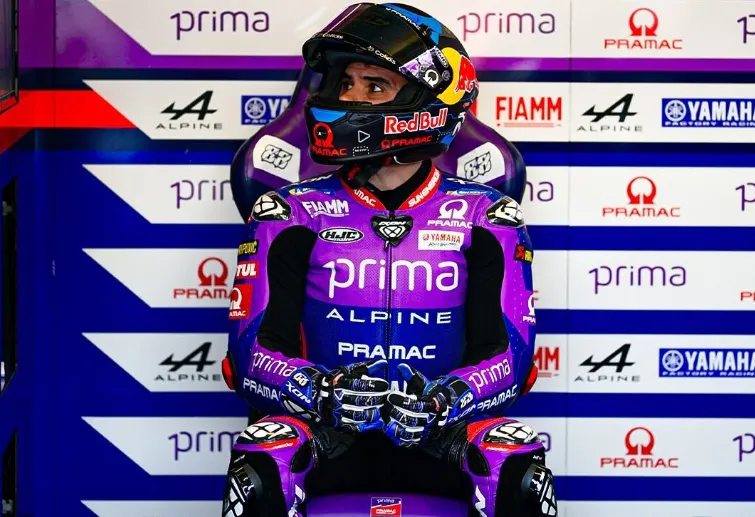
Miguel Oliveira, once regarded as one of the brightest talents in MotoGP, is enduring a frustrating and underwhelming 2025 season despite switching to Pramac Racing, now the official Yamaha satellite team. While many expected his move away from the Aprilia satellite RNF team to breathe new life into his career, the results have been underwhelming, raising questions about both the rider and the machinery.
From technical problems to lack of pace in key race moments, Oliveira’s recent string of disappointing performances has become one of the most discussed topics in the MotoGP paddock. But what is really going wrong for the Portuguese star?
A New Chapter with Familiar Struggles
Miguel Oliveira entered the 2025 season with high hopes. After a difficult run with RNF Aprilia, his signing with Pramac Racing—which transitioned from a Ducati satellite to a Yamaha-backed outfit—was supposed to be a major turning point. Yamaha, facing a crisis of competitiveness, put faith in Pramac and Oliveira to help develop and push the M1 closer to the front.
Oliveira, known for his strategic racecraft and calm demeanor, brought experience and adaptability to the team. Yet halfway through the season, the podiums remain elusive, and the points tally does not reflect the ambitions set out in pre-season.
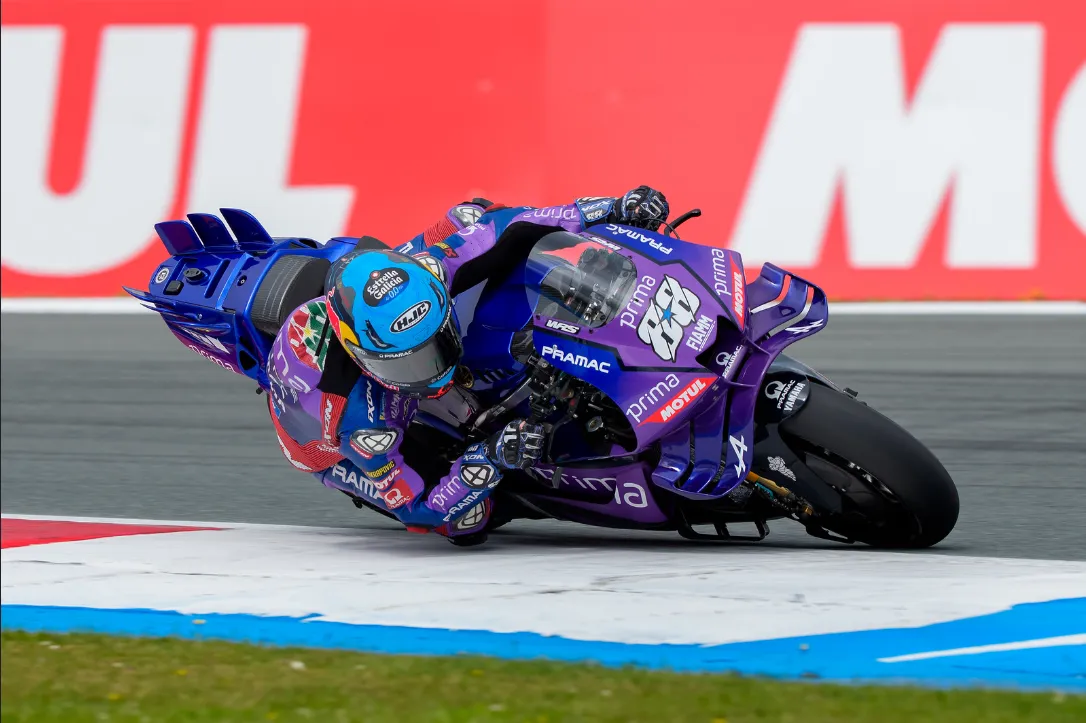
The Yamaha M1: An Incomplete Machine
One cannot assess Oliveira’s performance without evaluating the machinery. The Yamaha M1, once revered for its precision and cornering prowess, has lagged behind the competition since 2022. In 2025, Yamaha introduced a heavily revised version of the M1 with a more aggressive engine character and aerodynamic upgrades aimed at improving top speed and overall balance.
However, the updates have yielded mixed results. Fabio Quartararo, the factory team leader, has also struggled to consistently crack the top five, indicating that Yamaha’s issues go beyond just team setup or rider feedback.
The core problems appear to be:
-
Lack of acceleration out of corners, especially compared to Ducati and KTM
-
Stability issues under braking
-
Inconsistent rear grip, which affects tire longevity in long races
Oliveira has voiced concerns during press conferences, often noting how unpredictable the bike behaves over race distance. Despite some flashes of potential in qualifying sessions, the race pace has simply not been strong enough to challenge for podiums.
Team Transition Challenges at Pramac
While Pramac Racing is one of MotoGP’s most professional and well-organized satellite outfits, the 2025 season has marked a huge transition for the team. After years of using Ducati machinery and data, the switch to Yamaha required a complete reset in terms of setup philosophy, data analysis, and rider feedback.
Oliveira and his team have had to start almost from scratch—learning how to adapt to Yamaha’s engine characteristics, electronics, and chassis behavior. This transition period has been longer than expected, and while there have been incremental improvements, they haven’t translated into tangible results on Sunday.
Additionally, Oliveira’s riding style, which emphasizes late braking and tight apex control, suited the Aprilia and KTM more than the Yamaha, which requires flowing lines and precision. Adjusting to this dynamic has taken time and continues to impact his race-day effectiveness.
Mental and Physical Toll
Beyond the technical and team challenges, Oliveira is clearly feeling the pressure. The 2025 season was supposed to be a comeback arc for the Portuguese rider—a return to the front of the grid and possibly a dark horse championship contender.
Instead, constant battles for P9–P12, occasional Q1 eliminations, and minimal points hauls have begun to wear him down. In recent interviews, he’s remained professional but his tone has shifted—from hopefulness to stoic realism.
Insiders suggest that Oliveira’s training and physical condition remain top-tier. However, the mental strain of yet another season without a competitive package is starting to chip away at his confidence. When asked if he regrets the move to Yamaha, he diplomatically avoided criticizing the manufacturer but hinted that “the project still needs time.”
A Paddock Full of Pressure
Adding to the complexity is the uncertain future of Yamaha’s competitiveness in MotoGP. Despite being a historic brand with multiple world championships, Yamaha has fallen behind in terms of development speed compared to Ducati and KTM. If Oliveira’s performances don’t pick up soon, it could impact his standing in the
Pramac Racing also finds itself under pressure. Once Ducati’s top satellite partner, the team is now Yamaha’s best hope for turning around its fortunes. While they have full technical support from Iwata, the lack of results could raise questions about the future of this partnership if results don’t improve in the second half of 2025.
Silver Linings: The Positives in a Tough Year
Despite the gloom, there are some reasons for optimism. Oliveira has shown flashes of brilliance, especially in mixed conditions and sprint races. In particular:
-
His qualifying performance at the German GP, where he briefly held second on the grid before slipping to fifth, was a reminder of his raw talent
-
His aggressive charge from P15 to P7 in the Dutch TT showcased his racecraft when tire and bike setup align
-
His consistency in finishing races—despite being outside the top 5—is helping Yamaha gather valuable data
Moreover, Yamaha has brought multiple upgrade packages since mid-season, with more expected after the summer break. If Oliveira and Pramac can fine-tune the balance and find a setup that works across tracks, we may yet see him on the podium before the season ends.
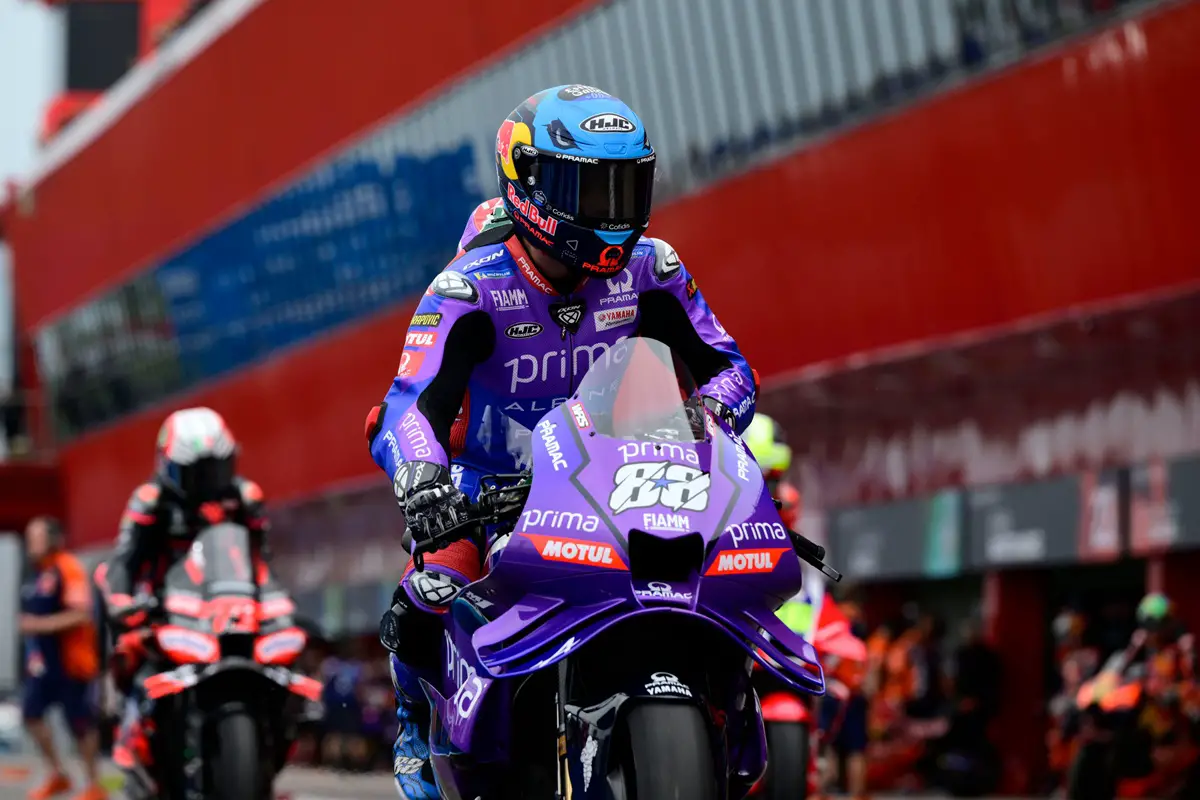
What Does Oliveira Need Now?
To return to form, Oliveira needs three things:
-
A breakthrough with the M1 setup, particularly in rear grip and stability under braking
-
A clearer direction from Yamaha’s development team, ensuring that rider feedback translates into rapid engineering changes
-
A confidence-boosting result—whether a top-5 finish or a surprise podium—that reaffirms his belief in the project
Most importantly, he needs time. Time to adapt, time for Yamaha to evolve, and time for Pramac to align its strategy with the demands of the new manufacturer partnership.
Looking Ahead
The road ahead for Miguel Oliveira is uncertain but far from hopeless. He remains one of the most technically gifted and mentally resilient riders on the grid. If Yamaha’s upgrades continue to trend in the right direction and Pramac finds its rhythm, 2025 could yet become a year of redemption.
But as the pressure mounts and the competition tightens, Oliveira must rise above the noise and focus on what he does best: adapting, evolving, and fighting—one race at a time.
For Oliveira and Yamaha, the next few races may determine whether this is a temporary slump—or a sign of deeper cracks in the foundation.
Related News