







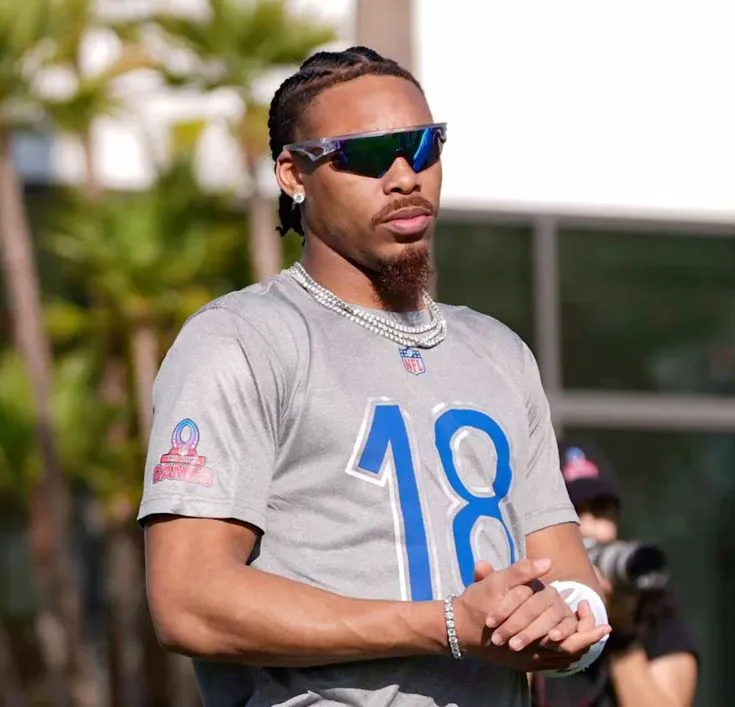
Justin Jefferson Calls Out NFL Playoff ‘Unfairness’ — Slams Rams’ Home Field Setup in Fiery Comment
The NFL playoffs are a battleground where the best teams clash in pursuit of the Super Bowl, but for Minnesota Vikings star Justin Jefferson, not all fields are created equal. The electrifying wide receiver has never been one to bite his tongue, and his recent fiery criticism of what he sees as “unfair advantages” in the league’s playoff structure has sparked major conversation.

At the center of his remarks is a critique aimed directly at the Los Angeles Rams’ home field setup — a stadium arrangement Jefferson believes tilts the playing field far too much in favor of the home team, particularly in high-stakes postseason games. As NFL fans debate the merits of home-field advantage, Jefferson’s outspoken comments have added fuel to a larger, simmering controversy.
A Star Who’s Not Afraid to Speak Out
Justin Jefferson, widely considered one of the top wide receivers in the league, has grown not only as a playmaker but also as a vocal presence in the NFL. Known for his swagger, passion, and competitive fire, Jefferson’s remarks often reflect deeper frustrations shared by players across the league — even if he’s the one brave enough to say them out loud.
After a frustrating playoff exit last season and watching teams like the Los Angeles Rams benefit from what he called “engineered conditions”, Jefferson didn’t hold back during a recent interview with Bleacher Report. When asked about what he believes needs to change in the NFL, his response was swift: “It’s not a real playoff game if it feels like a concert for the home team. That ain’t football.”
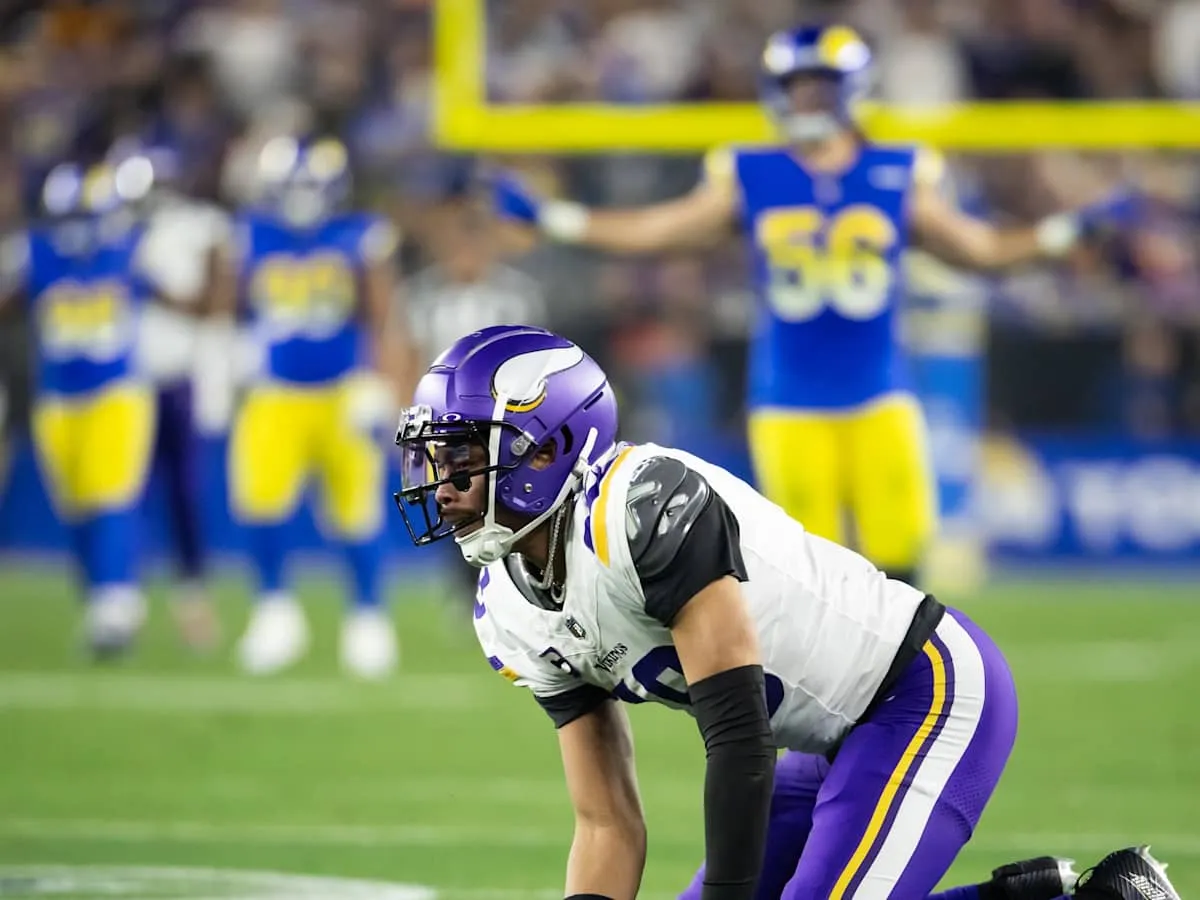
His comments were a direct shot at SoFi Stadium, the glittering $5.5 billion home of the Rams, which has become known not just for its architecture but for the crowd-control measures that limit ticket access for visiting fans. In Jefferson’s view, it’s a manufactured environment designed to boost home team morale while muting opposing teams’ support — and that, he says, fundamentally distorts the spirit of postseason football.
SoFi Stadium: A Home Fortress or a League Loophole?
At the heart of Jefferson’s frustration is SoFi Stadium, one of the most technologically advanced and visually stunning stadiums in the world. With an enormous jumbotron, cutting-edge acoustics, and Los Angeles glitz baked into its design, it offers an experience unlike any other venue in the NFL. But Jefferson and other critics argue that the stadium’s design — and the Rams’ control over its atmosphere — have weaponized home-field advantage to a degree that raises ethical questions.
The controversy first erupted during the 2021 NFC Championship Game between the Rams and the San Francisco 49ers. In the lead-up to that game, reports emerged that the Rams had implemented a policy restricting the sale of tickets to buyers with non-Southern California billing addresses, effectively preventing thousands of traveling 49ers fans from attending. The outcry was swift and fierce, with many calling the move “anti-competitive” and “manipulative.”
For Jefferson, that moment wasn’t just a one-off; it was part of a larger trend. “You can’t call it a playoff if you’re building a bubble around the home team,” he said. “That’s like putting the away team on mute. That’s not football — that’s theater.”
The Meaning of ‘Home-Field Advantage’ in the Modern NFL
Traditionally, home-field advantage has meant playing in familiar territory, with your own fans cheering behind you. In freezing Green Bay, it means braving the icy wind. In New Orleans, it’s the deafening roar of the Superdome. In Kansas City, it’s the sea of red at Arrowhead. But according to Jefferson, what’s happening in Los Angeles — and potentially in other big-market stadiums — goes beyond tradition and into the realm of strategic manipulation.
“The NFL needs to decide what home-field is really supposed to mean,” he argued. “If it’s about comfort and familiarity, fine. But if you’re actively limiting fan access, filtering who can be in the stands, pumping in sound, shaping the lighting to hype your team — that’s not the same game we signed up to play.”
His remarks echo growing concerns among both players and fans that high-budget teams are starting to use their financial and logistical resources to construct playoff environments that are more about spectacle than sport. For teams like the Rams, who play in a city not known for die-hard football tradition, the ability to manufacture crowd support can be a critical factor — and a contentious one.
Player Frustration Beyond the Vikings Locker Room
Though Jefferson is the latest and most high-profile player to speak out, he is by no means alone. Several anonymous players and assistant coaches have voiced similar concerns in recent months, particularly in light of how ticketing practices, travel accommodations, and stadium acoustics are being used to give home teams the edge.
One NFC assistant coach, speaking anonymously, told The Athletic: “We prepare all year for these moments, and then you show up to a playoff game and it feels like you’re walking into a scripted TV show. Everything’s polished, the lights, the sounds, the crowd — and if you’re the road team, you feel like an extra in someone else’s movie.”
These concerns come at a time when the NFL’s parity — the idea that any team can win on any given Sunday — is under pressure from economic and media realities. Teams in larger markets with richer owners and glitzier stadiums are now able to control more variables than ever before, from how tickets are distributed to how the game is presented inside the venue.
Jefferson, for his part, is using his platform not just to complain, but to challenge the league to protect the integrity of the game. “We work too hard all season for the playoffs to be about marketing and optics,” he said. “Let the game be the game.”
The NFL’s Silent Response
So far, the NFL has not directly responded to Jefferson’s comments. However, the league has previously defended the Rams’ ticketing policies, stating that “individual teams are responsible for ticket distribution and fan engagement strategies within league guidelines.” That response, while technically accurate, avoids the deeper question: Should the league intervene when home-field advantage starts to feel like an artificial construct?
League commissioner Roger Goodell has often touted the NFL’s commitment to “competitive balance,” but critics say the league’s silence on this issue is telling. As teams continue to invest in ever-more elaborate stadiums and crowd-management systems, the risk is that the line between home advantage and manufactured dominance becomes harder to define.
For Jefferson, that’s exactly the point. “They say the playoffs are where legends are made. But how can you build a legacy when the deck is stacked before kickoff?” he asked. “I don’t want special treatment — I just want fairness.”
What Happens Next?
As Jefferson’s comments continue to circulate on sports talk shows and social media, pressure may grow on the NFL to reassess its stance on playoff environments. Some analysts have proposed stricter league-wide policies around ticket distribution, while others have suggested that the NFL create independent review boards to monitor how home-field advantages are implemented.
Jefferson himself has hinted at pushing for a Players Association conversation in the offseason to address this. “We got to talk about this as a union,” he told ESPN. “If they can engineer who shows up, who cheers, and how loud it gets — that changes the game. And if the game is changing, then we need to be part of the decision.”
Whether or not any immediate reforms are made, Jefferson’s willingness to call out what he sees as a fundamental flaw in the postseason system has already struck a chord. In a league where players often hesitate to rock the boat, his candor could mark a turning point in how playoff fairness is discussed and defined.
Conclusion: More Than Just a Complaint
What Justin Jefferson has voiced isn’t just about one stadium or one game — it’s about the very nature of competitive integrity in professional football. His critique of the Rams’ home-field setup taps into a larger anxiety within the NFL about how money, technology, and market size may be reshaping the essence of the sport.
In calling out what he sees as NFL playoff unfairness, Jefferson has opened a conversation that could reverberate far beyond this season. Whether the league listens, or whether other players join his chorus, remains to be seen. But one thing is clear: the debate over what constitutes fair play in the playoffs has never been more urgent — or more public.
As Jefferson put it, “You want the best team to win — not the best show.” And with stakes as high as the Super Bowl, maybe it’s time the league took a long, hard look at how its biggest games are being staged.
Related News