

Olivia Rodrigo Just Made a Wild Call on Tour — And One Musician’s Life Changed Overnight
Something unexpected is happening on Olivia Rodrigo’s sold-out world tour. And it’s not another viral scream-along moment from “Vampire” or “good 4 u.”
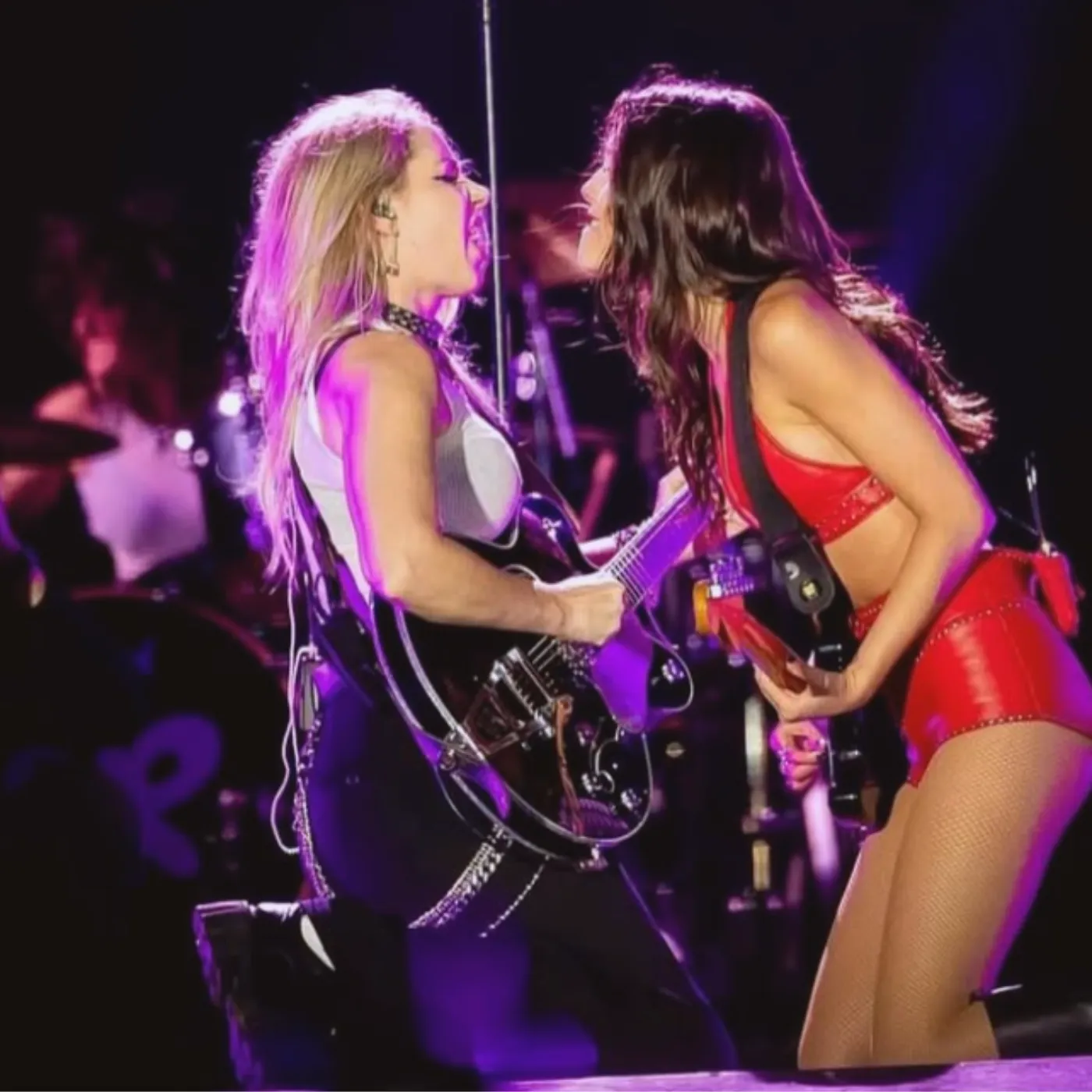
It’s seven blistering guitar solos.
Not from Rodrigo.
From Arianna Powell—the six-string phenom now commanding spotlights that were never supposed to be hers.
And yes, you read that right: seven solos. On a pop tour. In 2025.
“I’ve got 7 guitar solos throughout the set, which is kind of insane—and that’s totally from her wanting that,” Powell recently told fans backstage.
But why is this such a big deal? Because in an era when pop artists often reduce bandmates to background players, Olivia Rodrigo just did the unthinkable—she handed a chunk of her show, her stage, and her legacy… to someone else.
And the industry is still trying to make sense of it.
Who Is Arianna Powell—And Why Is She Suddenly Everywhere?
Until recently, Arianna Powell was known mostly among L.A. session circles and diehard guitar nerds. Her resume was stacked—touring with artists like Halsey, Black Eyed Peas, and GAYLE—but she remained backstage, unseen.
Now, thanks to Rodrigo, she’s getting more than screen time. She’s getting mythologized.
Clips of her jaw-dropping solo in “Brutal” hit 2.3 million views in 48 hours on TikTok. Fans are tagging her in fan art. One Twitter user said, “Olivia gave Arianna a full METAL GOD arc mid-show, and I’m not recovering.”
But this wasn’t a PR stunt or label-engineered “girl power” campaign. Insiders say Rodrigo insisted on Powell’s spotlight personally—against the pushback of managers who feared “guitar solos wouldn’t stream.”
Olivia didn’t care.
Why Seven Solos Break Every Pop Rule
In an industry driven by 2-minute tracks, TikTok soundbites, and algorithmic conformity, extended live solos are seen as “dead weight.”
But Rodrigo is redefining the game, pushing back against an industry afraid of anything that doesn’t auto-tune.
Fans at her shows aren’t just vibing—they’re screaming through shredding solos like it’s the ‘80s all over again.
“We came for Olivia, but Arianna melted our faces off,” one fan posted after the Boston show.
For context: even Beyoncé rarely hands over this much stage power. Taylor Swift has never allowed a guitarist to solo unscripted. And Ariana Grande? Forget it.
This move, as simple as it may seem, is Olivia Rodrigo challenging the hierarchy of modern pop.
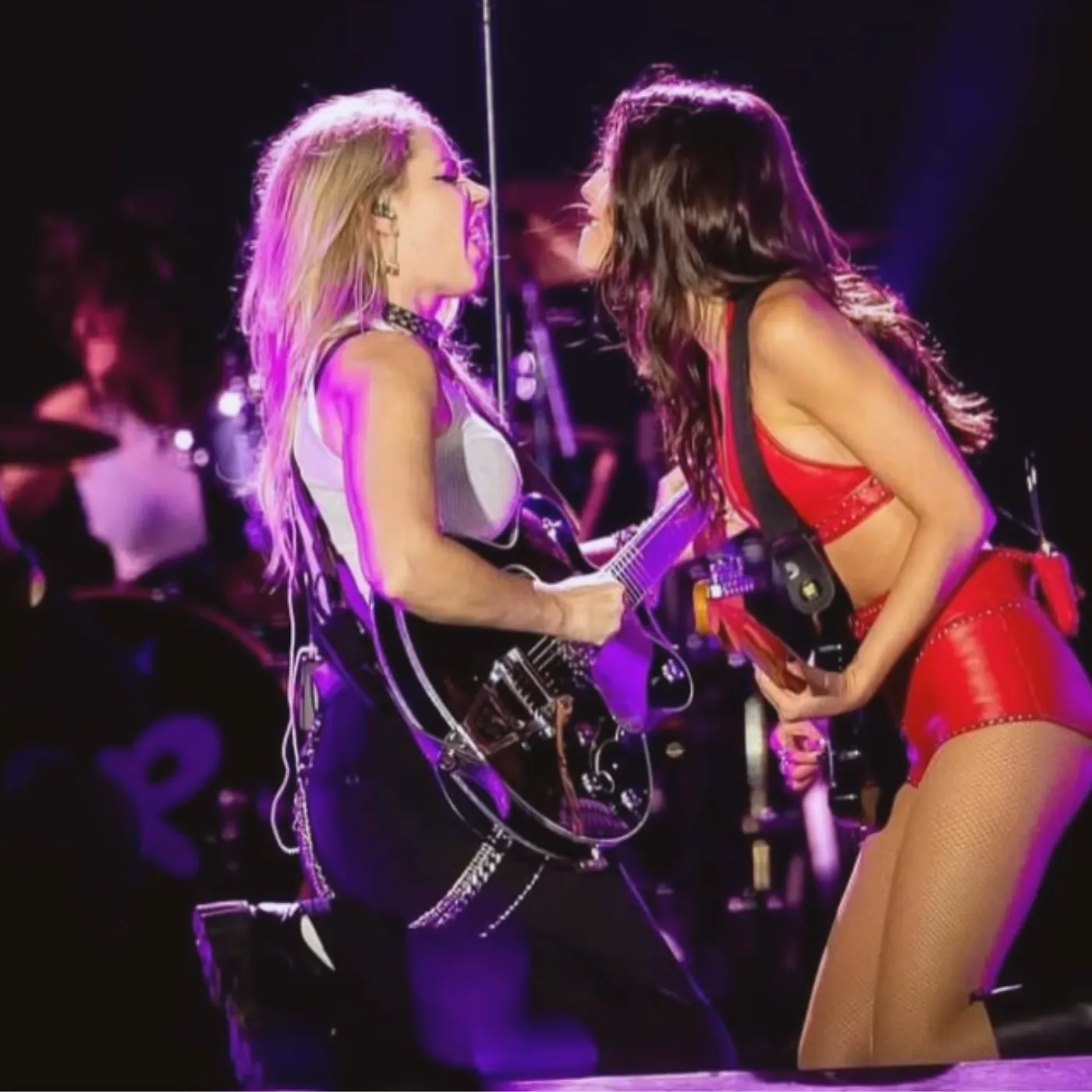
The Viral Fallout: TikTok, Twitter, and the Guitar Renaissance
One TikTok caption summed it up perfectly: “THIS. IS. NOT. A. DRILL. OLIVIA JUST BROUGHT BACK GUITAR GODS.”
Clips of Powell bending notes and slamming power chords have infiltrated Gen Z’s algorithmic feed. And the reaction is surprisingly unanimous: we’re starving for real musicianship.
On Instagram, #AriannaPowell trended next to #SabrinaCarpenter and #LouisPartridge—a feat no hired guitarist has accomplished in years.
Spotify searches for Powell’s solo material have spiked 380%. Guitar Center even reported a 25% uptick in sales of Powell’s signature Fender model after Olivia’s second tour stop in Chicago.
Rodrigo’s Real Agenda? Legacy Control.
Here’s where things get messy.
Olivia Rodrigo isn’t just hyping Powell. She’s curating her own legacy.
By giving Powell a hero’s arc, Rodrigo isn’t just building a great show. She’s establishing herself as a tastemaker. A leader. The kind of artist who doesn’t just sell records—she builds empires.
“It wasn’t about making the tour cool,” says a source close to the production. “Olivia sees Arianna like how Bowie saw Ronson or Prince saw Wendy. She’s planting roots.”
In short: Olivia isn’t just writing music. She’s rewriting the rules of what a female pop act can do with power—and who she can lift along the way.
Backlash or Blueprint? Industry Reactions Are Divided
Not everyone’s celebrating.
Some producers have anonymously complained that Rodrigo’s emphasis on “real instruments” is “out of touch” with today’s music climate.
A controversial anonymous thread on Reddit said, “Rodrigo’s giving stage time to a guitarist no one knew a year ago. How’s that good business?”
Yet the numbers don’t lie.
Shows are selling faster, merch is moving, and fan engagement is peaking during Powell’s solos.
If this is “bad business,” it’s also becoming a blueprint.
The Power of a Co-Sign: What This Means for Future Guitar Heroes
Powell’s rise under Rodrigo might just mark a turning point in how the music world treats supporting musicians.
Historically, guitarists in pop have been silent. Tools. Decorations.
Now? They’re characters in the story.
And Powell’s trajectory could unlock doors for dozens more. With Olivia leading the charge, artists might finally stop fearing the spotlight’s spillover.
Because if Rodrigo’s tour proves anything, it’s this:
Pop isn’t dead. It’s just plugging back in.
Final Hook: Why This Matters
Let’s be clear: Olivia Rodrigo didn’t have to do any of this.
She could’ve built a tour that revolved around her and her alone. She could’ve played it safe, kept the band anonymous, and leaned on viral choreography and confetti drops.
Instead, she gave something away that most artists in her position guard fiercely:
Control.
She handed a chunk of her show—her rhythm, her pacing, her vibe—to a guitarist who most of the crowd didn’t even know by name.
But now?
Arianna Powell is getting standing ovations before Rodrigo even returns to the mic.
This wasn’t just a mic pass. It was a nice transfer of power.
“It’s rare to see a pop star be this generous without demanding something in return,” said a senior tour manager familiar with Rodrigo’s production. “She gave Powell the kind of space most opening acts don’t even get.”
And in doing so, Olivia Rodrigo didn’t just amplify another artist. She redefined what generosity looks like in pop.
She made space.
She multiplied the spotlight.
And she showed an entire industry what it looks like to lift someone up without fear of being overshadowed.
The real question now isn’t whether Arianna Powell will become a star—that part’s already happening.
The real question is this:
Which artist has the courage to do what Olivia did next?
Because the stage has changed. The rules are bending. And pop’s not dead—it’s plugging back in with the volume turned all the way up.