







The Curse of Greatness: The Invisible Burden LeBron James Bears from His Fame
In the world of professional sports, few names carry as much weight and universal recognition as LeBron James. A living legend, a four-time NBA champion, a two-time Olympic gold medalist, and a consistent role model on and off the court, LeBron has built a career that seems nothing short of mythical. But behind the awe-inspiring stats and historical highlights lies an invisible burden—the psychological toll of being too famous, too watched, too idolized, and sometimes, too criticized.
LeBron himself hinted at this in a recent Instagram post that sent waves across the internet. In a dramatic video of him performing a thunderous slam dunk, one line of caption stood out: “Being a winner is a curse…” Simple, but potent. And with it, LeBron pulled back the curtain to reveal the immense pressure that rides on his shoulders.
A Slam Dunk That Spoke Louder Than Words
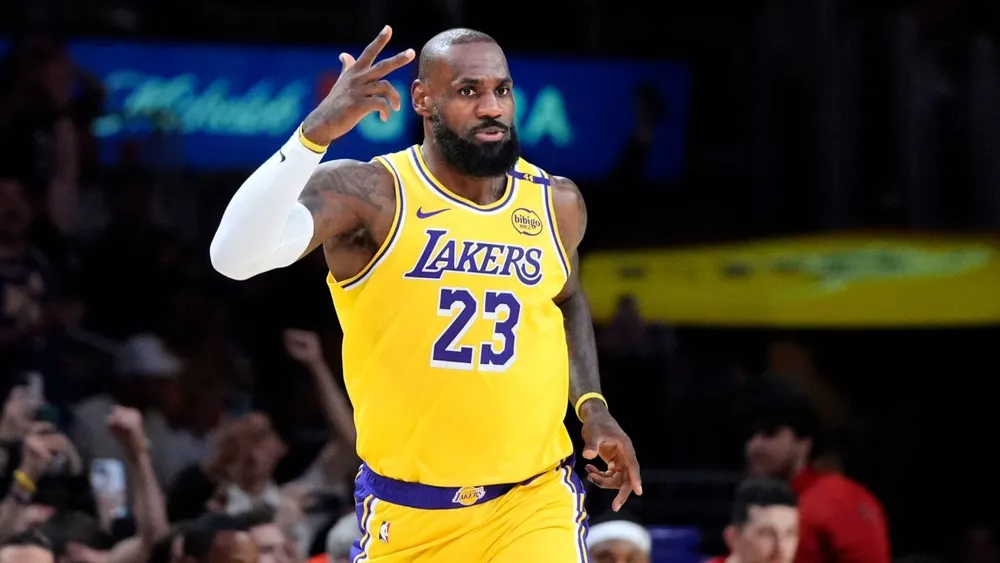
In the now-viral video, LeBron—donning his iconic number 23 jersey—is seen executing a gravity-defying dunk. The crowd around him blurs into the background. Even the opposing team fades from relevance. The focus is solely on him. The camera follows his motion with reverence, capturing the full force of his athleticism.
It was a visual metaphor for his life.
LeBron has long stood as a towering figure in basketball, not just literally but symbolically. Every move he makes is under scrutiny, every word he says dissected. This dunk, therefore, became more than just a highlight play. It was a statement—one that hinted at exhaustion, introspection, and maybe, a silent cry for understanding.

“Being a Winner is a Curse”: The Meaning Behind the Words
Success often comes with applause, trophies, and wealth. But LeBron’s cryptic caption opened a new conversation: What happens when success becomes a prison?
At first glance, the statement seems counterintuitive. After all, isn’t winning the goal of every athlete? For LeBron, however, the pursuit of greatness has evolved into a double-edged sword. The higher he climbs, the less margin for error he has. The more records he breaks, the more people wait for him to stumble.
The curse, then, is not in the winning itself—it’s in the expectation that he must always win, always lead, always shine.
Memes and Mockery: The Price of Being in the Spotlight
In the comments section of his post, a variety of reactions poured in. Some fans offered support, others resorted to humor. One user, charlie252009, posted a meme with LeBron’s face photoshopped onto a hamburger, possibly poking fun at his larger-than-life presence. Another user, burger_king_hat_guy_, joined in with a meme that exaggerated LeBron’s features into cartoonish absurdity.
To many, these are just harmless jokes. But for LeBron, who has spent two decades giving his all to the sport and to his fans, even playful mockery can sting.
It’s part of a broader culture where athletes are no longer just athletes—they are memes, marketing machines, and fodder for public discourse. And while LeBron handles it with grace, the toll is undeniable.
The Social Media Paradox: Connection or Cage?
Social media has been both a blessing and a curse for celebrities. It allows them to connect with fans, share their thoughts, and control their narratives. But it also means they are constantly on display.
For LeBron, who boasts millions of followers, every post becomes a headline. A simple quote like “Being a winner is a curse” can spark debates on ESPN, fuel blog posts, and become viral overnight.
This kind of visibility is suffocating. It leaves no room for vulnerability, no space for reflection, and certainly no privacy.
Expectations vs. Humanity
Fans often forget that behind the stats and sponsorships, LeBron James is still a human being. He has a family. He has fears. He feels pressure.
In the pursuit of excellence, he is expected to carry entire teams, inspire millions, speak on social issues, and maintain peak physical performance—all without faltering.
This expectation robs him of his right to be flawed, to be tired, or simply to be silent.
Legacy as a Weight
LeBron is often compared to Michael Jordan, Kobe Bryant, and other NBA legends. These comparisons, while flattering, can also be emotionally draining. LeBron is no longer just playing basketball; he is curating a legacy.

Every game, every playoff run, every off-season decision is interpreted through the lens of history. That level of scrutiny would unnerve anyone. For LeBron, it’s become his daily reality.
Public Ownership of Private Lives
Another dimension of LeBron’s fame is the loss of personal boundaries. Fans feel entitled to his time, his opinions, even his family.
His son, Bronny James, is already under similar pressure simply because of his lineage. This generational pressure is another layer of burden that LeBron must navigate—protecting his family from the fame that both blesses and haunts them.
Mental Health and the Invisible Battle
LeBron has spoken publicly about mental health, advocating for athletes to take their emotional wellbeing seriously. But the stigma still exists. The idea that an alpha male, a superstar, a global icon could struggle with anxiety or depression is often met with disbelief.
And yet, it is precisely those at the top who suffer the most.
Athletes are trained to be strong, not vulnerable. But true strength lies in acknowledging the strain—something LeBron has subtly done through his recent social media presence.
The Double Standard of Perfection
LeBron is often held to standards that would break a lesser man. If he wins, it’s expected. If he loses, it’s his fault. If he speaks, he’s too political. If he’s silent, he’s accused of apathy.
This double standard has become the cage he lives in. No matter what he does, there will always be critics. The bar of perfection is not just high for LeBron—it’s ever-shifting and unreachable.
When Jokes Hurt: The Impact of Mockery
Returning to the memes, it’s important to ask: When does humor cross the line?
While some may argue that jokes are a part of celebrity culture, it’s worth considering the accumulated effect of constant ridicule. Even the strongest minds can buckle under unrelenting criticism. For LeBron, who is often portrayed as invincible, acknowledging pain can feel like betrayal.
But as the memes multiply, so too does the weight he carries.
LeBron’s Response: Grace Under Pressure
Despite all of this, LeBron continues to handle the pressure with remarkable poise. He continues to mentor young players, support community initiatives, and raise awareness for important causes.
He doesn’t lash out at critics. Instead, he lets his performance speak for him. His legacy, then, is not just about points scored or rings earned, but about character, resilience, and integrity.
What the Future Holds
As LeBron enters the twilight of his career, questions abound. Will he retire soon? Will he join Bronny in the NBA? Will he transition into a new role as a mentor, entrepreneur, or activist?

Whatever the future holds, one thing is certain: the weight he carries will remain. But perhaps, with more conversations like the one his post inspired, that burden can be shared, understood, and maybe, lightened.
Conclusion: The Human Behind the Hero
LeBron James is not just a basketball player. He is a symbol, a brand, a movement. But more importantly, he is a man. A man who has given the world greatness and, in doing so, has also absorbed its darkness.
“Being a winner is a curse,” he said. But maybe, with time and empathy, it doesn’t have to be.
Let us remember that even the mightiest of giants have hearts that break, minds that tire, and souls that long for peace.
Related News