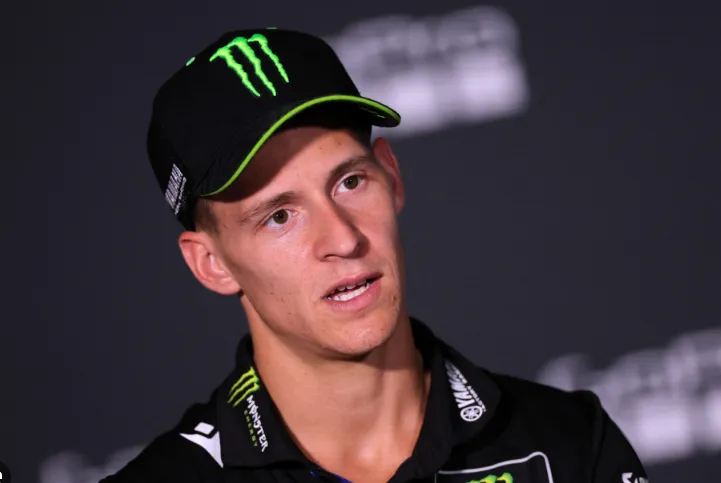
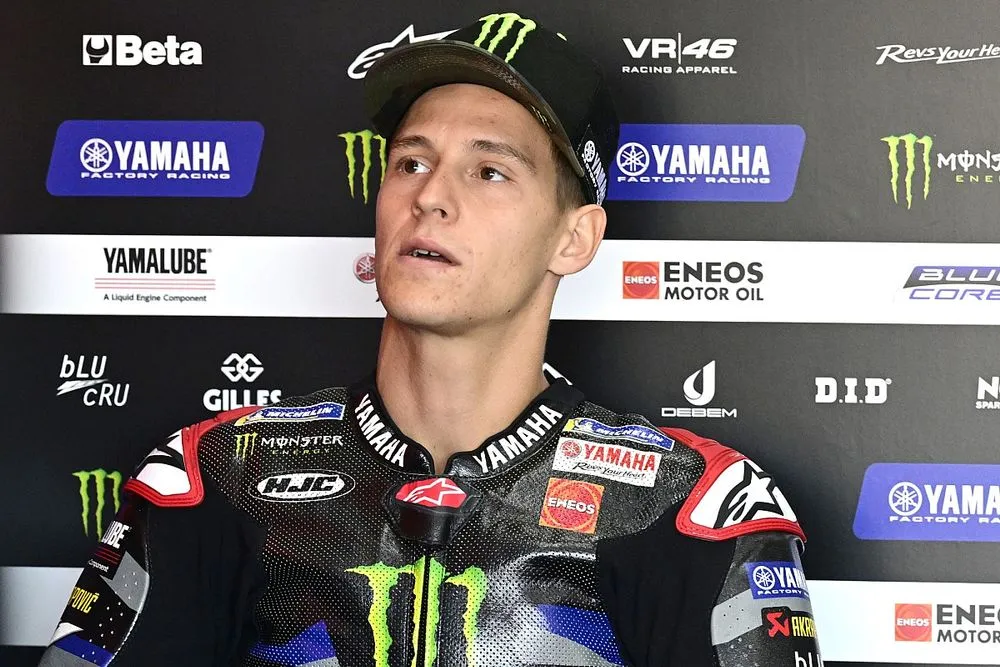
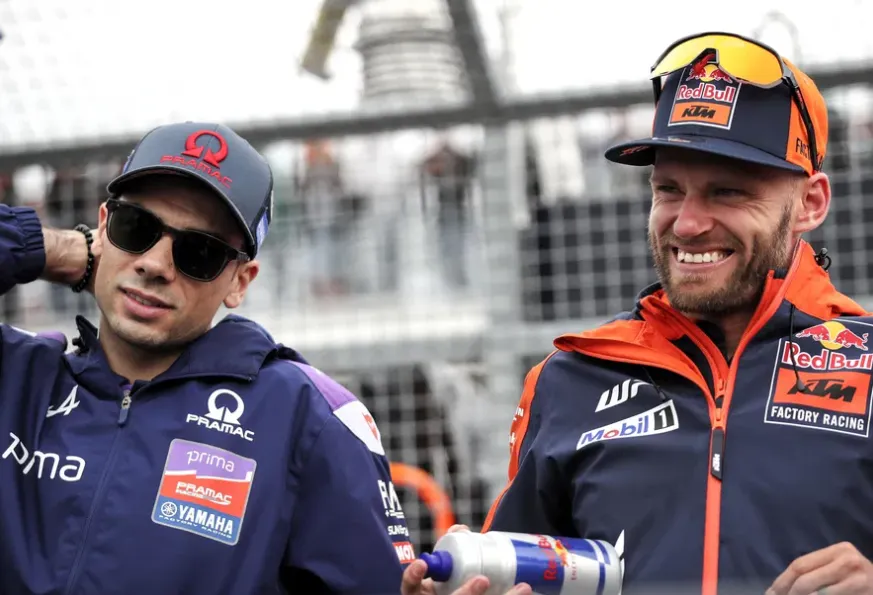
Technical disagreement? Fabio Quartararo opposes the V4 project at Yamaha.
🎗76
As MotoGP returns to Brno this weekend, all eyes are not just on race results but on the deepening technological divide within Yamaha. While fans will eagerly await whether the Iwata factory can bounce back on track, the real battle may be happening behind closed doors — over the soul of the machine itself.
At the heart of this internal conflict lies the development of Yamaha’s long-awaited V4 engine, a radical departure from its traditional inline-four (I4) configuration used in the M1. For the first time, Fabio Quartararo has openly expressed concern about the direction Yamaha is taking — and test rider Augusto Fernandez confirms the V4 project, though promising, is far from race-ready.
Fabio Quartararo: Not 100% Convinced by the V4 Vision
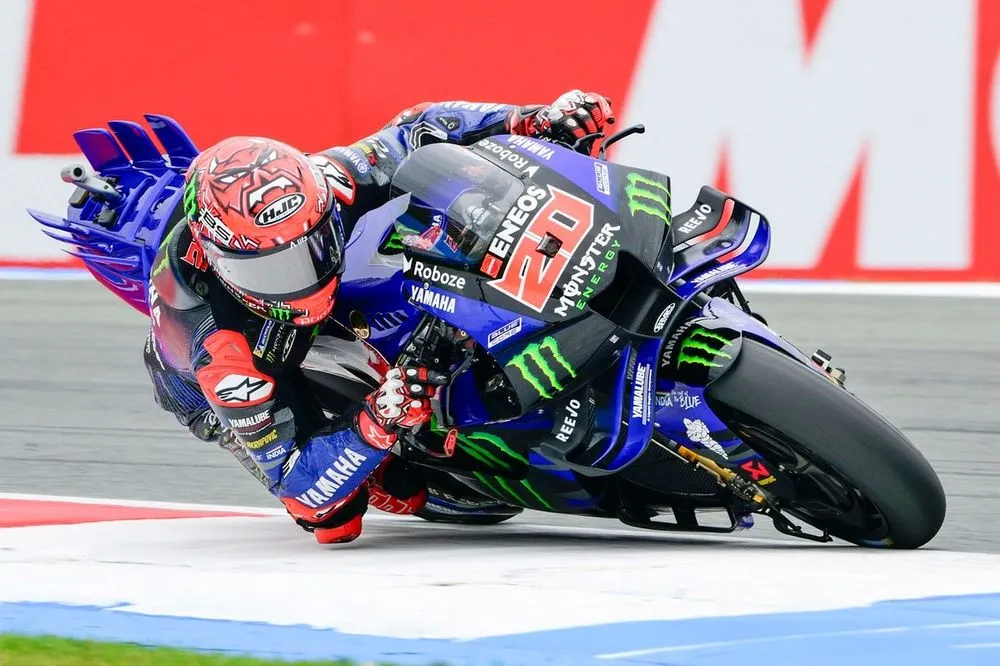
Since debuting in MotoGP with Yamaha in 2019, Fabio Quartararo has been synonymous with the M1. The 2021 World Champion has built his success around the machine’s precise cornering and manageable power delivery. However, in recent years, Yamaha’s I4 concept has fallen behind its V4-powered rivals — Ducati, KTM, Honda, and Aprilia — all of whom dominate in top-speed and acceleration.
Despite the trend, Quartararo is urging Yamaha to rethink their full-speed dive into V4 territory.
“All the energy put into the V4… I don’t agree 100%,” Quartararo told GPone, offering a rare public disagreement with Yamaha’s technical strategy.
The Frenchman still believes the current M1 has potential and should not be discarded so quickly. His concerns are twofold: a personal connection to a bike he knows intimately, and a lack of performance guarantees from the new V4 project. In his view, the priority should remain on extracting everything possible from the current package, especially with the 2025 season fast approaching.
Augusto Fernandez: “The V4 Is Promising, But It’s Not Ready”
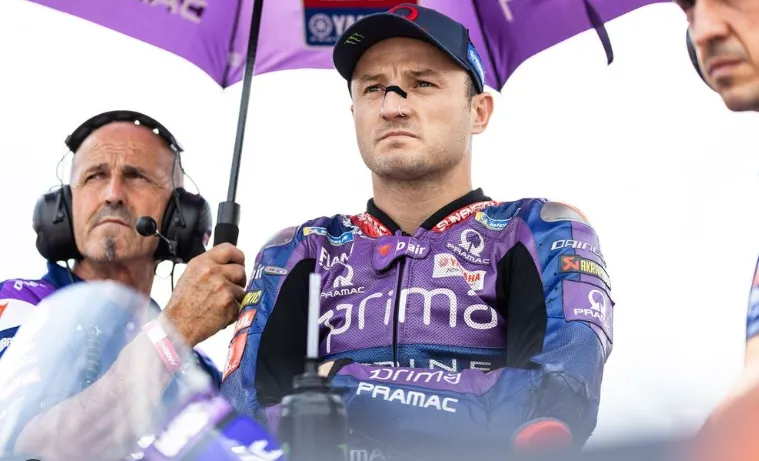
Adding to the discussion is Augusto Fernandez, Yamaha’s test rider and wildcard entrant this weekend at Brno. Unlike Quartararo, Fernandez is tasked directly with shaping the V4 engine’s future. Having tested it during recent private sessions, he’s both encouraged and cautious.
“The engine is promising, but there is still a lot of work to be done. It is not yet ready for racing,” Fernandez admitted.
He described a conservative Japanese development philosophy, where Yamaha engineers are deliberately holding back on unleashing full engine power. Their approach — data-driven and methodical — ensures safety and reliability but could delay the project significantly if the goal is a 2026 debut.
The chassis is still incomplete, the power output is capped, and the bike lacks the mileage necessary to draw definitive conclusions. Fernandez respects the process but acknowledges that the timeline is tight, especially when rivals like Ducati and KTM are continually refining well-established V4 platforms.
The Present vs. The Future: A Strategic Dilemma
The contrasting viewpoints of Quartararo and Fernandez paint a picture of a Yamaha team caught between two diverging philosophies:
Quartararo, still Yamaha’s top-performing factory rider, wants immediate improvements to the existing M1. With no wins since 2022 and podiums becoming rare, his patience is understandably wearing thin. He sees potential in incremental upgrades and better integration of aero and electronics, rather than an overhaul.
Fernandez, however, represents a forward-thinking approach. As a test rider, he knows the limits of the current I4 and sees the V4 as the only way to catch up to the modern grid. But his honesty about the V4’s current limitations also shows Yamaha may be betting on a concept that won’t deliver short-term success.
In many ways, this debate reflects a broader crisis inside Yamaha’s MotoGP program. Is it better to focus on present competitiveness or gamble on a revolutionary — but risky — shift in architecture?
Brno: A Critical Test Ground
This weekend’s Czech Grand Prix at Brno is more than just a race — it’s a strategic test for Yamaha’s entire MotoGP program. Augusto Fernandez will race without pressure, focusing solely on gathering data to help address the M1’s handling issues. The team will evaluate braking stability, acceleration grip, and corner exit — key weaknesses that have plagued Yamaha since 2023.
For Quartararo, who narrowly missed the podium at Sachsenring with a respectable fourth place, the target remains clear: finish as high as possible and prove the current M1 still has life left in it. If he succeeds, it may reinforce his argument to keep faith in Yamaha’s current DNA — at least until the V4 is fully matured.
What’s at Stake for Yamaha?
Yamaha’s path to MotoGP redemption hinges on more than horsepower and aerodynamics. It requires unity between its factory riders, engineers, and leadership. The public disagreement — albeit respectfully expressed — between Quartararo and Fernandez underscores the stakes.
If the V4 fails to materialize in time for 2026, and if 2025 becomes a season of transition without results, Yamaha risks losing Quartararo altogether, either mentally or literally. Rumors already circulate that other factories are watching his situation closely, especially those with winning machines and empty seats.
Conversely, if Yamaha nails the V4 concept — as KTM did after years of development — they could revolutionize their competitiveness overnight. But the current signs indicate a long road still ahead, and a painful one if not managed correctly.
Conclusion: The Future Rests on a Knife’s Edge
The MotoGP paddock in Brno this weekend is not just welcoming back the roar of engines — it’s witnessing a pivotal turning point in Yamaha’s modern era. With Fabio Quartararo pulling in one direction and Augusto Fernandez pushing in another, the internal tension reflects a manufacturer at a crossroads.
Will Yamaha salvage the M1 and return to form in 2025? Or will it leap into the future with a yet-unproven V4 engine, risking further decline in the short term?
For now, both bikes and philosophies will coexist — but how long that uneasy balance lasts may depend on what happens at Brno and beyond. One thing is certain: the next chapter of Yamaha’s MotoGP legacy is being written right now — and everyone is watching.