




Lil Wayne Dominates BAPE Fashion in 2005 — But Fans Are Shocked When He Ditches ‘Hustler Muzik’ for a Baby Milo Monogram Tee!
2005 was not just another year in hip-hop—it was a year that redefined streetwear culture through the influence of Lil Wayne. While music fans remember Weezy for his chart-topping tracks and lyrical dominance and fewer realize that he was simultaneously establishing himself as a trendsetter in high-end streetwear. From BAPE to Billionaire Boys Club, Lil Wayne’s 2005 fashion choices left an indelible mark on hip-hop style, merging luxury streetwear with authentic urban flair.
The Lil Daddy Era: Baby Milo Monogram Takes Center Stage
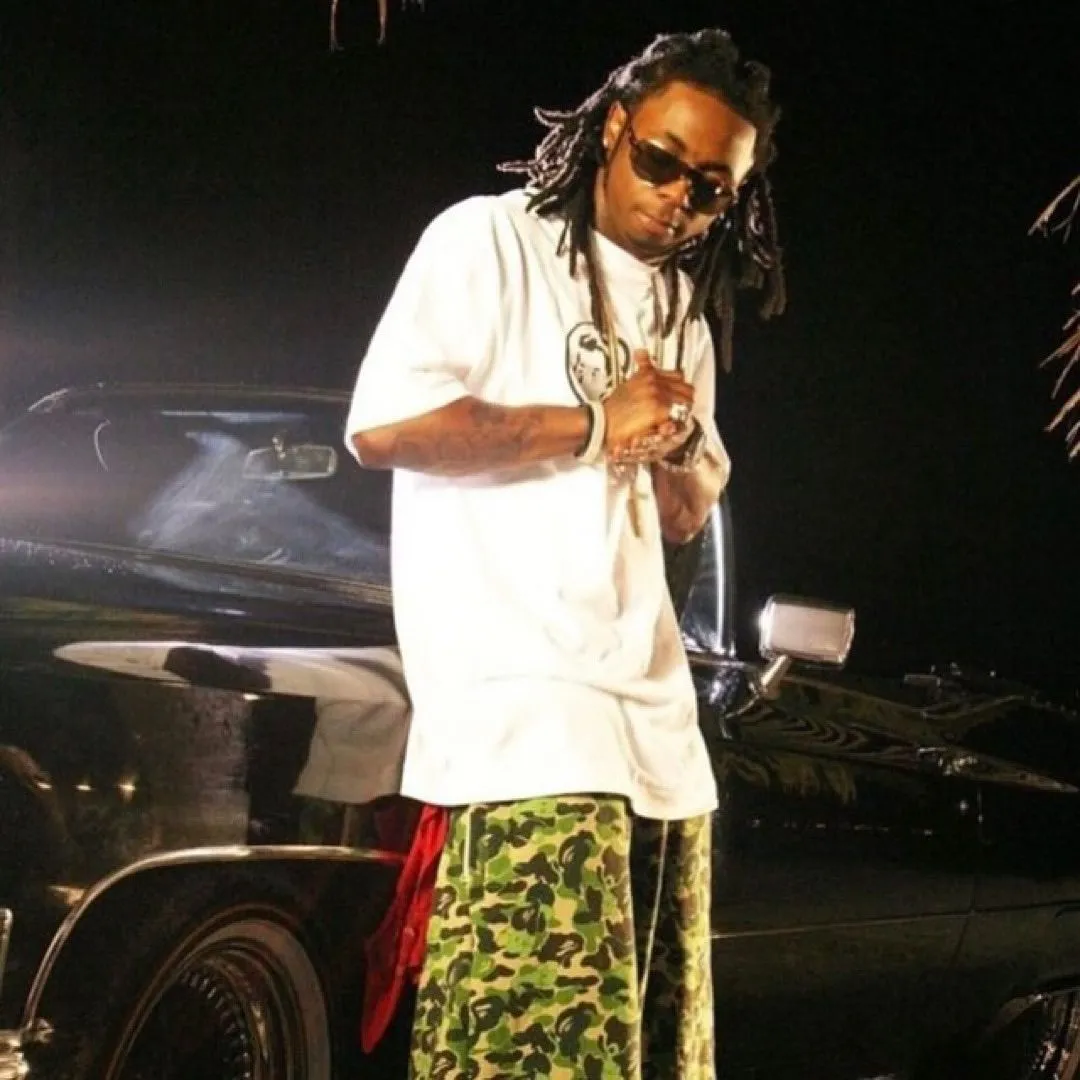
In 2005, ex-Bad Boy artist CHOPPER, also known as Young City, released the single “Lil Daddy”, featuring a cameo from Lil Wayne. Shot in the streets of New Orleans, the music video quickly drew attention—not solely for Wayne’s rap performance, but for his distinct fashion sense. Unlike the typical BAPE “Hustler Muzik” aesthetic, Weezy opted for a Baby Milo Monogram T-shirt, making a bold statement in the early days of premium Japanese streetwear.
For fans deeply invested in streetwear culture, this outfit wasn’t just a shirt—it was a signal. Lil Wayne had officially cemented himself as an influencer in hip-hop fashion, showing that his style choices were as deliberate and impactful as his music.
Wayne’s Billionaire Boys Club Obsession
Throughout 2005, Lil Wayne didn’t just wear BAPE—he also fully embraced Billionaire Boys Club (BBC), creating a signature look that fused multiple streetwear powerhouses. During a photoshoot for Japan’s Ollie Magazine, Weezy discussed his passion for fashion and his admiration for NIGO, the founder of BAPE:
“I just became president of Cash Money Records. I wore BAPE in videos and magazines. NIGO is seriously cool—he told me if I ever needed anything, just ask.” – Lil Wayne, 2005
This statement reflects more than a casual interest in clothing—it highlights how Lil Wayne valued the streetwear community, integrating it seamlessly into his music videos, public appearances, and personal brand. 2005 was a year where Lil Wayne’s wardrobe was just as important as his lyrical output, proving that style and music could coexist to create cultural influence.
The Lil Daddy Remix: Fashion as a Statement
The remix of “Lil Daddy” was filmed on the same day as the original video, but fans and quickly noticed Weezy in a Billionaire Boys Club Season 0 T-shirt, reminiscent of what Pharrell wore in his iconic track “Frontin’.”
This subtle fashion choice was more than coincidence. It revealed Lil Wayne’s early alignment with global streetwear icons and proved that he wasn’t just following trends—he was actively shaping them. In 2005, Lil Wayne demonstrated an understanding of fashion influence, showcasing pieces that would later become collector’s items for enthusiasts of hip-hop streetwear culture.
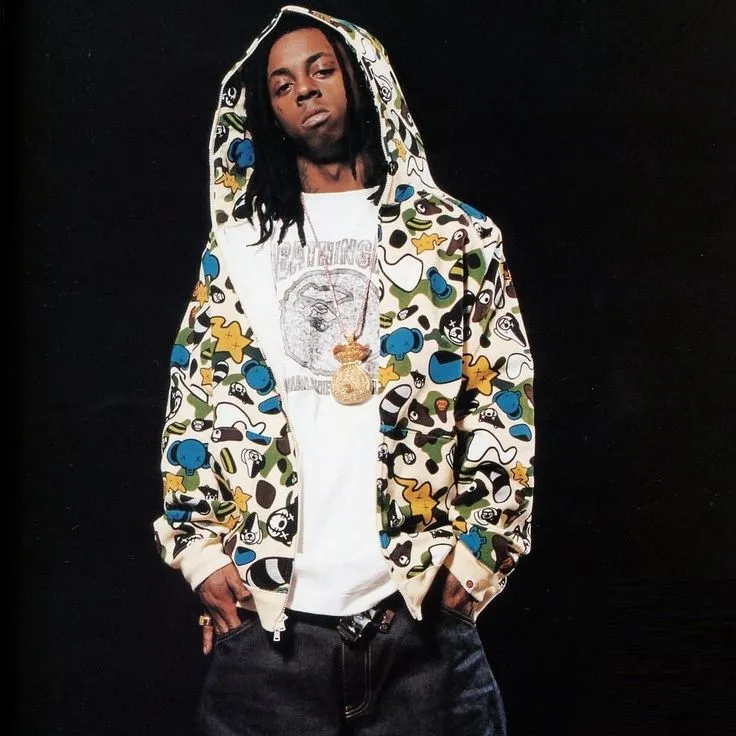
The Fireman: BAPE, Baby Milo, and KAWS Bapestas
Another defining moment in 2005 came with the music video for “The Fireman.” Here, Lil Wayne’s wardrobe choices went beyond casual style—they became visual extensions of his music persona. Fans could spot a variety of highly coveted pieces, including:
-
Billionaire Boys Club apparel
-
Baby Milo hoodies
-
KAWS Bapestas sneakers
Every outfit in the video was carefully curated, blending the rebellious energy of hip-hop with high-fashion streetwear influence. In doing so, Lil Wayne not only elevated his own image but also set a fashion benchmark for fellow artists, inspiring the next generation to treat style as integral to music branding.
Why 2005 Was the Pinnacle of Weezy’s Fashion Influence
When looking back at 2005, it becomes clear why many consider it the peak of Lil Wayne’s style dominance. His choices weren’t just about clothing—they were intentional cultural statements that reflected:
-
Authenticity in street culture
-
Personal connections with global fashion icons
-
Mastery of branding and self-expression long before social media made it mainstream
Fans and collectors often debate whether 2005 was Weezy’s most stylish year ever. Between BAPE Baby Milo Monograms, Billionaire Boys Club exclusives, and KAWS collaborations, the evidence overwhelmingly points to yes. Lil Wayne didn’t just wear clothes—he curated an image, one that influenced hip-hop fashion globally.
Lil Wayne and the Rise of Streetwear in Hip-Hop
Before Lil Wayne, many hip-hop artists flirted with fashion, but few grasped the significance of brands like BAPE and BBC. 2005 Lil Wayne understood that his wardrobe could convey a persona: authentic, aspirational, and collectible.
His strategic approach became a blueprint for future artists, showing how to:
-
Merge musical influence with streetwear credibility
-
Elevate personal branding through curated outfits
-
Establish a long-lasting fashion legacy
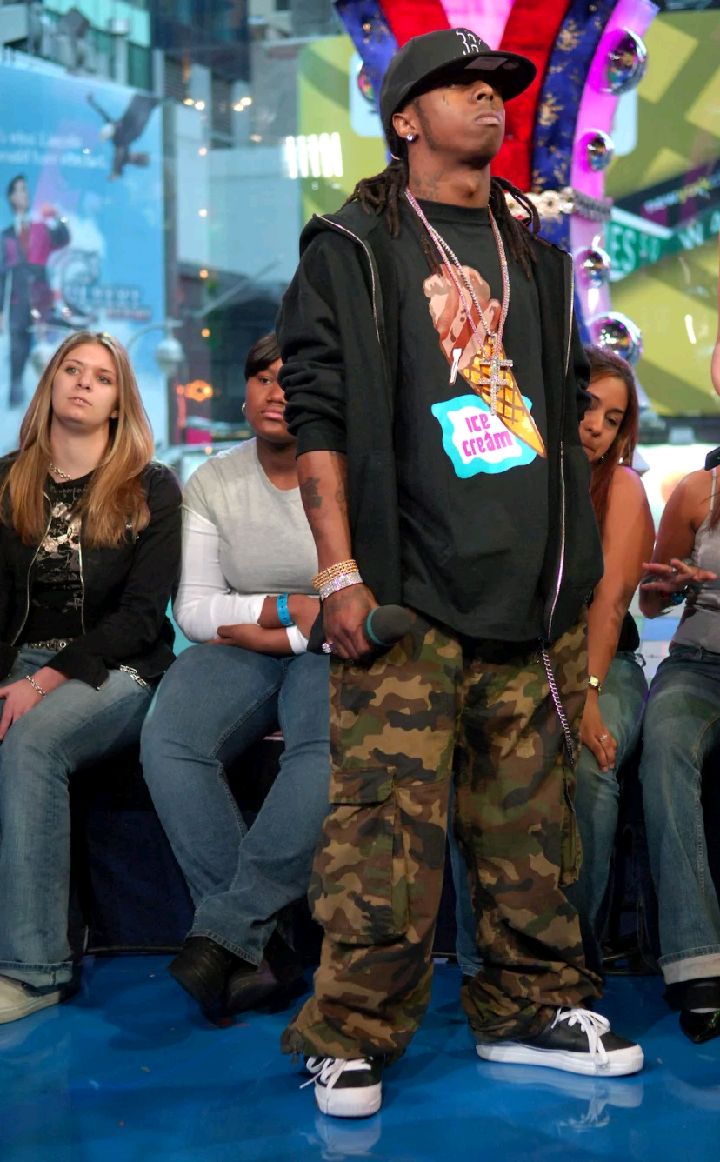
Lil Wayne’s 2005 wardrobe marked a turning point where hip-hop and fashion could no longer exist in isolation. Instead, they merged to form a cultural dialogue, with Weezy leading the conversation.
The Enduring Legacy of Lil Wayne’s 2005 Wardrobe
Even today, 2005 remains a reference point for streetwear enthusiasts and hip-hop historians. Each BAPE T-shirt, BBC hoodie, and KAWS Bapesta tells the story of an artist asserting dominance not only in music but also in fashion culture. Key moments include:
-
The “Lil Daddy” music video outfit, regarded as a pivotal crossover moment
-
The BBC Season 0 T-shirt in the remix, symbolizing fashion foresight
-
The Fireman visuals, showcasing a holistic mastery of hip-hop streetwear styling
Collectors, fans, and fashion historians continue to cite these examples as essential case studies for understanding the intersection of music and style in the mid-2000s.
Conclusion: Lil Wayne – The Original BAPE STA
2005 was more than a musical milestone for Lil Wayne; it was the year he became the BAPE STA of hip-hop fashion. From Baby Milo Monogram shirts to Billionaire Boys Club exclusives, every outfit contributed to a fashion narrative that continues to influence artists, fans, and streetwear enthusiasts alike.
By seamlessly blending streetwear and hip-hop culture, Lil Wayne proved that style could rival music in shaping cultural influence. His 2005 wardrobe remains a blueprint for artists seeking to define themselves through fashion, cementing Weezy’s position not just as a musical icon but also as a fashion trailblazer.
For anyone looking to study how hip-hop can redefine global streetwear culture, Lil Wayne’s 2005 era remains the ultimate reference point.
Related News