


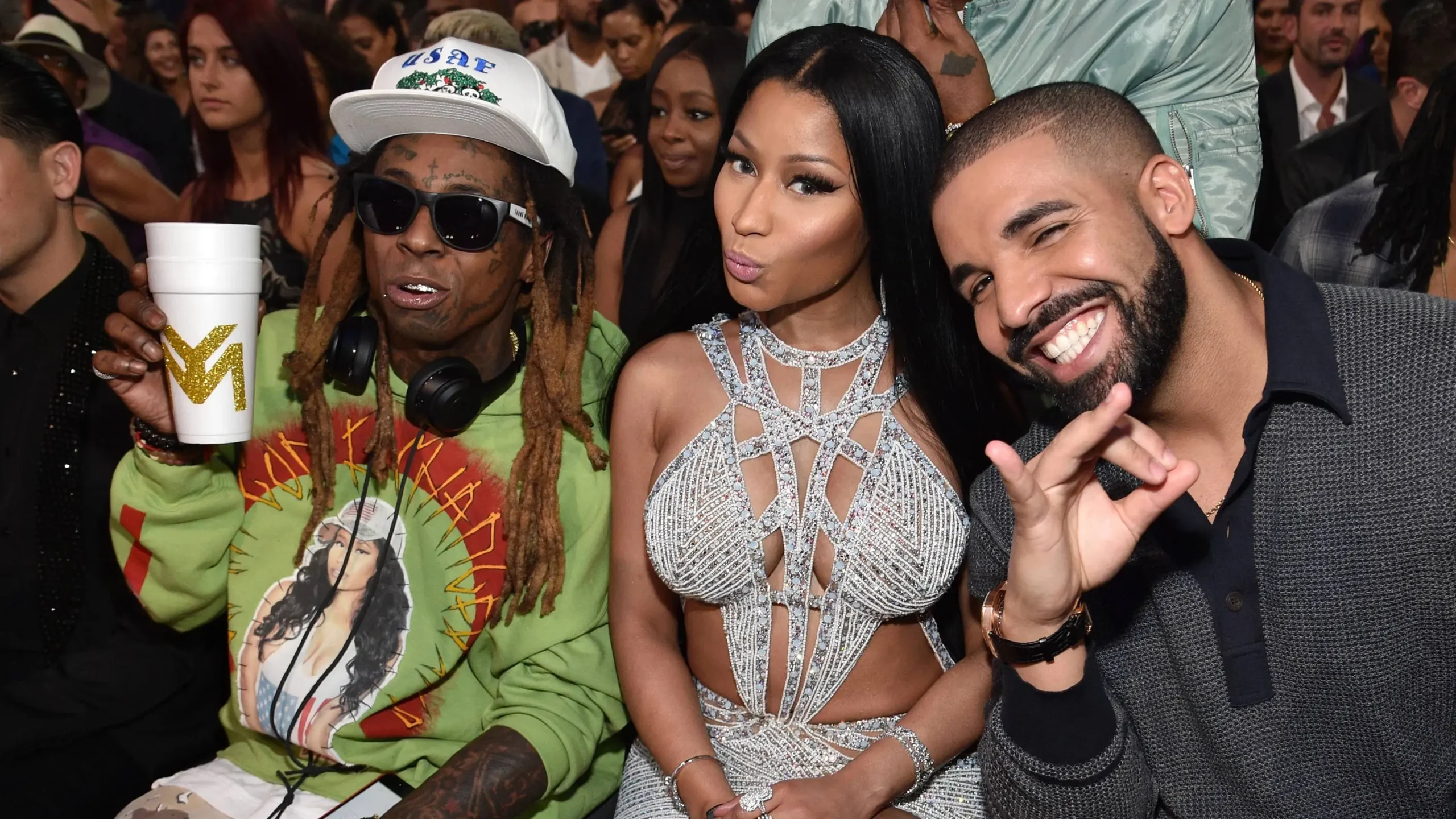
Did Drake and Nicki Become Legends Through Talent — Or Thanks to Someone Who Saw Their Greatness Before Anyone Else Did?
The Question Nobody Dared to Ask — Until Now
Drake and Nicki Minaj are two of the most iconic names in music today. With platinum albums, sold-out arenas, viral moments, and a cultural influence that stretches far beyond the studio, the pair seem destined for greatness. But what if their rise wasn’t solely due to raw talent? What if the true architect of their careers was someone else—someone who saw what no one else did before the world caught on? Behind the glam, the streams, and the headlines, there lies a name that doesn’t get mentioned nearly enough: Lil Wayne.
So here’s the real question: Did Drake and Nicki Minaj become legends because of their own genius—or because one man took a chance on them when no one else would?
Lil Wayne – Not Just a Rapper, But a Visionary Who Built an Empire
To understand this dynamic, you have to go back to the mid-2000s. At that time, Lil Wayne was at the peak of his dominance—dropping mixtapes like Dedication, delivering chart-topping albums like Tha Carter III, and redefining what it meant to be a rapper in the digital era. But while the world was focused on his punchlines and platinum plaques, Wayne was laying the foundation for something far bigger: Young Money Entertainment.
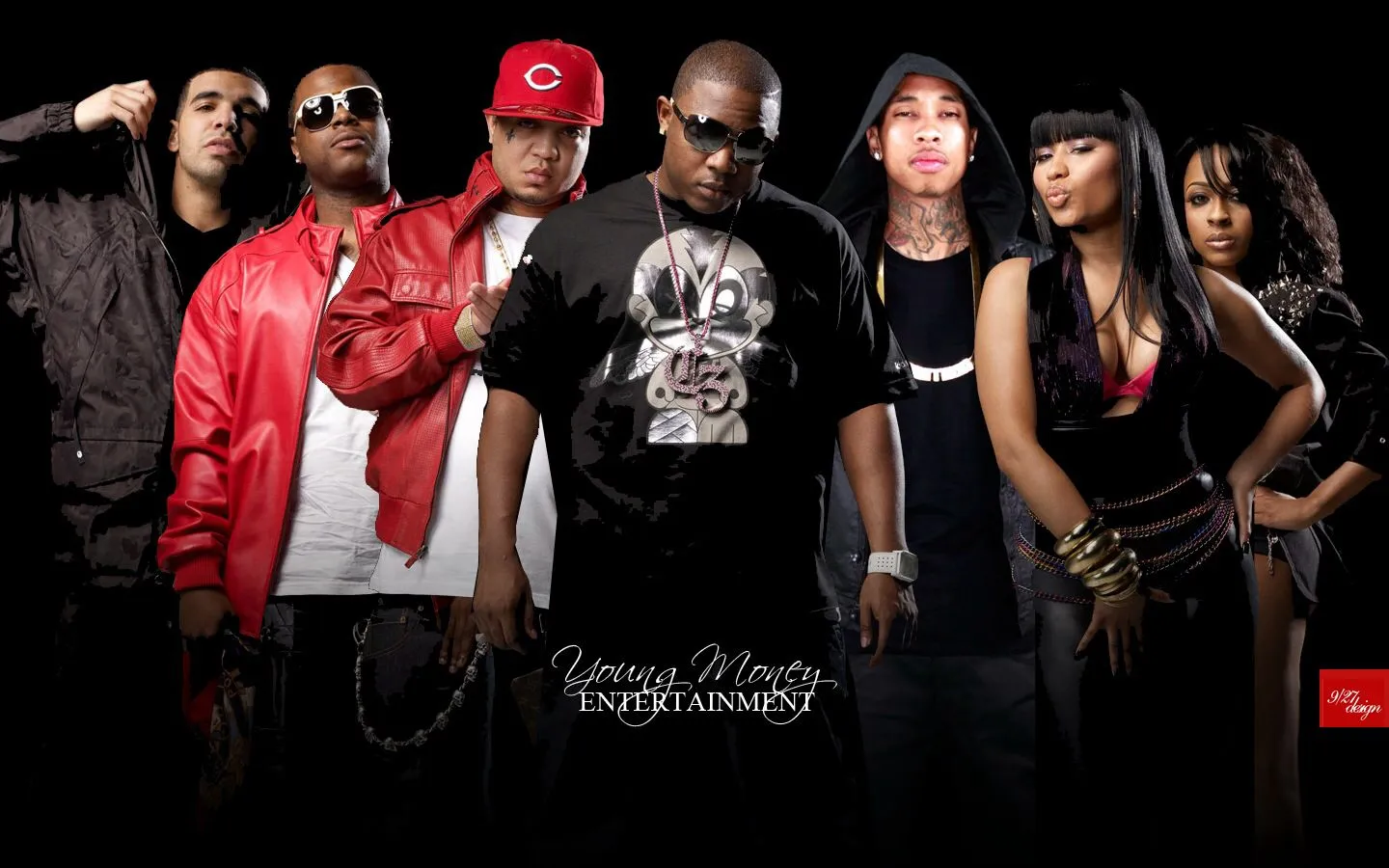
Young Money wasn’t just a vanity label. It was a calculated, forward-thinking talent pipeline, hand-curated by Wayne himself. He wasn’t interested in short-term clout. He was building a legacy—and Drake and Nicki were his cornerstones.
Drake – From Degrassi to Global Dominance (With a Push from Wayne)
When Lil Wayne first heard Drake’s early tracks, he didn’t hear just another MySpace rapper. He heard potential. At the time, the idea of a half-Jewish Canadian actor becoming a dominant force in hip-hop sounded laughable. The industry had no precedent. But Wayne didn’t care about precedent. He trusted instinct.
Drake later admitted he flew to meet Wayne in Houston, handed over his music, and the rest is history. But let’s be clear: without Wayne’s co-sign, Drake’s journey could’ve taken a very different turn. Not only did Wayne bring Drake into the fold, he also gave him space to grow, featured him on hits, and introduced him to a fanbase that would become loyal for life.
Wayne wasn’t just giving Drake exposure—he was giving him validation. And in hip-hop, that matters.
Nicki Minaj – The Blueprint Nobody Saw Coming
Nicki Minaj’s story is even more striking. A female rapper in a male-dominated industry, with a bold personality, theatrical flows, and looks that dared to challenge the norm—she was a walking contradiction in a genre that hadn’t made space for someone like her.
But Wayne saw a star. Not a gimmick. Not a marketing experiment. A star. When Nicki signed with Young Money, she wasn’t a polished act. But under Wayne’s guidance, she sharpened her bars, refined her presence, and exploded into a global icon.
Let’s not forget: before “Super Bass,” before “Anaconda,” and before the Barbz took over the internet, Nicki Minaj was just another mixtape rapper trying to break through. Wayne gave her more than just visibility—he gave her a platform to be exactly who she was, unapologetically.
Influence Beyond Young Money — Wayne’s Impact on Today’s Sound
Drake and Nicki are just the most visible examples. But Lil Wayne’s fingerprints are all over modern rap. His fearless use of autotune, genre-blending approach, lyrical absurdism, and even fashion choices have influenced artists from Lil Uzi Vert, Young Thug, Playboi Carti, to Post Malone. Some of today’s most genre-fluid artists trace their inspiration directly back to Wayne.
Lil Uzi once admitted he used to rap in his room pretending to be Wayne. Young Thug calls Wayne his “idol,” and you can hear it in his erratic delivery and high-pitched tones. Even Travis Scott’s psychedelic autotune-heavy aesthetic owes something to the groundwork Wayne laid in his post-Carter III experimental years.
Wayne didn’t just change the sound—he gave other artists permission to change with it.
The Mentor vs. The Machine – What Makes Wayne Different
In today’s industry, mentorship is often a buzzword. Labels sign young talent, throw money at them, and expect overnight results. But Wayne’s mentorship came with time, freedom, and creative shelter. He didn’t just slap his name on an artist and move on.
He put Nicki and Drake on his own songs. He let them shine. He celebrated their wins. And then he got out of the way.
That’s the secret. Wayne didn’t control his protégés—he amplified them. He didn’t see Drake or Nicki as threats to his spotlight. He saw them as part of his legacy. In doing so, he created something most rappers never do: a lineage.
Where’s the Credit? Why This Legacy Is Often Ignored
It’s easy to forget the hand that raised the kings and queens. Today, Drake is a brand. Nicki is an empire. But go back and watch their early interviews, early performances, early mixtapes—Wayne is everywhere.
So why doesn’t he get the credit? One theory: Wayne never asked for it. He wasn’t interested in playing label politics or corporate games. He let his work, and his artists, speak for themselves. In a world obsessed with credit, Wayne simply did the work.
And maybe that’s the biggest reason he deserves the recognition now.
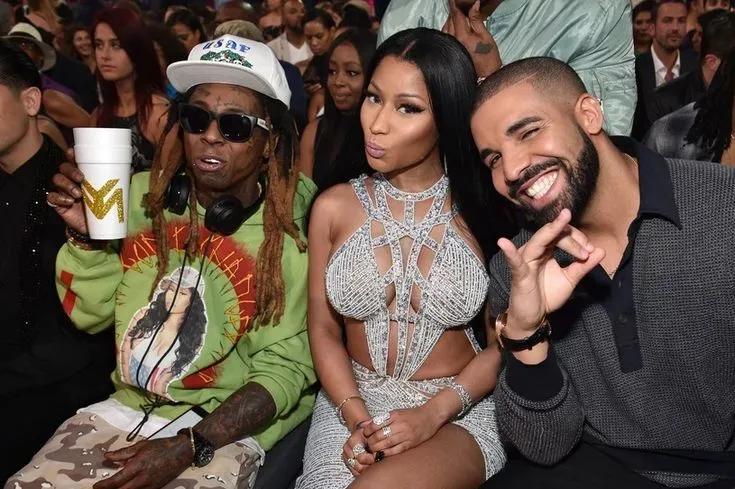
The Legacy Continues – Wayne’s Relationship With the Next Generation
Even today, Wayne continues to co-sign and collaborate with younger artists—from Lil Baby to XXXTentacion before his death. He’s not territorial. He’s curious. Always listening. Always evolving.
Artists like NBA YoungBoy, Polo G, and even Roddy Ricch cite Wayne as foundational to their understanding of music. Not because he lectures or teaches—but because he exists. His discography is a masterclass in reinvention.
So, Did They Make It on Their Own? Or Did Wayne Make Them?
The truth is layered. Drake and Nicki are brilliant, undeniably talented, and hard-working. But in a ruthless industry, brilliance alone isn’t enough. It takes a gatekeeper willing to open the door—and keep it open. That gatekeeper was Lil Wayne.
He didn’t just introduce two future legends to the world. He believed in them when it was risky to do so. That belief, that platform, that mentorship—it changed the course of modern hip-hop.
So next time you stream a Drake hit or post a Nicki lyric, ask yourself: Would this moment exist without Wayne?
The answer might surprise you. Or maybe, deep down, you already know.
Related News