








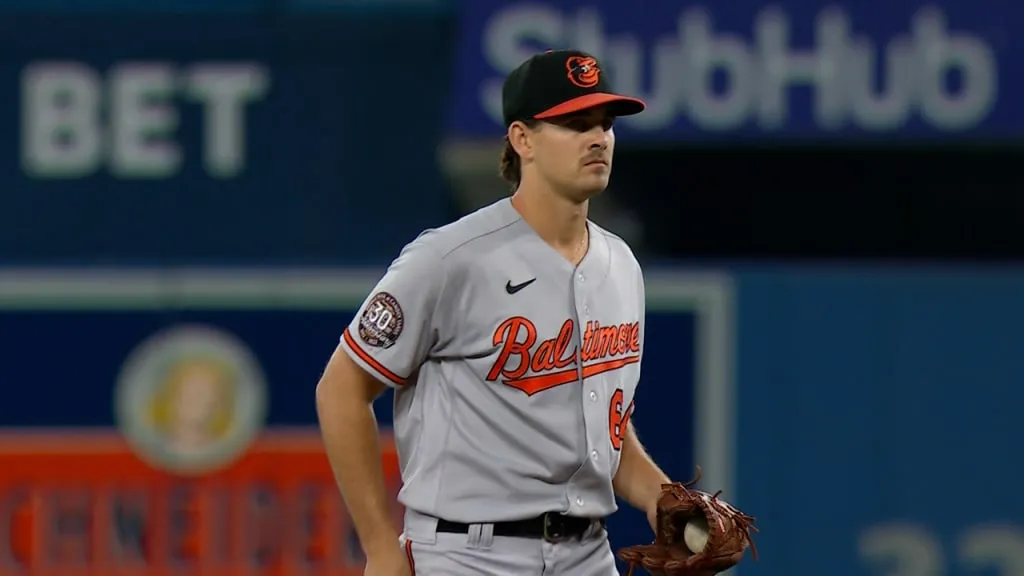
Dean Kremer’s Invisible Hometown Burden: What Crisis He Faces Beyond Baseball?
As the Baltimore Orioles pitcher Dean Kremer takes the mound, his battle extends far beyond the boundaries of the baseball diamond. Born to Israeli parents and deeply connected to the region, Kremer finds himself carrying an invisible weight as the war in Israel intensifies. While fans see him as a professional athlete chasing playoff glory, the truth is far more complicated: every pitch he throws is shadowed by the anxiety of loved ones back home caught in conflict. This dual struggle — the pursuit of victory in America and the haunting turmoil in Israel — has placed Kremer at the intersection of sports and humanity, where the game becomes secondary to an inner crisis that few can fully understand.
Introduction: When Baseball and War Collide
Baseball has always been described as a game of rhythm, focus, and control. For pitchers especially, every inning is a mental chess match as much as it is a physical test. Yet what happens when the biggest battle isn’t on the mound, but thousands of miles away, unfolding in a homeland at war?
Dean Kremer, the Baltimore Orioles’ right-handed pitcher and the first Israeli-American to play in Major League Baseball (MLB), has been forced to live that very reality. In October, as the Orioles prepared for their high-stakes postseason run, Kremer was dealing with something far more overwhelming than any playoff pressure: the ongoing war in Israel, where much of his family still resides.
This story isn’t just about a pitcher’s bad outing or his playoff nerves. It’s about how an invisible weight — war, family, identity, and survival — infiltrated his game, shaping not only his performance but also how he is seen by fans and media worldwide.
The Mental State of a Pitcher Before the Big Game
For most athletes, playoffs represent the pinnacle of focus. But for Dean Kremer, his playoff start came with an unshakable psychological undertow. In interviews leading up to his American League Division Series (ALDS) start, he admitted openly that the war in Israel was in his thoughts.
“I still want to pitch,” Kremer told reporters. “But it’s going to be in the back of my head.”
That single sentence encapsulates his dilemma. On one side, his unwavering professionalism, his willingness to take the ball when the team needed him most. On the other, a heavy awareness that his family and friends were caught in the chaos of an armed conflict halfway across the world.
The human brain can’t simply compartmentalize war. Every notification, every update about rockets, attacks, and military escalation is a reminder that loved ones might be in danger. Kremer, despite being in the United States, was psychologically tied to Israel, experiencing the playoffs with one foot on the mound and the other anchored in the Middle East.
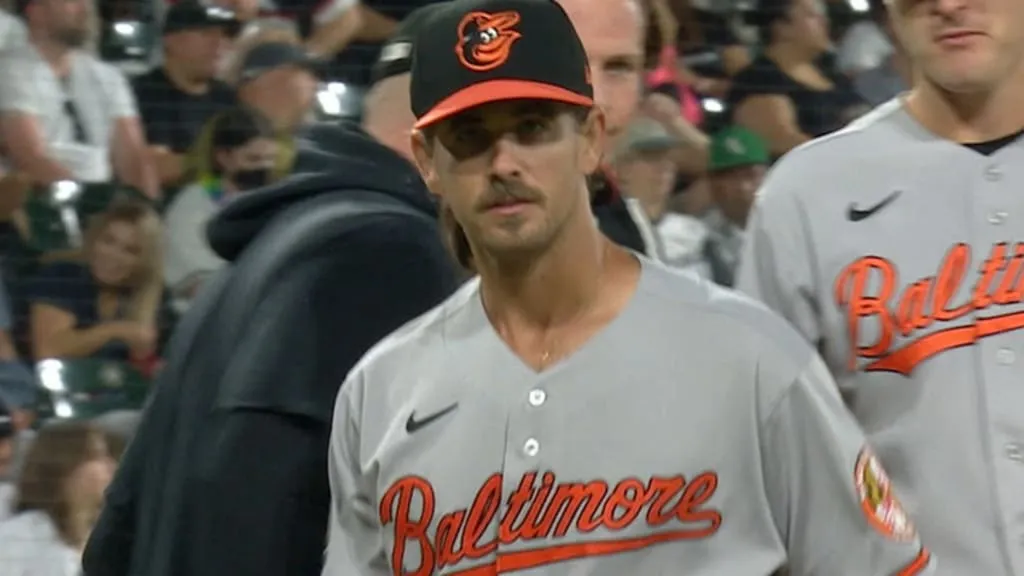
This dual consciousness made his start unique: he wasn’t just pitching against the Texas Rangers batters, he was pitching against distraction, fear, and anxiety that no athlete should have to carry.
Support From the Orioles: “You’re Not Alone”
Before his Game 3 ALDS start, Orioles manager Brandon Hyde and teammates made sure Kremer knew they had his back. Hyde reportedly messaged him, reminding him: “You’re not alone.” This was more than a manager’s pep talk; it was an acknowledgment of the invisible crisis Kremer was facing.
Inside the Orioles’ clubhouse, players recognized that their teammate’s mind wasn’t only on baseball. The solidarity was genuine, but solidarity doesn’t erase anxiety. It can cushion the blow, but it cannot erase the source of pain.
Fans on social media echoed that sentiment. One Reddit user summarized it poignantly:
“The war in Israel is haunting the Orioles’ starting pitcher, Dean Kremer… but he’s ready and still wants to pitch. Respect to him.”
Such messages highlight the respect Kremer earned for choosing to compete despite his internal turmoil. Yet, the brutal reality of professional sports is that sympathy doesn’t change results.
When War Affects Performance on the Mound
The results of Game 3 against the Rangers spoke volumes. Kremer lasted only 1.2 innings, surrendering six runs and effectively ending the Orioles’ momentum in the postseason. While critics could chalk it up to nerves or inexperience, it’s impossible to ignore the psychological burden he carried into that start.
Pitching in baseball is fragile; even the smallest lapse in concentration can be catastrophic. Imagine trying to execute pinpoint fastballs and sharp-breaking cutters while wondering if your cousins are hiding in bomb shelters. The emotional split between battlefield and ballfield is not something analytics can measure, but its impact is undeniable.
Observers saw it not as a failure of talent, but as the manifestation of a mind divided. Kremer’s mechanics weren’t broken; his rhythm wasn’t off by chance. It was the war playing defense against him, an invisible opponent he couldn’t shake off.
Professionalism and Quiet Resilience
Despite everything, Kremer never once asked out. He didn’t withdraw. He didn’t request a delay. He chose to take the mound, to honor his team and his commitment.
This decision reflects his resilience and his pride as a professional. In interviews after the game, he didn’t deflect blame or make excuses. He accepted responsibility while acknowledging the external pressures he couldn’t ignore. That duality — accountability mixed with vulnerability — is exactly what made his story so powerful.
For Orioles fans, and even casual MLB watchers, Kremer became a figure of quiet inspiration. He wasn’t just a pitcher who had a rough outing. He was a man who showed up, carrying more than most could bear, and still tried to deliver for his team.
The Long-Term Psychological Toll
Psychologists often emphasize that trauma and stress don’t disappear once the game is over. For Kremer, the war in Israel is not a news headline; it’s personal. It is family. It is identity.
Every outing he takes in MLB, this reality lingers. JPost and Forward noted that his emotional state has been tested repeatedly, with many games showing flashes of brilliance mixed with bouts of inconsistency. Sports Illustrated (SI) speculated that:
“The burden of representing not only a city and a franchise, but also a country at war, cannot be underestimated.”
This long-term toll isn’t only about baseball statistics. It’s about mental health. It’s about how one’s dual identity — Israeli and American — can become a source of pride but also a constant reminder of responsibility.
For Kremer, the war amplified that sense of responsibility. He is not just another player; he is the only Israeli-American in MLB. That makes every appearance symbolic, whether he wants it to be or not.
A Symbol of Israel on the Global Stage
Sports often transcend politics, but for Kremer, they collide. As the only Israeli-American in the league, he naturally carries symbolic weight. Every time he pitches, Israeli media covers it. Every time he struggles, the shadow of “what he represents” lingers.
This symbolic role can be both empowering and crushing. On one hand, he stands as proof that Israel can produce world-class athletes, capable of competing in the best league in the world. On the other hand, in times of crisis, he becomes an unwilling ambassador, expected to comment, to represent, to shoulder narratives far larger than himself.
That expectation weighs heavily, especially in playoff moments where athletes are already under the microscope.
The Hidden Battle Within: Baseball vs. Family
What makes Kremer’s story especially poignant is the hidden battle between two loyalties: his professional duty to the Orioles and his emotional duty to his family in Israel.
Fans often demand complete focus from athletes, forgetting that they are human beings. Yet for Kremer, every strike or ball thrown was haunted by an unspoken question: Are my loved ones safe right now?
That battle isn’t visible in box scores, but it explains so much about the texture of his performances. It is why, despite his mechanical consistency, he sometimes falters under pressure. It is not weakness. It is humanity.
Fans and Media Reactions: Sympathy and Debate
The reaction to Kremer’s situation has been complex. Some fans have showered him with support, praising his courage to pitch despite the emotional storm. Others, less forgiving, critiqued his poor playoff outing without context, reducing him to a “choker.”
Media coverage also reflected this divide. Outlets like Daily Mail highlighted the war’s psychological grip on him, while certain sports analysts argued performance should be judged independently.
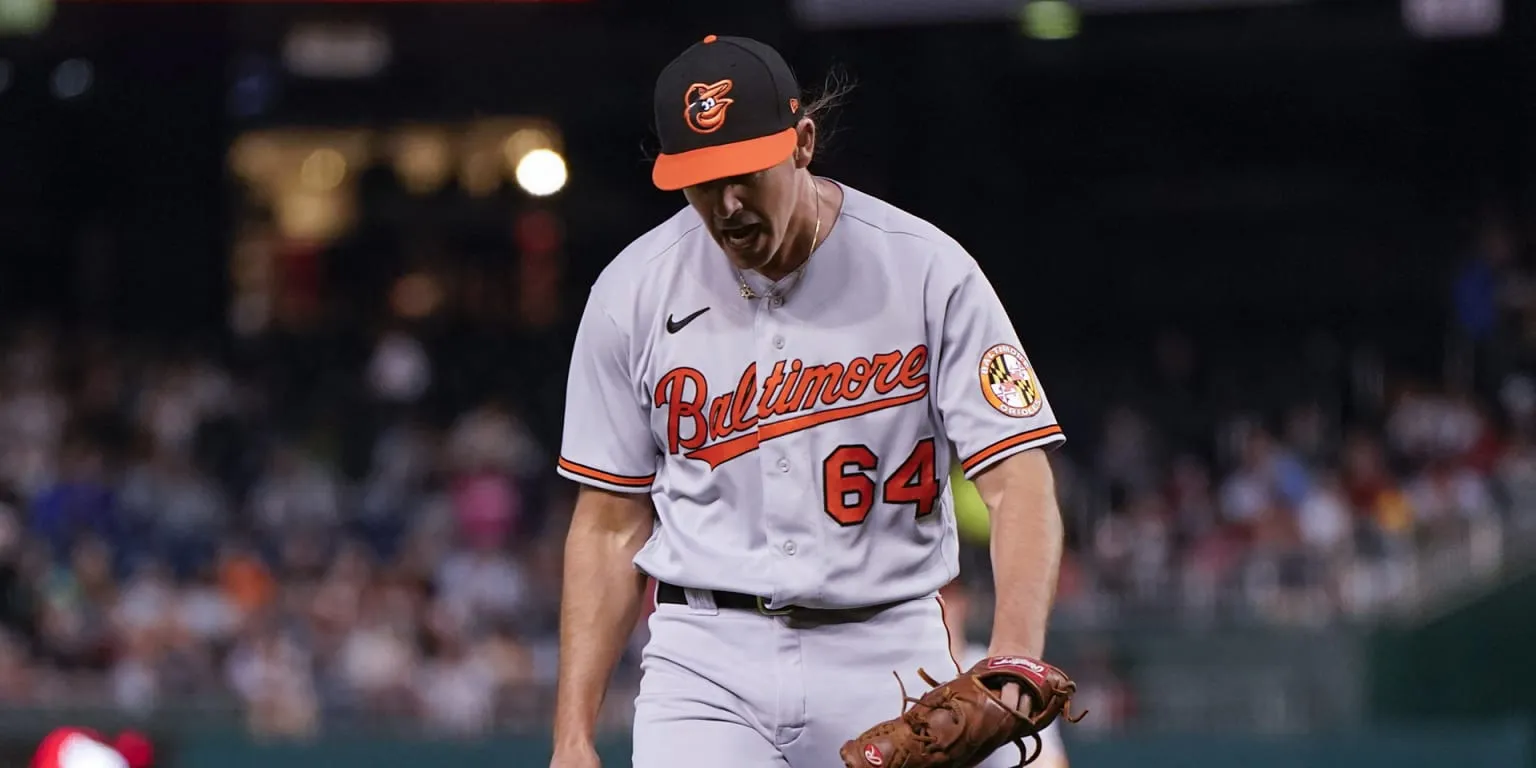
This debate reflects a broader question in sports: How much should personal circumstances matter when evaluating professional athletes? For Kremer, the answer is clear: ignoring it would be a denial of reality.
Beyond Baseball: Identity, Resilience, and Humanity
At its core, the Dean Kremer story is not just about a playoff game. It is about the fragility of focus under extraordinary circumstances. It is about the ways global events intrude on individual lives, no matter how far removed geographically.
Kremer’s resilience, his willingness to pitch, and his vulnerability all combine to paint a picture of an athlete facing a crisis larger than the game itself. He is not simply fighting for strikeouts; he is fighting for balance, for peace of mind, for strength under impossible conditions.
Conclusion: The Invisible War Behind the Game
Dean Kremer’s ALDS outing may go down in the box score as a short, difficult start. But behind that line lies an extraordinary story of an athlete carrying the weight of a war, a family, and an identity on his shoulders.
He remains a symbol of perseverance, a man who chose to honor his commitment to his team even as his heart and mind were torn. While the war in Israel may fade from headlines, its impact on Kremer’s psyche will linger, shaping his career and his narrative.
In the end, the real battle for Dean Kremer is not only against opposing hitters. It is against the invisible burden of fear, loyalty, and responsibility that no athlete — no human being — should ever have to carry alone.
Related News