







Ali Fell at 38, Usyk Made History at 38 – So Why Do People Still Believe Ali Would Easily Destroy Him?
At 38, Muhammad Ali was defeated and fading. At 38, Oleksandr Usyk is undefeated and making history. So why do fans still insist Ali would dominate Usyk? This deep dive challenges nostalgia, compares legacies, and uncovers what most boxing fans don’t want to admit.
The Myth, The Fall, and The Rise
In the brutal and poetic world of heavyweight boxing, narratives often outlive reality. Legends are carved in blood, sweat, and slow-motion replays. But even in a sport built on fact and physical dominance, some myths refuse to die. One of them? That Muhammad Ali — even at the twilight of his career — would have easily destroyed Oleksandr Usyk.
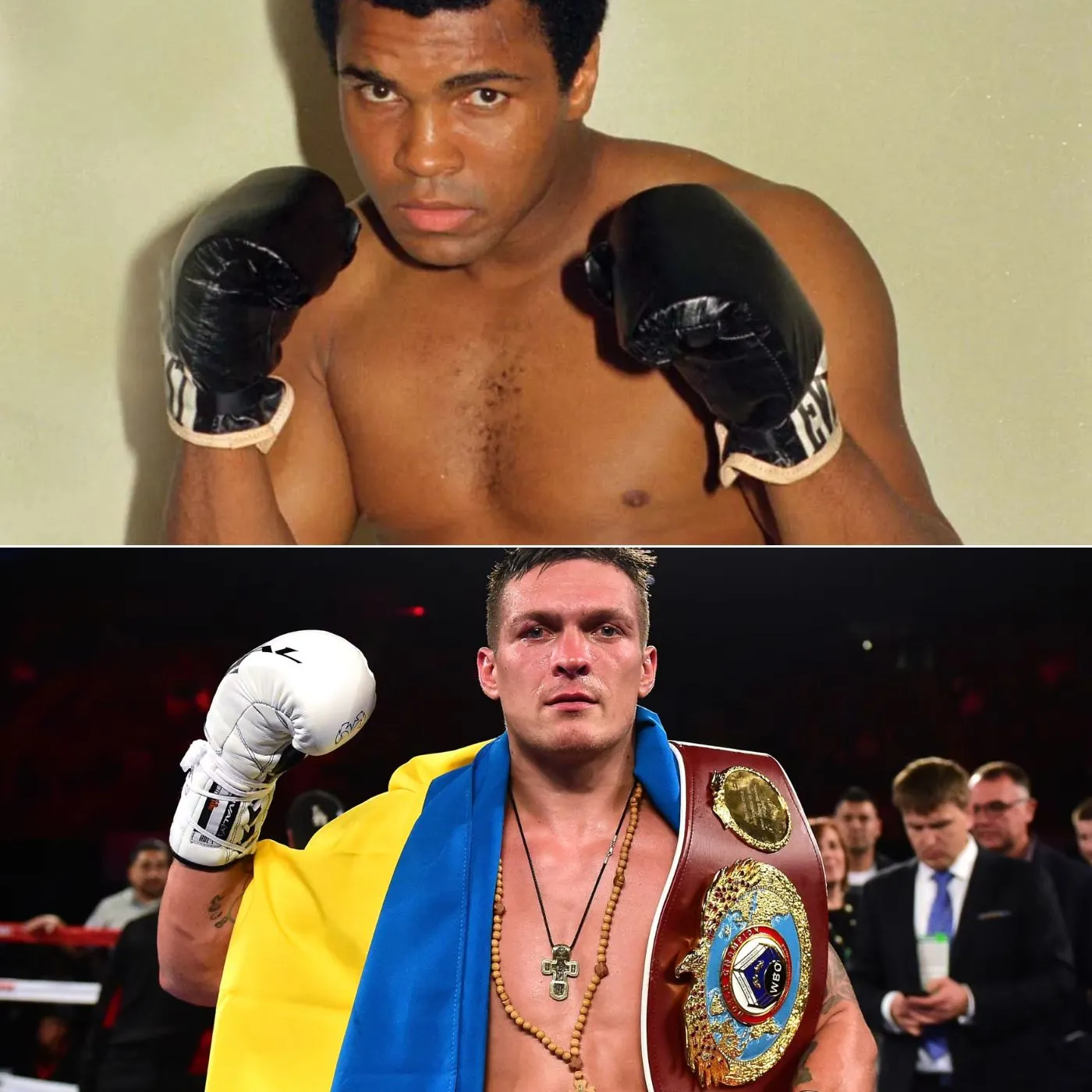
But here’s the thing: Ali fell hard at 38, battered and bloodied by Larry Holmes, a man once molded by Ali himself. Meanwhile, Usyk, at the same age, is rewriting the rules of boxing longevity, standing tall and undefeated after becoming the first two-time undisputed heavyweight champion in the four-belt era.
So why do so many still believe in a fantasy that wilts under the weight of facts?
The Fall of a Giant: Ali’s Painful Goodbye at 38
Let’s rewind to October 2, 1980. Muhammad Ali was 38 years old, slower, heavier, and visibly worn down. He entered the ring against his former sparring partner Larry Holmes not to prove a point — but to protect a legacy that had already begun to crack. The result? A one-sided massacre, with Holmes landing 260 punches to Ali’s 77. It was so tragic, so one-sided, that Holmes openly wept after the fight, devastated by what he had done to his former hero.
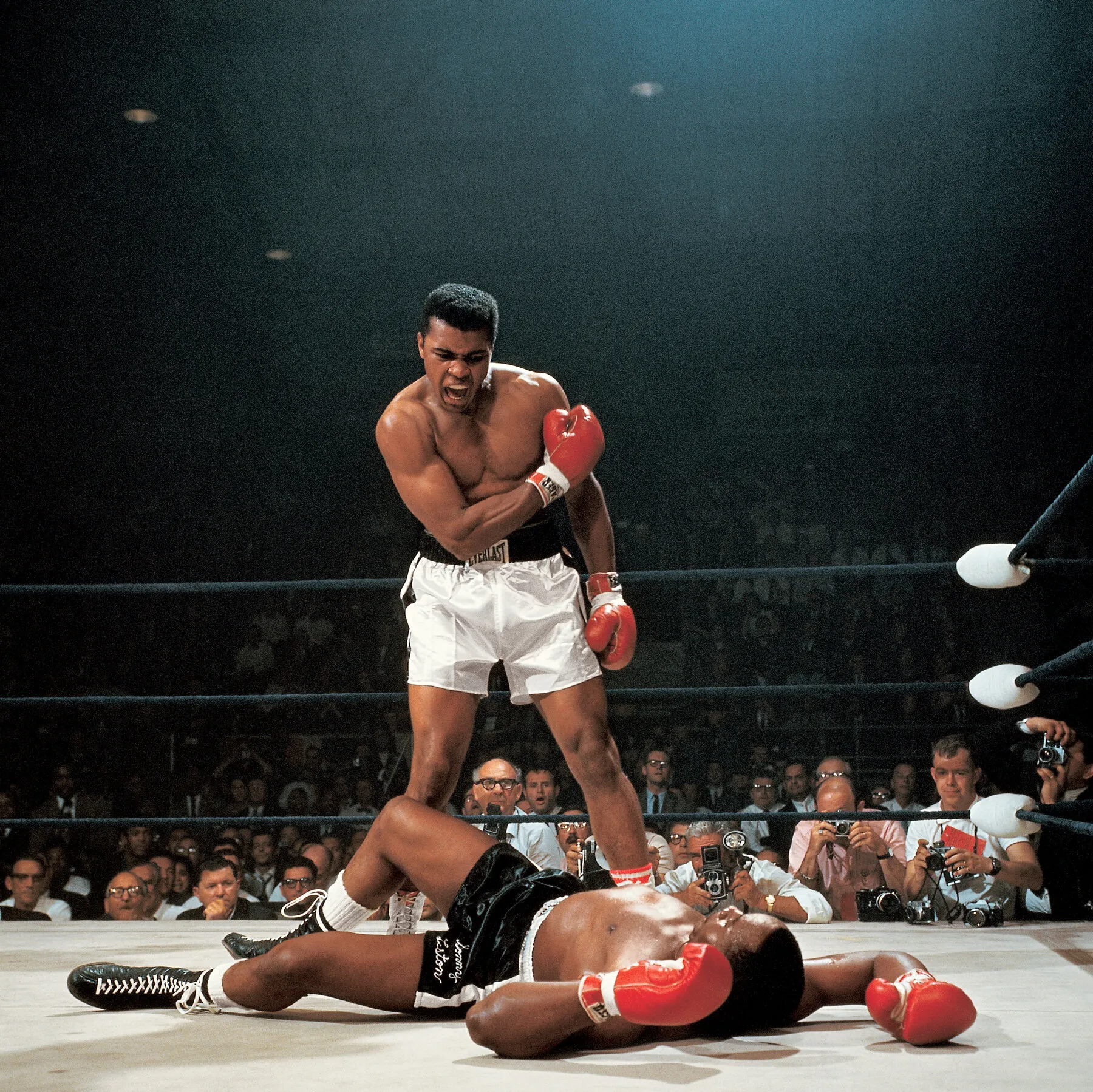
Ali didn’t just lose — he looked like a ghost of the fighter who once danced circles around Sonny Liston, George Foreman, and Joe Frazier. And yet, many fans refuse to view that version of Ali as a cautionary tale, instead pointing to his prime as an eternal yardstick against today’s champions.
The Rise of a Modern Maestro: Usyk’s Unbreakable Streak at 38
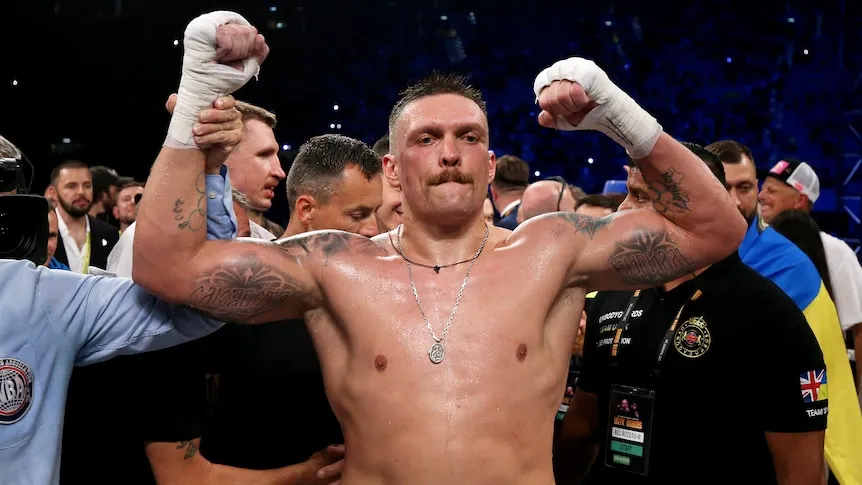
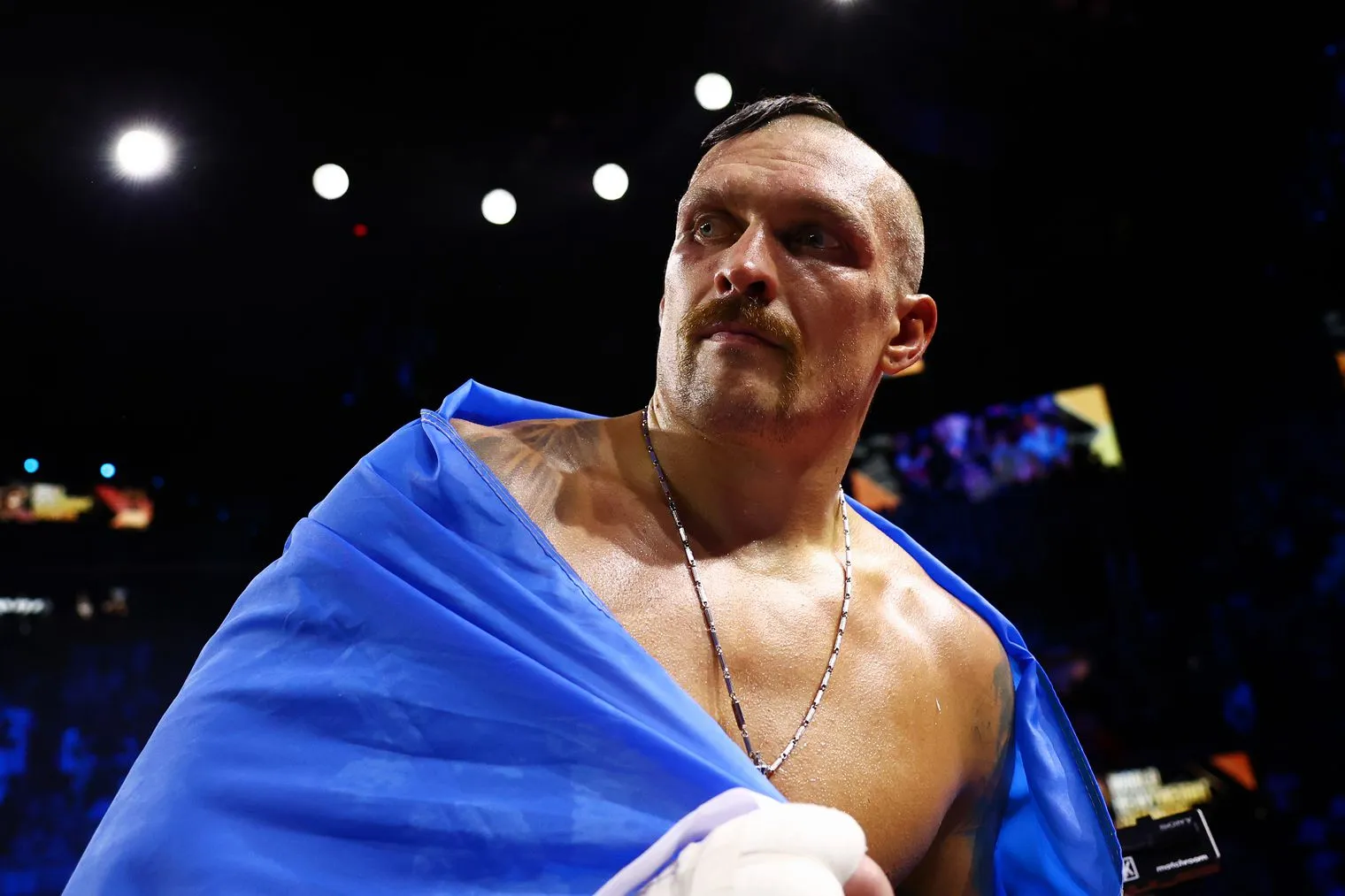
Fast forward to 2025. At the exact age Ali was brutally dismantled, Oleksandr Usyk stands undefeated, wearing the undisputed heavyweight crown twice — something even Ali never accomplished in the modern belt system. After conquering the cruiserweight division with clinical precision, Usyk moved up to heavyweight and dominated a landscape full of giants.
He outboxed Anthony Joshua — not once, but twice. He mentally broke Tyson Fury in their high-stakes clash and silenced critics who called him “too small” or “too European” for heavyweight greatness. And now, at age 38, with zero losses, and with history in his fists, Usyk is arguably the most tactically gifted heavyweight of the modern era.
So when fans still say “Ali would crush him,” we must ask: Which Ali are you talking about — the myth or the man?
The Bias of Nostalgia: Why We Romanticize Ali’s Era
Here’s where things get complicated. Ali isn’t just a boxer — he’s a cultural phenomenon, a man whose battles outside the ring elevated his status beyond sport. His charisma, defiance, and poetry have seeped into global consciousness, making it emotionally uncomfortable to compare anyone to him, let alone suggest someone might actually beat him.
But when the nostalgia fades and we look purely at the tape — at movement, at adaptability, at ring IQ — Usyk deserves to be in the conversation, not dismissed by default.
Ali fought in an era where styles were brutal but often one-dimensional. Usyk, by contrast, fights in a more evolved ecosystem, where footwork, punch economy, feinting, and data-driven fight camps define success. And he’s mastered them all.
The Flawed Comparison: Fantasy Fights Don’t Age Well
Here’s the reality: comparing fighters from different eras is always a flawed endeavor. Training techniques, nutrition, fight science, and even glove design have changed drastically over decades.
Ali fought 15-round wars. Usyk fights 12-round chess matches. Ali used charisma as a psychological weapon. Usyk uses silence and cold calculation.
They are products of different times — and that’s okay. But when we say Ali would “easily” destroy Usyk, we ignore how hard Usyk makes it for anyone to touch him, let alone dominate him.
The Bigger Picture: Why This Debate Still Matters
This debate isn’t just about two fighters. It’s about how we choose to respect greatness. Must one legend be diminished to praise another?
Maybe not. But in boxing — where legacy is as much about imagination as it is about belts — we must be honest about what we see, not just what we feel.
Ali was The Greatest. But Usyk is the greatest of now. And in any era, undefeated records, unifications, and unmatched composure under pressure deserve acknowledgment, not dismissal.