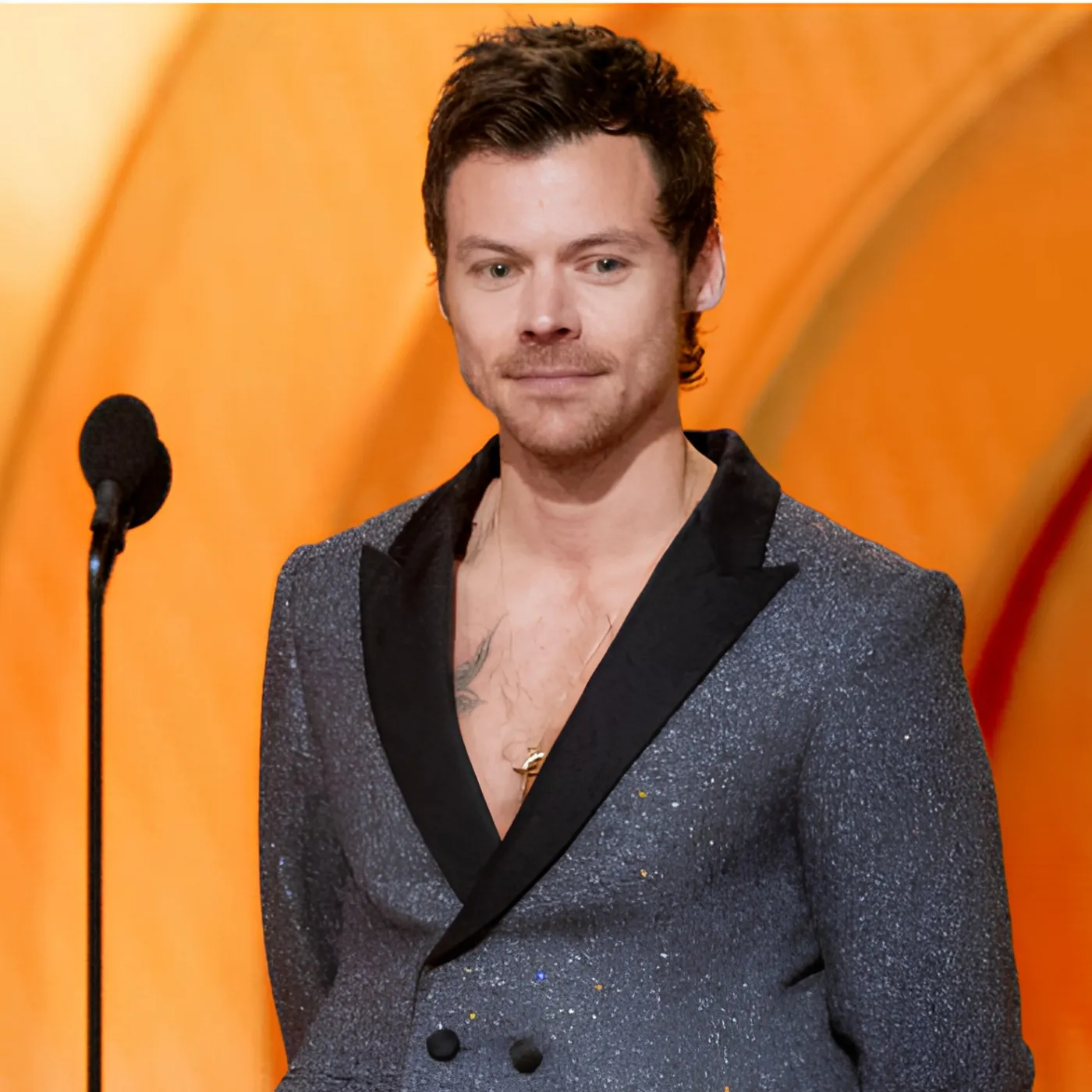
“I Struggled to Even Talk About It…” — Harry Styles Opens Up to Zane Lowe About Grieving Liam Payne Under Public Pressure
🎗79
In the ever shifting world of global pop culture, moments of raw honesty are rare. Superstars are often filtered through layers of management, production, and expectation. Yet when Harry Styles sat down with Zane Lowe for an intimate conversation, something felt unmistakably different. This was not a carefully choreographed press stop or a polished promotional appearance. It was a vulnerable reckoning with grief, memory, and the complicated weight of public life.
For years, fans have watched Harry navigate extraordinary fame with composure. From his early days in One Direction to his evolution as a solo artist, he has carried himself with a sense of calm assurance. But in this deeply personal exchange, he admitted that after the loss of Liam Payne, he found himself grappling with emotions that refused to stay neatly contained. “I struggled to even talk about it,” he confessed, his voice measured but heavy with meaning.
The conversation resonated far beyond a standard interview cycle. It was not simply about remembrance. It was about what it means to grieve when the entire world is watching, analyzing, and sometimes demanding a response before the heart is ready to give one.
A Brotherhood Forged in the Spotlight
To understand the emotional gravity behind Harry’s words, one must return to the beginning. In 2010, five young artists were brought together on The X Factor in the United Kingdom. What followed was an unprecedented rise. One Direction became one of the defining pop phenomena of the decade, a global force whose concerts filled stadiums from London to Los Angeles.
Within that whirlwind, friendships formed under extraordinary pressure. Harry and Liam were not simply colleagues sharing a stage. They were young men navigating adolescence in front of millions. They endured relentless travel schedules, chart expectations, and constant scrutiny. The bond forged in that crucible carried layers of complexity. It was equal parts camaraderie, rivalry, admiration, and shared survival.
In his interview with Zane Lowe, Harry reflected on how unique that shared experience was. “There’s no manual for that,” he said, describing what it felt like to grow up while cameras captured nearly every moment. Losing Liam meant losing someone who understood that reality in a way few others could. It was the loss of a friend and also the loss of a witness to a transformative chapter of life.
The Silence Before the Words
When news of Liam’s passing spread, fans across continents demanded answers, statements, tributes. Social media filled with speculation and emotion. The pressure to respond publicly was immediate and overwhelming. For Harry, however, words did not come easily.
In his conversation with Zane Lowe, he acknowledged that he wrestled with whether to speak at all. “Everything felt too small,” he admitted. In a world where artists are expected to articulate perfect sentiments within hours, Harry found himself paralyzed by the inadequacy of language. How do you summarize years of shared dreams, laughter, exhaustion, and growth into a single post or speech?
He explained that grief is rarely linear. It arrives in waves, often unpredictable. Some days were filled with gratitude for memories. Others were consumed by disbelief. Under normal circumstances, such emotions unfold privately. For a figure of Harry’s stature, even silence becomes a public statement.
Public Pressure and Private Pain
The interview illuminated a tension familiar to many public figures. Fame creates access. Fans feel connected, invested, sometimes entitled to participation in personal milestones and tragedies. Harry has long embraced that connection, often expressing gratitude for the support that sustained his career.
Yet he also made clear that there is a boundary between performance and personal mourning. “You don’t stop being a human because people know your name,” he told Zane Lowe. Those words struck at the heart of the conversation. Behind the global tours, award ceremonies, and headline appearances is a person processing heartbreak like anyone else.
The weight of public expectation intensified the challenge. He described reading messages from fans who were grieving too, many of whom felt a deep attachment to Liam. While he found comfort in the shared love, he also felt a quiet pressure to offer something stabilizing, something definitive. That duality complicated his own healing.
Remembering the Early Days
Throughout the interview, Harry’s reflections often drifted back to formative memories. He recalled cramped dressing rooms, nervous auditions, the surreal thrill of hearing their first single climb the charts. He spoke warmly of Liam’s work ethic and leadership within the group during those early tours.
These recollections were not rehearsed anecdotes. They were fragments of a life once lived at full speed. “He was always checking on everyone,” Harry shared. The comment, simple yet sincere, painted a picture of a friend who carried responsibility with quiet determination.
Revisiting those memories on air was not easy. Harry admitted that certain songs now carried a different resonance. Performing them meant revisiting a shared history that could no longer be recreated in the same way. Still, he insisted that the music remains a testament to what they built together.
The Complexity of Shared Legacy
When a band reaches the heights of One Direction, its legacy becomes almost mythic. Albums break records. Tours redefine industry benchmarks. Fans attach personal milestones to lyrics and performances. Within that shared cultural memory, each member occupies a distinct place.
Harry spoke thoughtfully about how Liam’s contributions shaped the group’s sound and spirit. He rejected any narrative that reduces their story to competition or contrast. Instead, he emphasized the collective effort that propelled them forward. “We were all different,” he said, “but that was the point.”
In grieving, he has come to see that legacy in a new light. The songs, the archival footage, the countless interviews now function as living documents. They preserve moments of laughter and ambition that remain vivid despite loss. For Harry, honoring Liam means protecting that shared narrative from distortion.
Conversations That Matter
Zane Lowe is known for his ability to create space for depth rather than spectacle. The setting allowed Harry to speak slowly, to pause, to reconsider. There were moments when silence filled the room, and those silences felt as meaningful as the words themselves.
“I didn’t want it to feel performative,” Harry admitted when discussing tributes. In an era where public displays can easily become content, authenticity was paramount. He needed time to find a way of remembering that felt true rather than reactive.
This insistence on sincerity has long defined his public persona. But in this context, it carried additional weight. Grief stripped away the protective layers of celebrity, revealing a young man navigating profound change.
The Role of Music in Healing
Music has always been Harry’s primary language. Throughout the interview, he hinted that songwriting became a private refuge during this period. While he did not disclose specific lyrics or projects, he acknowledged that creativity offered a way to process emotions too tangled for conversation.
“There are things you can say in a melody that you can’t say in an interview,” he reflected. That insight underscores the enduring power of art. For fans, future releases may carry echoes of this chapter, subtle or overt. For Harry, the act of creating was less about audience reception and more about personal clarity.
He emphasized that healing is ongoing. There is no definitive moment when grief concludes. Instead, it integrates into the fabric of life, altering perspective and priorities.
Carrying Forward the Memories
One of the most poignant parts of the conversation came when Harry described small, unexpected reminders of Liam. A melody overheard in a shop. A photograph rediscovered while scrolling through old messages. These moments arrive without warning, dissolving the illusion of distance.
Rather than resisting them, he has chosen to welcome them. “I want to remember,” he said simply. In a culture that often urges people to move on quickly, this commitment to remembrance feels radical. It acknowledges that love does not disappear with absence.
He also expressed gratitude for the fans who continue to celebrate Liam’s artistry. Their tributes, he noted, transform grief into collective appreciation. While public attention can be overwhelming, it can also be unifying.
Growth Through Vulnerability
For much of his career, Harry has projected a sense of confident playfulness. He commands stages with ease, experiments with fashion boldly, and speaks with charm. This interview revealed a different dimension. Vulnerability replaced spectacle. Reflection replaced promotion.
In opening up to Zane Lowe, he offered a reminder that strength often lies in acknowledgment rather than avoidance. Admitting that he struggled to speak did not diminish him. It humanized him.
The response from listeners was immediate and heartfelt. Many expressed gratitude for his candor. In a time when curated images dominate feeds, witnessing a global star articulate confusion and sorrow felt grounding.
The Broader Conversation About Grief
Harry’s experience underscores a universal truth. Grief does not discriminate based on status. Whether one lives in a small town or headlines arenas, the ache of losing someone beloved is fundamentally human.
Yet public figures face additional layers. Their mourning unfolds under scrutiny. Their pauses become headlines. Their expressions are dissected. By articulating this tension, Harry contributed to a broader conversation about boundaries and empathy.
He gently reminded listeners that behind every public moment is a private reality. Compassion requires recognizing that distinction.
Looking Ahead With Intention
As the interview drew to a close, the tone shifted subtly from reflection to resolve. Harry did not frame the future as a return to normalcy. Instead, he spoke about carrying forward lessons learned.
He emphasized the importance of checking in on friends, of expressing appreciation without delay. Loss has clarified priorities. Success, accolades, and streaming numbers feel secondary to connection.
In this way, Liam’s memory continues to influence his path. It shapes decisions both visible and unseen.
A Conversation That Will Endure
Interviews often fade from collective consciousness within days. This one feels different. Its impact lies not in sensational revelation but in quiet authenticity. By choosing honesty over polish, Harry created a moment that transcends promotional cycles.
For fans of One Direction, for admirers of his solo career, and for anyone navigating personal loss, the conversation offered resonance. It affirmed that even those who appear untouchable experience doubt and sorrow.
“I struggled to even talk about it,” he said at the outset. By the end, he had done precisely that. He spoke, carefully and sincerely. In doing so, he transformed silence into connection.
The Enduring Power of Shared History
As years pass, narratives evolve. The story of One Direction will continue to be revisited, reinterpreted, celebrated. Within that story, the friendship between Harry and Liam remains a foundational thread.
Their journey began in uncertainty and blossomed into global recognition. It encompassed triumphs and challenges. It produced music that defined a generation. Now it carries the additional weight of remembrance.
Through his conversation with Zane Lowe, Harry did more than reflect. He preserved a piece of that history with care. He reminded listeners that behind the spectacle were five young individuals chasing possibility together.
Finding Light in Honest Dialogue
In an industry often driven by spectacle, quiet truth can feel revolutionary. Harry’s willingness to sit in discomfort, to acknowledge struggle without embellishment, stands as a testament to growth.
The interview did not offer neat conclusions. It did not resolve grief into tidy optimism. Instead, it honored complexity. It recognized that healing unfolds gradually, sometimes unevenly.
For many, that recognition was enough. It provided language for emotions difficult to articulate. It demonstrated that even in the glare of fame, it is possible to choose sincerity.
Closing Reflections
As the world continues to move at relentless speed, moments like this invite pause. They encourage empathy. They remind audiences that artists are more than headlines or streaming statistics. They are people shaped by relationships, memories, and loss.
In opening up to Zane Lowe, Harry did not simply recount events. He modeled a form of courage grounded in honesty. The phrase that anchors this conversation, “I struggled to even talk about it,” encapsulates the paradox of public grief. Speaking is difficult. Silence is heavy. Yet somewhere between the two lies connection.
That connection is what ultimately endures. Through vulnerability, through remembrance, through music, Harry continues to navigate a path forward. And in doing so, he invites others to do the same, carrying love and memory with quiet strength.











 Closing Reflections