







Carlos Alcaraz Stuns Fans in Epic Cincinnati Showdown — Rublev Left Shaken After Nail-Biting Finish
The Western & Southern Open in Cincinnati has always been a theater for high-stakes drama, but this year’s clash between Carlos Alcaraz and Andrey Rublev carved a moment into tennis history that left fans gasping until the very last ball. In a gripping contest filled with raw athleticism, momentum shifts, and emotional turbulence, the young Spanish prodigy Carlos Alcaraz stunned the crowd with a victory that showcased not only his breathtaking skills but also his resilience under crushing pressure. On the other side of the net, Rublev—a player known for his fiery power—was visibly shaken by the intensity and heartbreak of the finish, underscoring the razor-thin margins that define elite tennis.
The Rising Force of Carlos Alcaraz
Over the past two years, Carlos Alcaraz has become the torchbearer of a new tennis generation, a player constantly compared to greats like Rafael Nadal and Novak Djokovic but carving a style uniquely his own. In Cincinnati, he demonstrated once again why he has been widely celebrated as the future of the sport. The match against Rublev demanded not only shot-making brilliance but also the mental fortitude to survive a rollercoaster of emotions.
Alcaraz entered the match with a confidence that reflected his recent successes, including triumphs at Grand Slam events and multiple ATP Masters 1000 tournaments. Yet Cincinnati was not just another stop on the tour; it was an opportunity to prove that his dominance can extend beyond clay courts and grass, to the hard surfaces that have tested many young stars before him.
Rublev’s Power Meets Alcaraz’s Creativity
From the opening games, it was clear that fans were witnessing two contrasting styles collide. Andrey Rublev, with his trademark explosive forehand and relentless baseline aggression, sought to dictate points with pace and precision. Every strike carried the weight of his determination to topple one of the sport’s fastest-rising icons.
Yet Alcaraz answered with a dazzling mixture of creativity, agility, and improvisation. His ability to transition seamlessly from defense to offense, to chase down impossible balls and then craft winners from defensive positions, repeatedly stole gasps from the Cincinnati crowd. The match was not merely about shot selection; it was a battle of identities—Rublev’s power game versus Alcaraz’s artistry and endurance.
The Emotional Swings of the Contest
As the first set unfolded, Rublev seemed determined to establish dominance. His booming serves and aggressive groundstrokes pushed Alcaraz onto the back foot, and for a stretch it appeared that the Spaniard might struggle to contain the barrage. The Russian broke early, pumping his fist with every winner, channeling his emotions into every point.
But Alcaraz responded with the composure of a seasoned champion. He tightened his service games, deployed delicate drop shots at just the right moments, and gradually turned the tide. When he secured the first set in a tense tiebreak, the atmosphere shifted dramatically. The crowd erupted, sensing that something extraordinary was unfolding before them.
The second set brought another twist. Rublev, refusing to bow, unleashed a storm of aggression. His winners painted the lines, his forehand thundered across the court, and his body language roared with defiance. This time it was Alcaraz who had to weather the storm, running tirelessly and absorbing punishing blows. Rublev’s relentless assault earned him the second set, leveling the match and setting up a decider that had fans on the edge of their seats.
The Decisive Final Set
The third set became a psychological marathon as much as a physical one. Every game felt like a miniature battle for survival. The Cincinnati crowd was treated to jaw-dropping rallies that showcased not just power, but also improvisation and heart. Alcaraz produced magical passing shots and fearless net approaches, while Rublev hammered serves and groundstrokes with unyielding intensity.
At 4-4, the tension reached its peak. Alcaraz, serving under pressure, faced multiple break points. With his back against the wall, he responded with audacious winners—a blistering forehand down the line, a delicate volley that barely clipped the tape, and a booming ace that drew roars from the stands. Saving those break points felt like a match within the match, a turning point that tilted momentum back in his favor.
In the following game, it was Rublev’s turn to wobble. The Russian, who had seemed unshakable for much of the match, suddenly sprayed errors under the mounting pressure. His body language betrayed frustration, his racket clashed against the court in moments of visible despair. Alcaraz pounced, breaking serve to move within striking distance of victory.
The Nail-Biting Finish
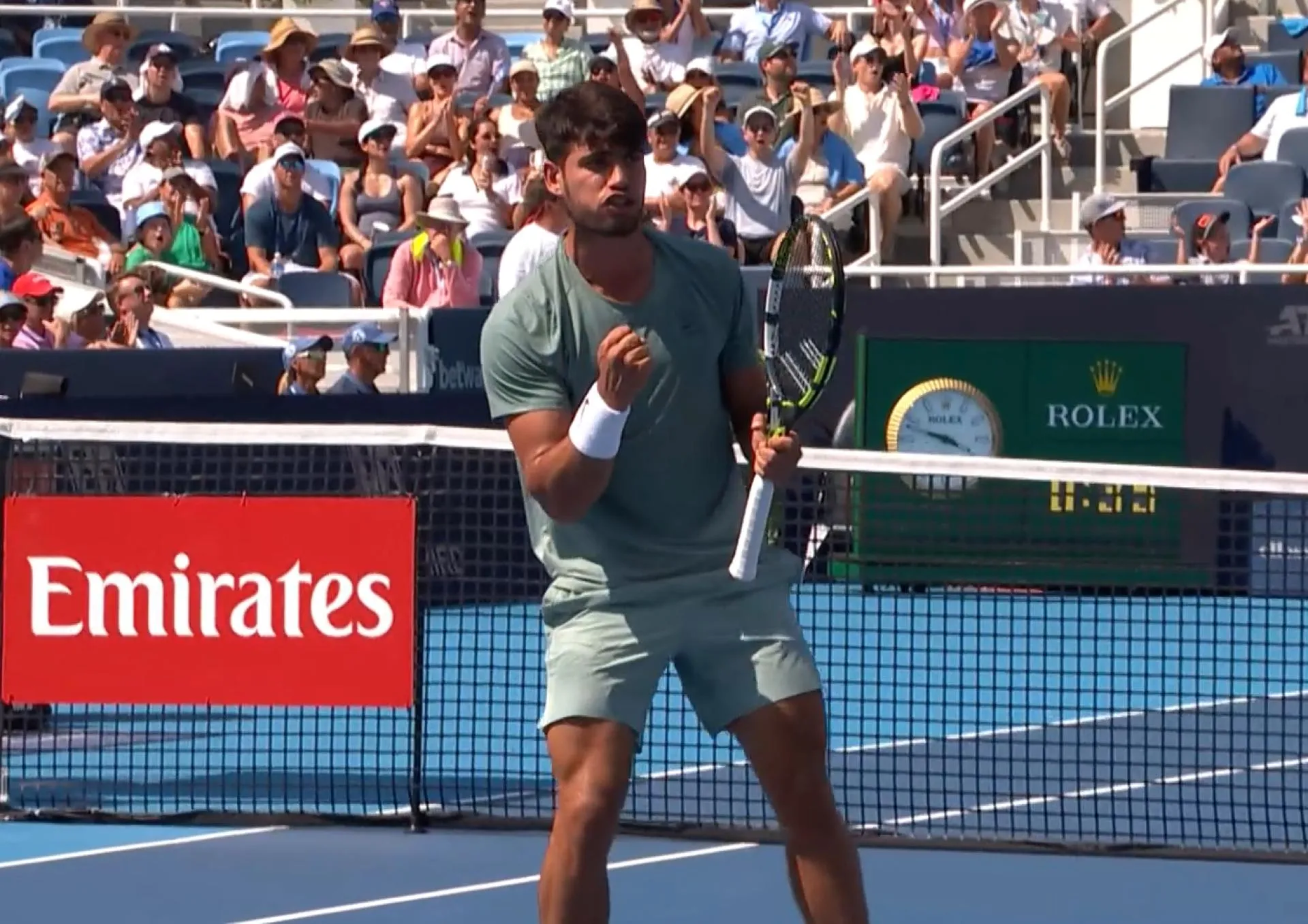
The final game of the match was pure theater. Alcaraz, serving for the win, had to navigate the suffocating tension of closing out a match against a dangerous opponent. Every point carried the weight of expectation, and every miss from his racket drew gasps from the Cincinnati crowd. Rublev, still fighting, pushed the game to deuce multiple times, refusing to concede without a battle.
Then came the decisive rally—a brutal exchange of forehands, each player unloading with everything they had. As the ball skidded across the baseline, Alcaraz unleashed a breathtaking backhand pass that whizzed beyond Rublev’s reach, sealing the match. The crowd exploded in thunderous applause, many leaping to their feet in disbelief at the brilliance they had just witnessed.
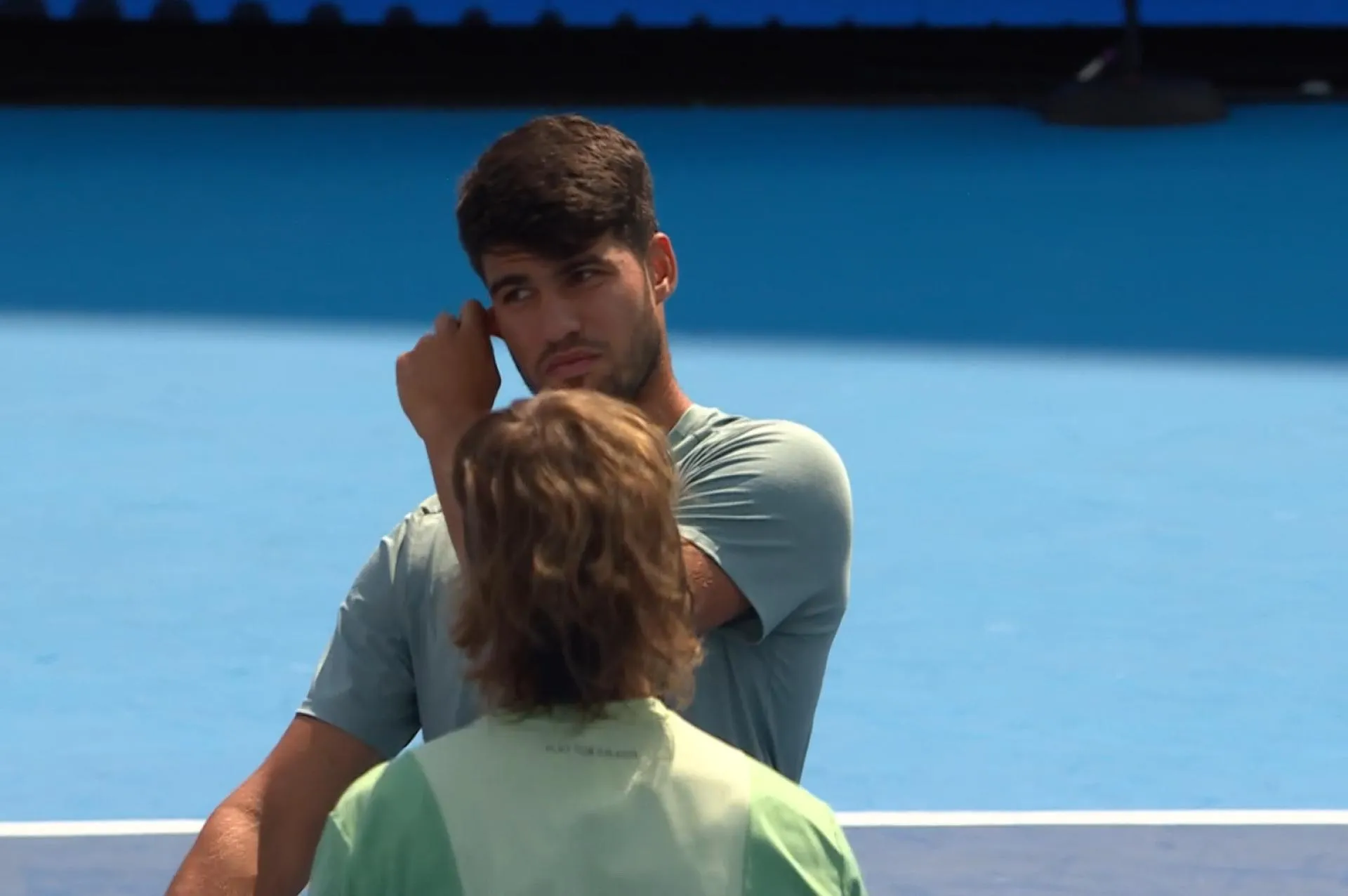
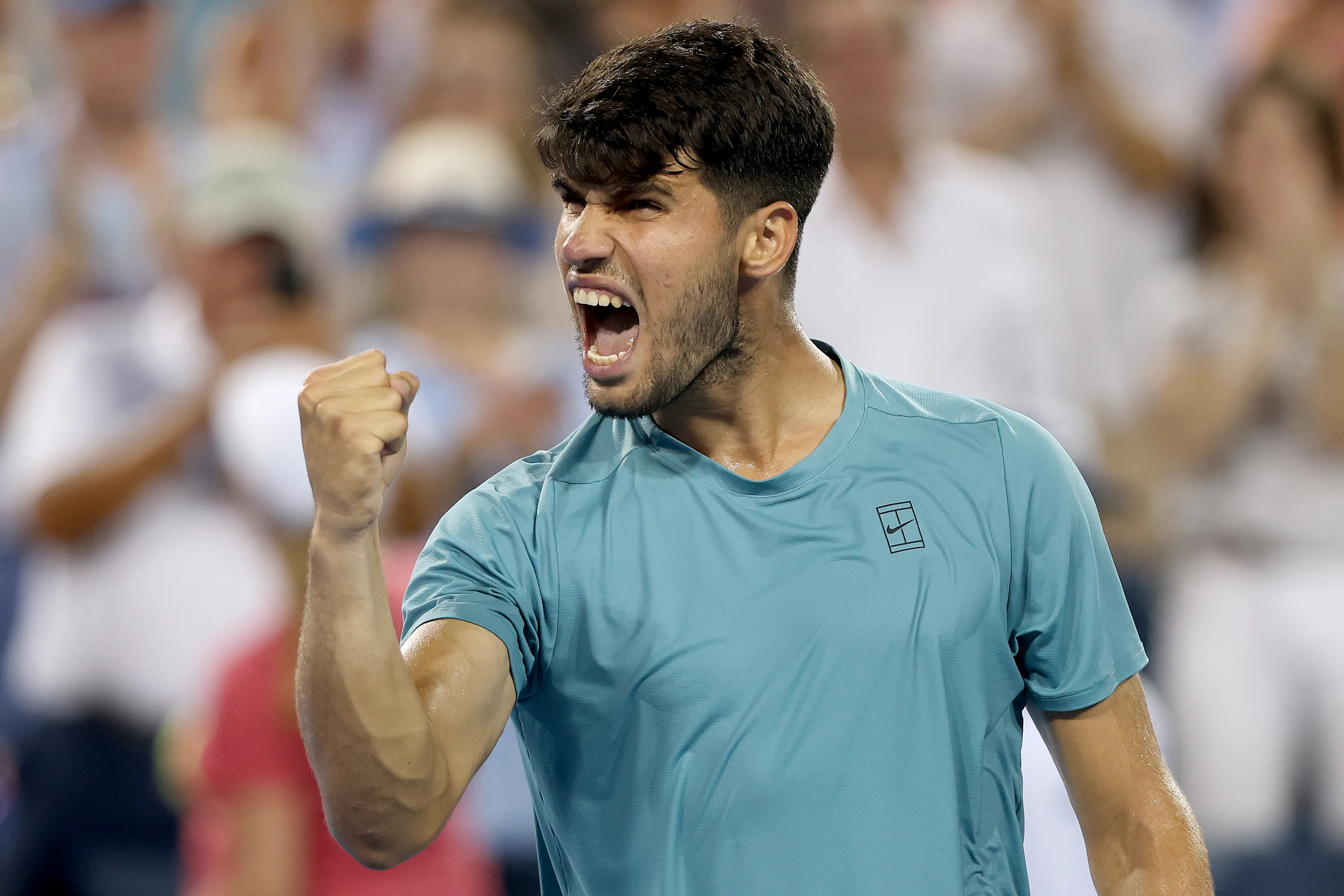
Carlos Alcaraz dropped to his knees, fists clenched, as the reality of victory sank in. On the other side, Andrey Rublev stood frozen, head bowed, visibly shaken by the narrow defeat. The final handshake at the net carried a palpable mix of respect and heartbreak, a reminder of the fine line between triumph and despair in professional tennis.
Rublev’s Heartbreak and the Weight of Expectations
For Andrey Rublev, the loss was a devastating blow. Known for his fiery temperament and relentless energy, he had poured every ounce of himself into the contest. Yet, once again, he found himself just short against one of the sport’s elite. His frustration was not only about the missed opportunities in the match but also about the narrative that continues to haunt him—that despite his immense talent, he struggles to convert big moments against the very best.
The sight of Rublev walking off court, shoulders slumped and eyes glazed, told the story of a player wrestling with disappointment. His shaken demeanor reflected the immense pressure he carries, both from himself and from the expectations of fans and analysts who see him as a perennial contender but not yet a champion at the biggest stages.
Alcaraz’s Growing Legacy
For Carlos Alcaraz, this victory was more than just another notch on his belt; it was a statement. To outlast a seasoned and ferocious opponent like Rublev in such a nerve-wracking encounter demonstrated that his rise is not a fleeting phenomenon but a sustained evolution toward greatness.
Every aspect of his performance in Cincinnati—his physical endurance, his creativity in shot-making, his refusal to crumble under pressure—echoed qualities of legends who have defined men’s tennis for decades. Yet Alcaraz is not merely a reflection of the past; he is shaping a new era, one defined by boldness, joy, and relentless ambition.
The crowd’s reaction in Cincinnati mirrored the larger sentiment in the tennis world: awe at witnessing a prodigy grow before their eyes, and excitement for what lies ahead. With every match like this, Alcaraz’s legacy deepens, and the conversation about him as the face of tennis’s future becomes not just speculation, but inevitability.
The Broader Implications for Men’s Tennis
This match between Alcaraz and Rublev carried significance beyond its immediate drama. It was symbolic of the generational shift taking place in men’s tennis, as younger stars step into the vacuum left by legends nearing the twilight of their careers. Matches of this caliber are not only entertaining but essential for keeping the sport vibrant and relevant.
For fans, the showdown in Cincinnati reinforced the thrill of unpredictability—the knowledge that on any given night, two players can produce a masterpiece that leaves lasting memories. For players like Rublev, it was a reminder of the brutal competition at the top, where even the smallest lapse can alter destinies. And for Alcaraz, it was another step in a journey that increasingly looks destined for greatness.
Conclusion: A Match to Remember
The epic Cincinnati showdown between Carlos Alcaraz and Andrey Rublev was a match that transcended statistics and scorelines. It was about resilience, artistry, heartbreak, and the sheer unpredictability that makes tennis such a captivating sport. Alcaraz stunned fans with his ability to rise in the clutch, while Rublev was left shaken, grappling with the pain of a narrow defeat.
In the end, what unfolded on that Cincinnati court was more than a tennis match—it was a story of ambition colliding with reality, of talent tested under fire, and of a new star continuing his march toward immortality. For fans, it will be remembered as one of those rare nights when sport becomes pure theater, and when the brilliance of Carlos Alcaraz illuminated the path for tennis’s future.
Related News