







Nick Kurtz’s Mocking Clap After Nationals’ Error Sends Twitter Into Meltdown
Baseball’s unwritten rules don’t cover everything—but they certainly don’t take kindly to showmanship that blurs the line between confidence and mockery. On a cool spring evening at the Oakland Coliseum, Nick Kurtz, the rising phenom of the Oakland Athletics, stepped into controversy with nothing more than a smirk and a slow clap.
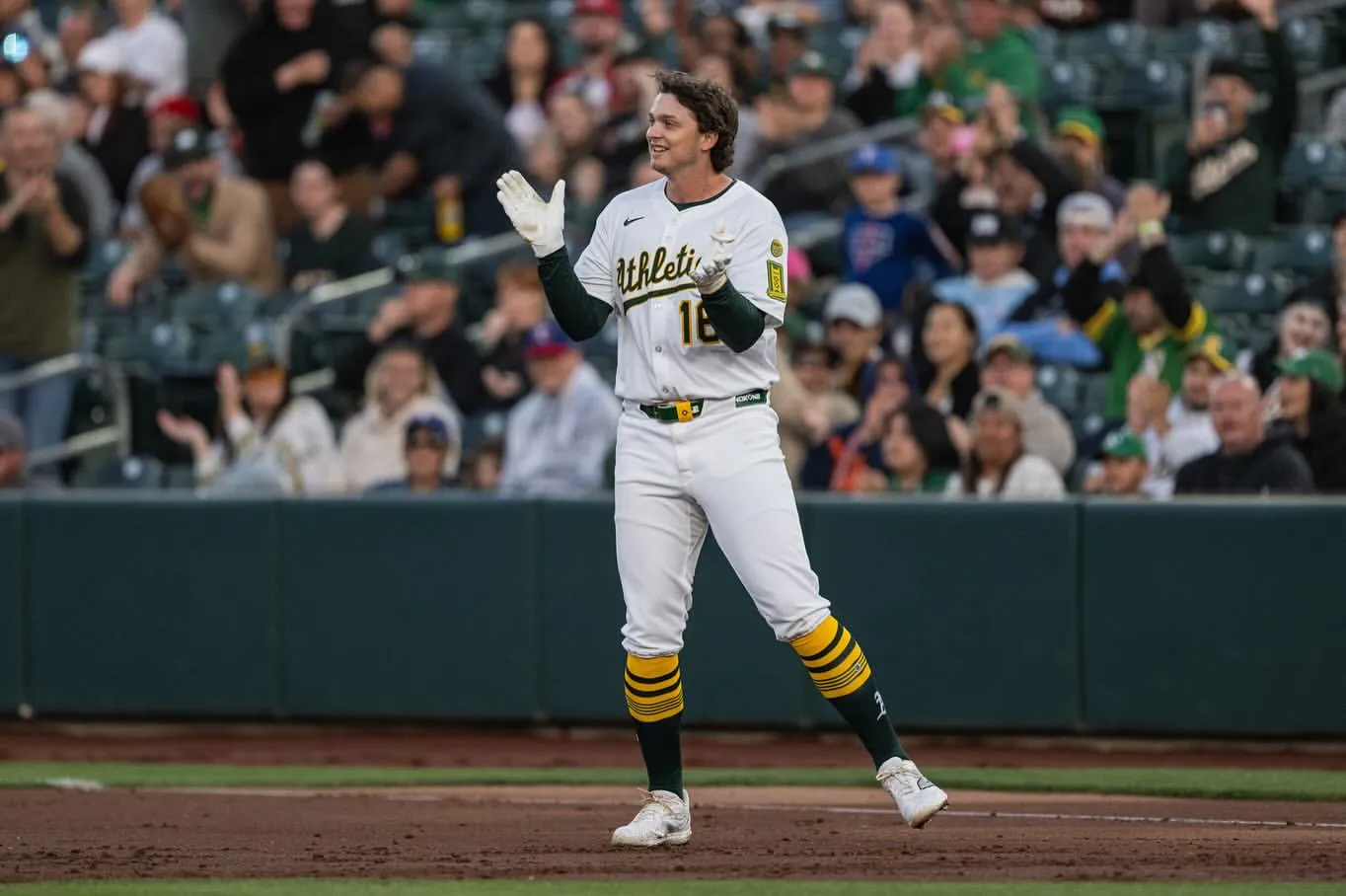
The moment was brief but powerful: following a defensive blunder by the Washington Nationals, Kurtz, after reaching base safely, turned toward the A’s dugout and delivered a pair of emphatic claps. Not the kind you see in celebration. These were laced with irony—sharp, deliberate, and captured on every camera in the stadium.
He didn’t say a word. But his body language screamed:
“I’m thriving while you crumble.”
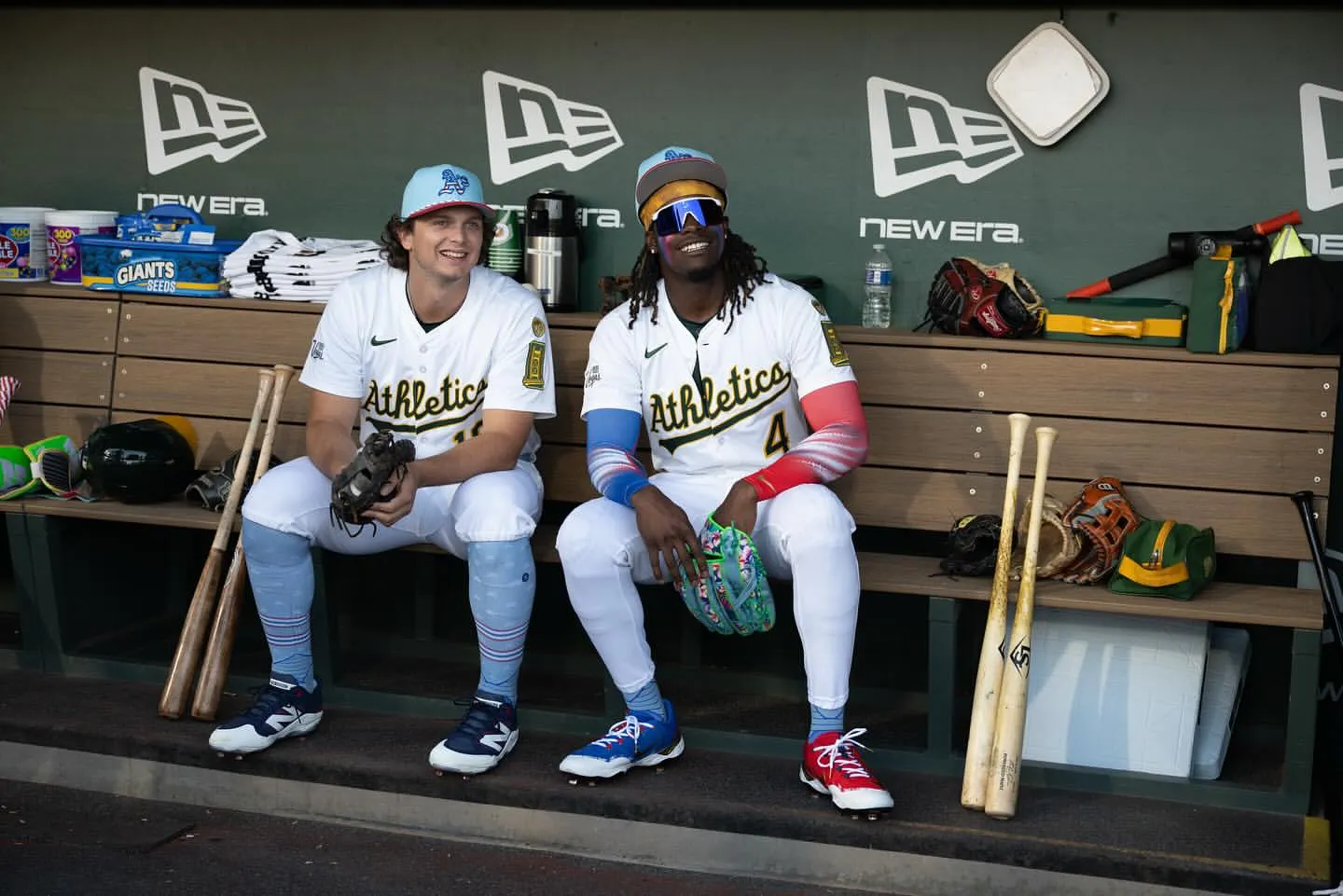
The image, later posted to his Instagram with the caption “Livin the Dream,” broke the internet. For Nationals fans, it was humiliation. For A’s supporters, it was swagger. And for neutral fans, it was entertainment—served cold.
A Phenom in the Making: Who is Nick Kurtz?
Before the clap heard ’round the league, Nick Kurtz was already on track to become a household name in Major League Baseball.
Born in Lancaster, Pennsylvania, Kurtz was a standout from his teenage years. Towering at 6’5” and armed with raw power and plate discipline far beyond his age, he became a breakout star at Wake Forest University. His college career was nothing short of dominant: 48 home runs, a .349 batting average, and a staggering OPS that kept scouts glued to every at-bat.
Drafted fourth overall by the Oakland A’s in 2024, expectations were high—but even those couldn’t contain his breakout. Within a year, he was called up to the majors, skipping over Triple-A entirely. That leap alone had critics talking.
Then came the game.
In July 2025, Nick Kurtz made history as the first rookie in MLB history to hit four home runs in a single game, going 6-for-6 with 19 total bases. Media dubbed it one of the greatest offensive performances in league history. ESPN called him “The Quiet Storm.”
But as fans would learn, Kurtz wasn’t always quiet.
The Game: Oakland vs. Washington and a Moment of Irony
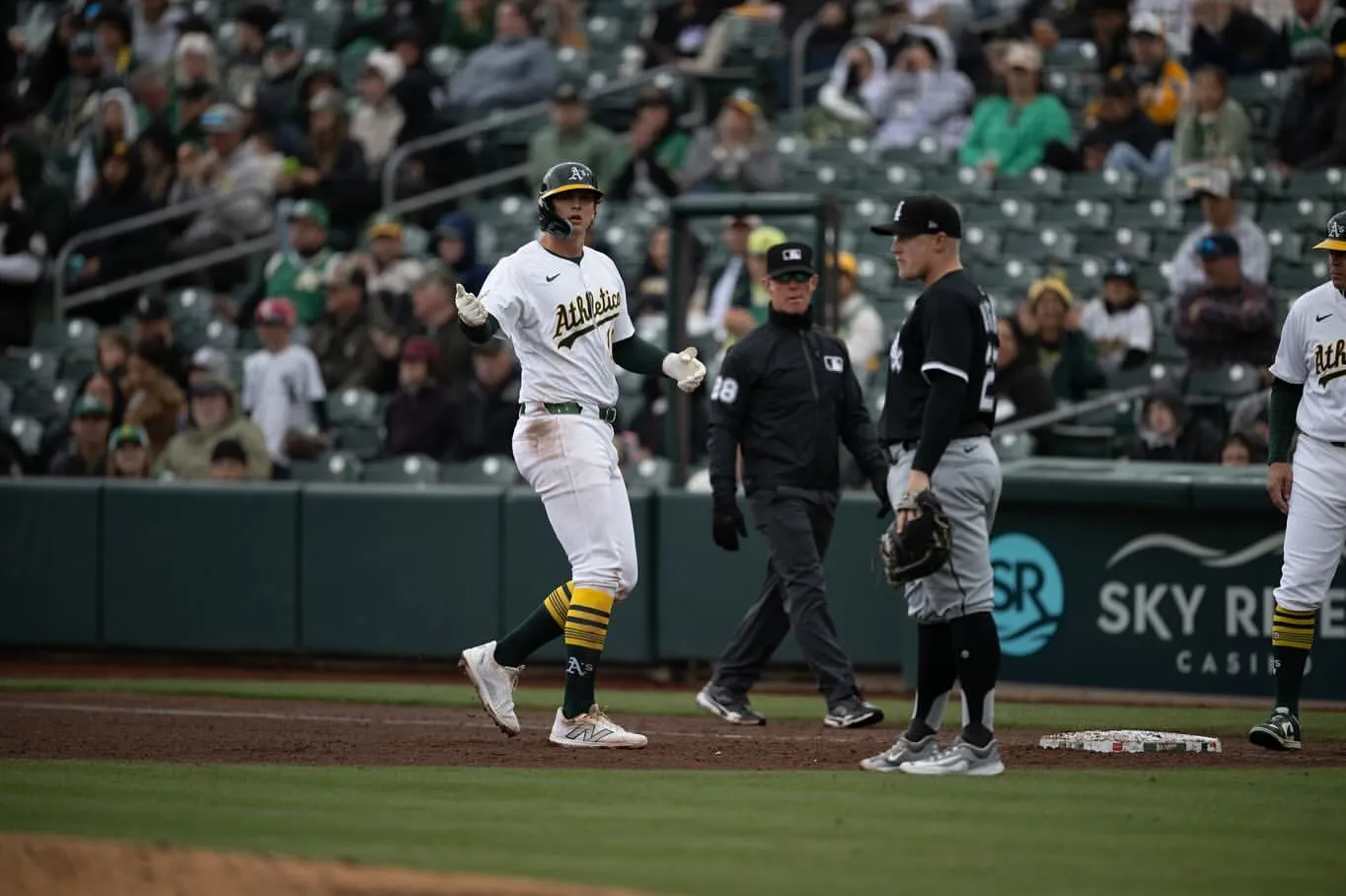
The game that triggered the now-infamous clap wasn’t even a playoff matchup. It was a Tuesday night interleague faceoff—Athletics vs. Nationals. Both teams were in the middle of rebuilding arcs, their rosters peppered with prospects and rookies still getting their feet wet.
In the bottom of the 5th, with two outs and a man on first, Kurtz hit what should have been a routine grounder. But the Nationals’ second baseman bobbled the ball, hesitated, and fired late to first. Kurtz was safe.
Then came the moment.
He reached the bag. Looked toward his teammates. And then slowly, exaggeratedly, clapped his hands twice.
It wasn’t aggressive. But it wasn’t innocent either.
He didn’t pump his fist. He didn’t yell. He didn’t smile.
Just two crisp claps, dripping with the kind of smugness you rarely see from a rookie.
Twitter noticed within seconds.
The Internet Reacts: Praise, Outrage, and Memes Galore
Within 10 minutes, the clip hit Twitter’s trending page.
Baseball fans—always divided over what counts as “respect for the game”—erupted into opposing camps.
Nationals fans:
-
“That clap was straight-up disrespectful.”
-
“Who does Nick Kurtz think he is?”
-
“Rookie hasn’t earned that kind of attitude.”
A’s fans:
-
“Let the kid live—he’s cooking.”
-
“He didn’t say a word and still owned them.”
-
“That clap had more power than his four home runs.”
Neutral observers:
-
“Baseball needs more villains like this.”
-
“Was that a taunt or just confidence?”
-
“Petty. And I loved every second of it.”
Within the hour, memes poured in:
-
A slowed-down replay of the clap, set to dramatic opera music.
-
“MLB’s Newest Villain” superimposed over Kurtz’s stoic face.
-
A still shot of the Nationals fielder fumbling the ball, captioned “You vs. the guy she told you not to worry about.”
It wasn’t just about baseball anymore. It was culture. Swagger. Perception.
The Power of a Clap: Why It Hit So Hard
So why did two claps stir up such a frenzy?
Because in sports, subtlety can sting the most.
If Kurtz had yelled, pointed, or made a showy gesture, it might’ve been dismissed as rookie immaturity. But instead, he said nothing—and said everything.
That clap carried meaning:
-
“I see your mistake.”
-
“I’m unfazed.”
-
“I belong here. You don’t.”
And the fact that he posted the moment on Instagram—with “Livin the Dream”—turned it from momentary sass into a brand.
It was reminiscent of athletes like Allen Iverson stepping over Tyronn Lue, or Conor McGregor’s slow walk after a knockout. Calm. Confident. Cutting.
Personality Behind the Glove: Nick Kurtz Unfiltered
To those who know him personally, the clap wasn’t a surprise—it was a side of Nick Kurtz rarely seen on television but always present in the locker room.
According to former Wake Forest teammate Brock Wilken:
| WILKEN: “Nick was never loud, but when he said something, it was usually savage. That clap? That’s classic Kurtz.” |
Kurtz is known for his methodical approach. Teammates say he studies pitchers like a scientist, tracks swing mechanics obsessively, and rarely loses his temper. He’s not fiery—he’s cold steel.
But beneath the icy demeanor is a competitor who doesn’t just want to win—he wants you to know he won.
After the Nationals game, when asked by a reporter if the clap was intentional, he smirked and said:
| KURTZ: “I just got on base. That’s all.” (pause) “We all express ourselves differently.” |
It was the kind of answer that only fueled the fire.
The Mental Game: Psychological Warfare in Baseball
Baseball isn’t just about physical skill—it’s mental. And gestures like Kurtz’s clap are part of the unspoken war between teams.
Think about it:
-
A veteran player flinches after a mistake.
-
A rookie claps, confidently, after you mess up.
Who has the edge?
The Nationals dugout reportedly took offense. Cameras caught a few players exchanging words. A coach appeared to bark something across the field. But Kurtz didn’t respond. He didn’t need to.
That’s psychological dominance. And that’s what separates stars from role-players.
As one analyst on MLB Network said:
| “That clap might’ve been more effective than a home run.” |
Aftermath: Fallout, Apologies, and Future Fireworks?
Did the league respond? No.
Did Kurtz apologize? Absolutely not.
In fact, in his next game, he hit a double and—once again—clapped. This time, the crowd cheered.
The A’s leaned into the drama. The team’s official account tweeted:
“Clap back season. #LivinTheDream”
T-shirts started appearing in the stands with the word “CLAPBACK” over his jersey number 16.
As for the Nationals, they declined to comment. Their manager shrugged it off post-game:
| “We made an error. He reached base. What he does after that is up to him.” |
But fans noticed that Kurtz didn’t get an inside pitch the rest of the series. Message received?
What This Means for Baseball’s Culture
Kurtz’s clap wasn’t just a viral moment. It was part of a bigger shift in MLB culture—a changing of the guard where young stars aren’t afraid to show flair.
Just like Fernando Tatis Jr., Ronald Acuña Jr., or Jazz Chisholm, Nick Kurtz represents a new era where:
-
Emotion isn’t weakness.
-
Swagger isn’t disrespect.
-
And silence can be louder than words.
Some fans hate it. Others love it. But everyone’s watching.
“Livin the Dream”: More Than a Caption

The phrase “Livin the Dream” might seem like a throwaway Instagram caption. But for Nick Kurtz, it’s a mantra.
-
He’s 22 years old.
-
He’s breaking records.
-
He’s building a brand.
-
And he’s doing it with ice in his veins.
That clap wasn’t just about the Nationals. It was about the message:
“I’m here. I’m legit. And I’m not afraid to ruffle feathers.”
If you can’t handle the clap, maybe you’re not ready for the storm.
Final Thoughts
Nick Kurtz’s mocking clap after a Nationals error didn’t just go viral—it revealed something deeper. In a single moment, it showed how baseball is evolving, how confidence can become controversy, and how one player can command an entire conversation without uttering a word.
Whether you view him as a rising star or a rising villain, one thing’s for sure:
Nick Kurtz isn’t just playing the game. He’s playing it his way.
And for now?
He’s still Livin’ the Dream.