









Had a 140 IQ and Was Writing Poetry by Age 8 – But Lil Wayne Walked Away from It All… for Nothing But a Microphone
Before he was Lil Wayne, he was Dwayne Carter – a gifted child with a 140 IQ, writing poetry at 8, and scoring in the top percentile of national academic tests. So what made a straight-A student from New Orleans abandon his future… just to chase beats and bars?
Lil Wayne didn’t just walk away from school — he walked away from a life most parents dream of for their children. A path paved with scholarships, degrees, and a potential career in robotics engineering. But instead, he chose something far more unpredictable. Something that couldn’t be taught in a classroom. He chose the mic. And in doing so, he rewrote the rules of hip-hop — and perhaps the definition of genius itself.
FROM GIFTED TO GRITTY: THE LOST PRODIGY OF LAFAYETTE HIGH
Long before platinum albums and face tattoos, Wayne was a disciplined, uniform-wearing, book-carrying honors student at Lafayette Elementary and later Eleanor McMain Secondary School. According to teachers, he was not only smart — he was different. While most kids were learning to write paragraphs, Wayne was writing poetry and lyrical monologues. By the time he hit middle school, he had already been identified as a “gifted and talented” student with an IQ estimated at 140, placing him well above the national average.
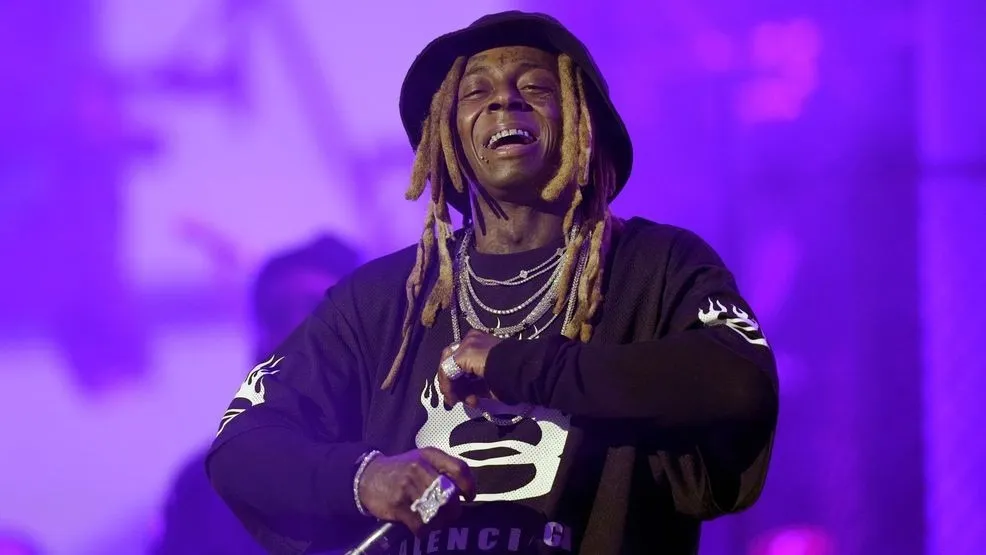
He wasn’t just naturally bright — he was hungry to learn. In fact, Wayne once dreamed of becoming a robotics engineer, inspired by late-night science programs and his fascination with futuristic machines. He would later enroll at the University of Houston in 2005, attempting to balance tour life with academia. But like most things in his world at the time, books couldn’t compete with beats.
WRITING POETRY AT 8, RHYMING WITH LEGENDS AT 14
While other kids were trying to memorize multiplication tables, Wayne was writing full verses — not nursery rhymes, but structured, metaphor-laden poetry. His earliest notebooks, reportedly filled with emotional, rhythm-based writings, hinted at a mind that processed the world not through equations, but through cadence and creativity.
At just 11, he left a voicemail rap on the answering machine of Cash Money Records — and the rest was history. Birdman heard the raw, unfiltered talent and took him under his wing. By 14, Lil Wayne was part of the Hot Boys, making national waves in the hip-hop underground. From gifted student to Cash Money protégé — the transformation was fast, almost jarring.
THE DECISION TO DROP OUT: A MIC OVER A DEGREE
Here’s what most people still don’t know: Wayne didn’t drop out because he was failing. He dropped out because school couldn’t keep up with his ambition. According to interviews, he felt confined by the system — a system that wanted to mold him into a conventional success story, while his heart was already racing toward the studio.
He reportedly left school at just 14 years old, despite earning high grades and ranking among the top students. “It wasn’t about not being smart. I just had other things on my mind,” Wayne would later say in rare interviews.
At an age when most kids worry about prom, he was negotiating record deals.
THE UNIVERSITY OF HOUSTON DETOUR: A GLIMPSE AT WHAT COULD HAVE BEEN
In a surprising twist, Lil Wayne enrolled at the University of Houston in 2005. By then, he was already a rising star with charting singles and a growing fan base. But the decision to return to school caught everyone off guard. Was it an attempt to finish what he started? A nod to his former academic self?
Unfortunately, the experiment didn’t last long. Tour life, studio sessions, and fame proved too heavy to juggle with exams and lectures. He reportedly completed just one semester before stepping away permanently. Yet even that short-lived enrollment remains a footnote in his story — a reminder that even a rap legend once dreamed of robots and research papers.
THE REAL COST OF GENIUS: WHAT DID WAYNE GIVE UP?
We celebrate Wayne for what he became — but what about what he left behind?
-
A potential degree in mechanical engineering
-
A future in tech or innovation
-
A stable, high-income career rooted in academia
But had he stayed that course, the world may have never heard Tha Carter III. There would be no “Lollipop,” no “A Milli,” no Grammy for Best Rap Album. So the question is not whether Wayne made the right choice — but whether he ever had a choice. Genius, after all, doesn’t always follow rules.
“I JUST WANTED TO BE HEARD”: WHY THE MIC MEANT EVERYTHING
In multiple interviews, Lil Wayne has hinted that rap saved his life — not metaphorically, but literally. Raised in one of New Orleans’ toughest neighborhoods, he witnessed violence, drugs, and poverty from a young age. He famously shot himself at age 12 in a near-fatal incident, later saying it wasn’t an accident.
The microphone wasn’t just a tool for success. It was a way out.
To Wayne, the studio was safer than the streets — and more liberating than the classroom. He didn’t need grades to prove his intelligence. His lyrics did that on their own.
THE GENIUS IN THE LYRICS
Listen closely to Wayne’s verses, and you’ll find the fingerprints of a poet, a philosopher, a wordsmith with surgical precision. His metaphors are layered, his punchlines calibrated like equations. Critics who once dismissed him as another Southern rapper were forced to reevaluate. There’s a reason universities have dissected his lyrics in English departments.
He wasn’t just rhyming. He was building linguistic mazes. It was academia — just with bass.
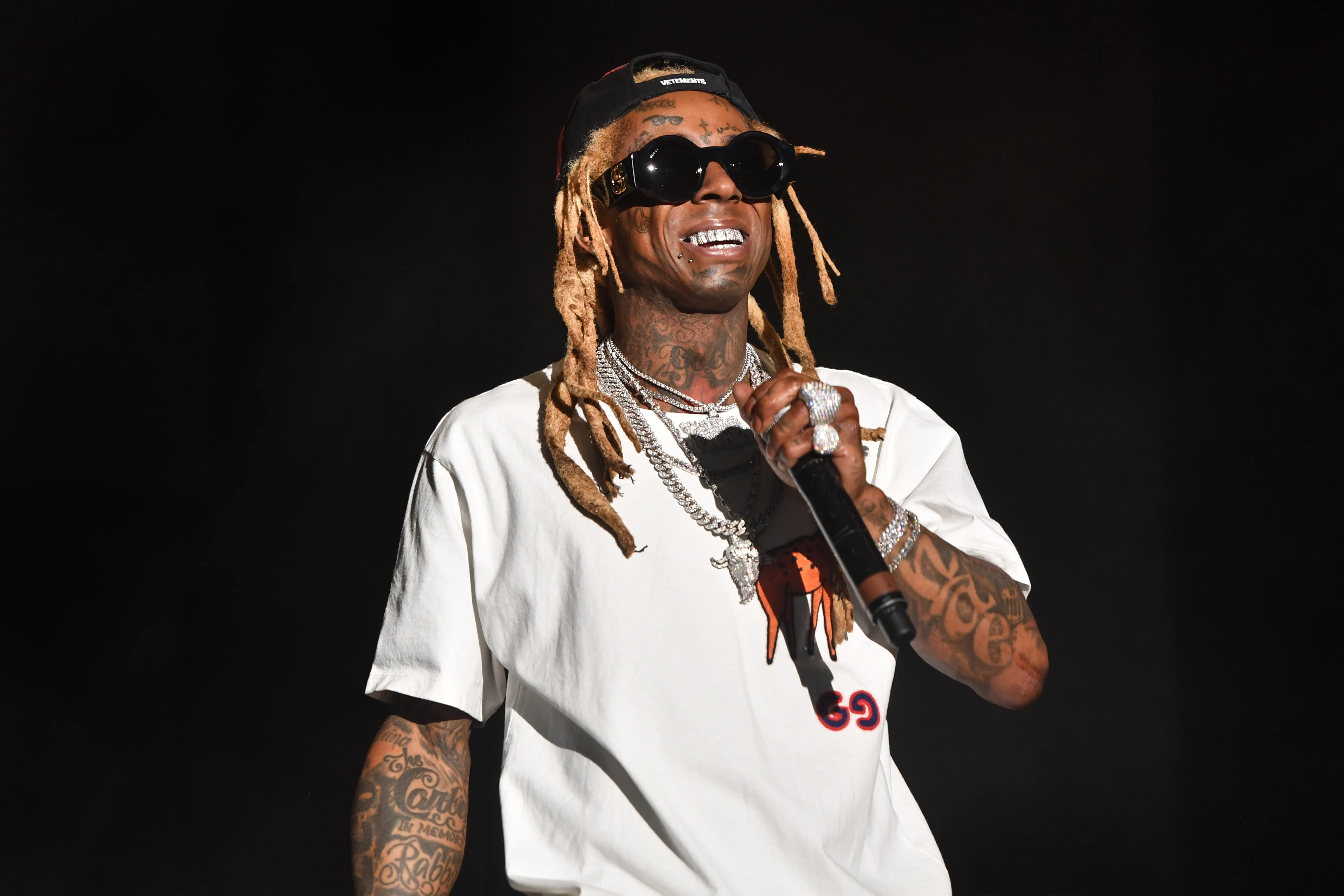
A DIFFERENT KIND OF DIPLOMA
Today, Lil Wayne doesn’t have a college degree. But he has something just as rare: cultural impact on a global scale. From being one of the best-selling artists of all time to influencing an entire generation of rappers, his legacy is undeniable.
He’s a guest lecturer at Harvard symposiums. His lyrics are studied alongside Shakespeare in comparative literature classes. And he’s inspired everything from sneaker designs to TED Talks.
So maybe the story isn’t that Wayne gave up his brain for rap. Maybe he just used it differently.
CONCLUSION: THE PATH NOT TAKEN… OR THE ONE THAT WAS ALWAYS HIS?
It’s tempting to ask: What if Wayne had stayed in school? What if he’d gone on to become a robotics engineer, a professor, a scientist? But maybe he was a scientist all along — just working in the lab of language, building verses instead of circuits.
In the end, Lil Wayne didn’t abandon genius. He redefined it.
And sometimes, a microphone is the most powerful diploma of all.