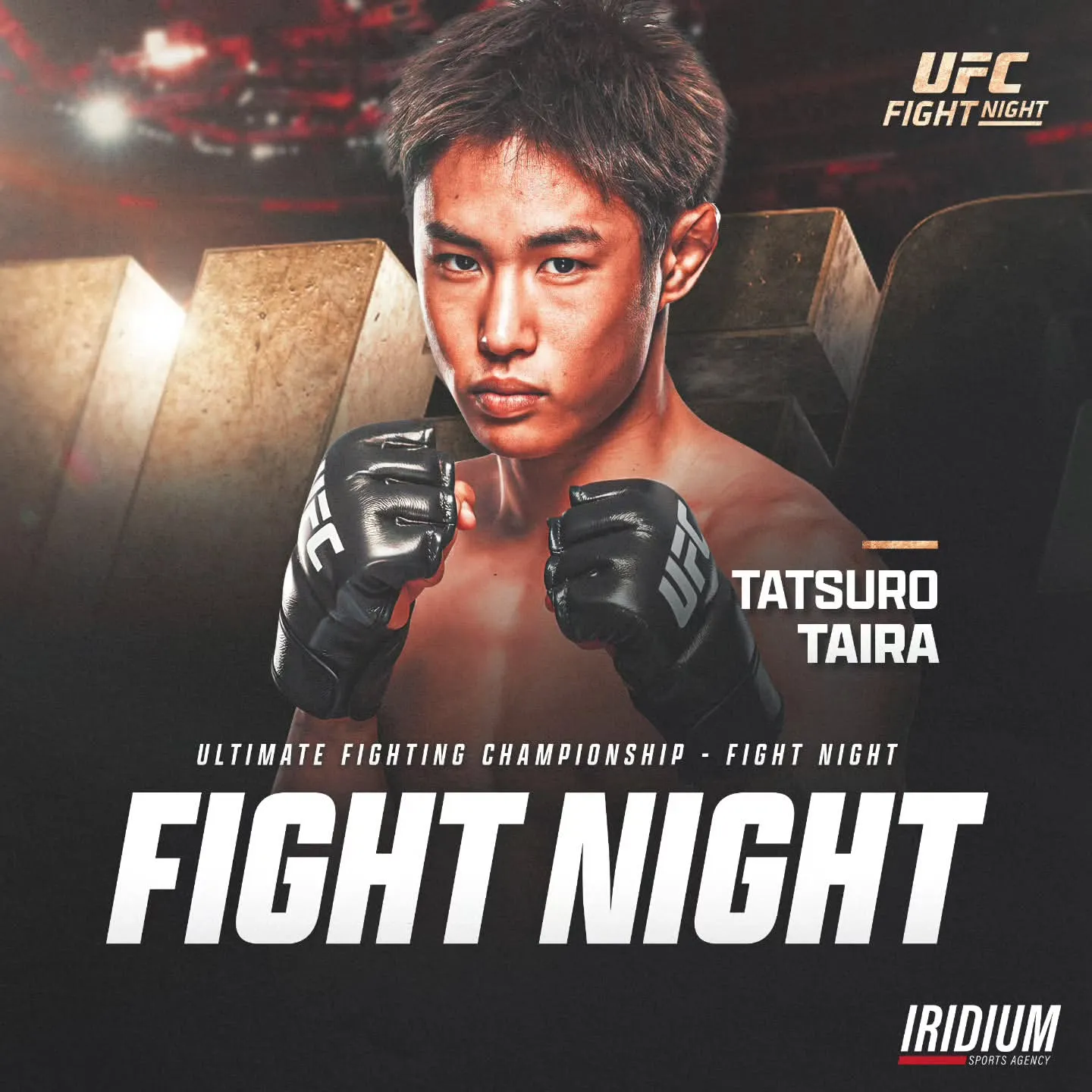
Tatsuro Taira pulled off a technique that broke his opponent’s neck. This technique saved his career. What was it?
For rising flyweight star Tatsuro Taira, UFC Vegas 108 was more than just another fight—it was a statement. A 16–1 record is impressive by any standard, but for Taira, this win against the previously undefeated Hyun Sung Park (10–0) marked a rebirth. After a heartbreaking split-decision loss to Brandon Royval in October 2024, many wondered if the Japanese phenom could bounce back. The answer came swiftly—1 minute and 6 seconds into Round 2, to be exact.
| Tatsuro Taira: “That loss taught me everything I needed. I’m not just back—I’m better.”
A Moment of Redemption
The matchup against Hyun Sung Park was billed as a battle between Asia’s two most promising flyweights. Park, unbeaten at 10–0, had built a reputation for resilience, calm under pressure, and sharp counter-striking. But when the Octagon doors closed at the UFC Apex, it was Taira who stole the spotlight.
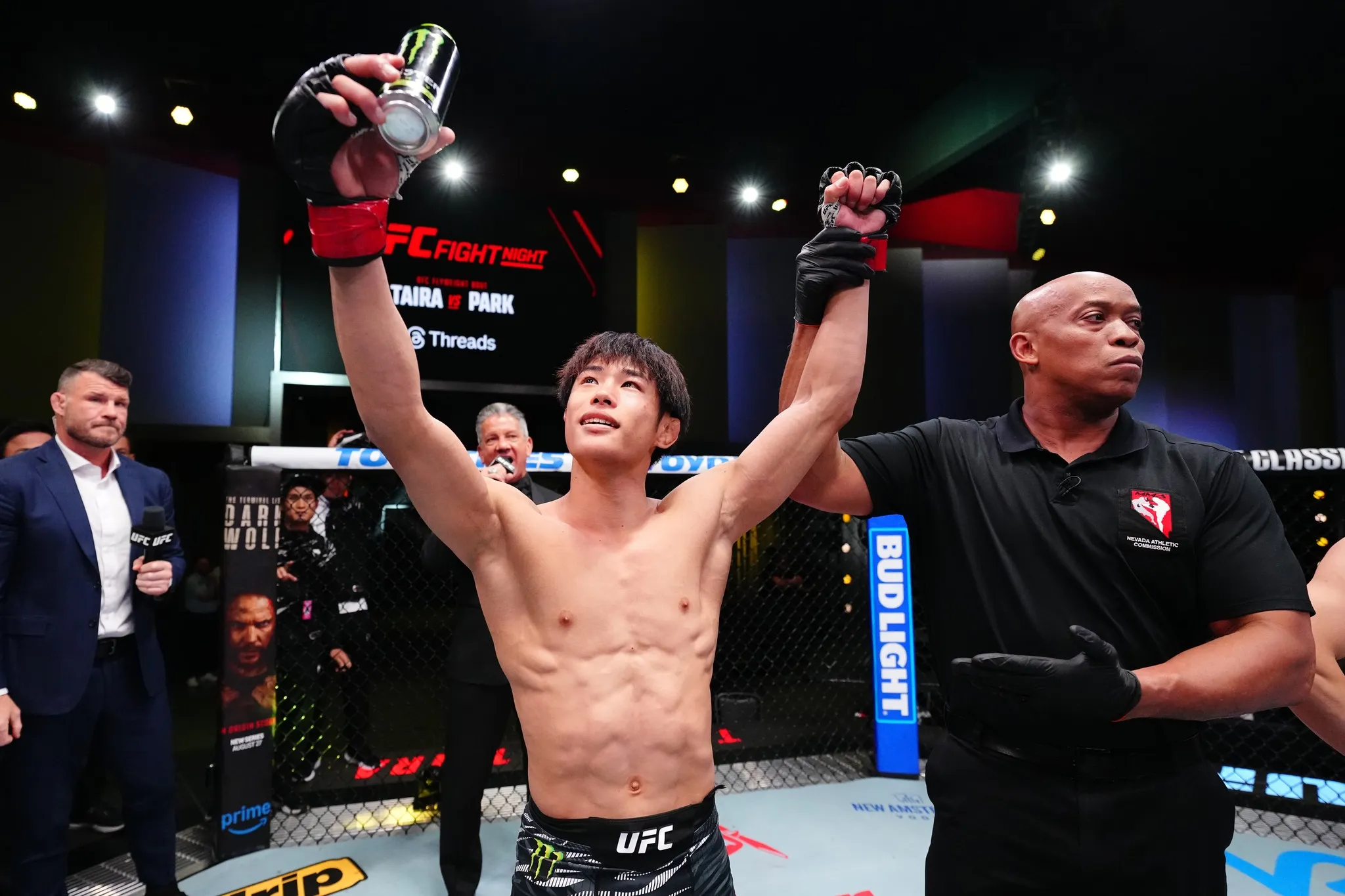
From the opening bell, Taira looked like a man on a mission. He displayed crisp footwork, deceptive feints, and precise striking. But what truly caught the attention of fans and commentators alike was his ability to blend striking and grappling seamlessly—a hallmark of a future champion.
The Finish: Face Crank Precision
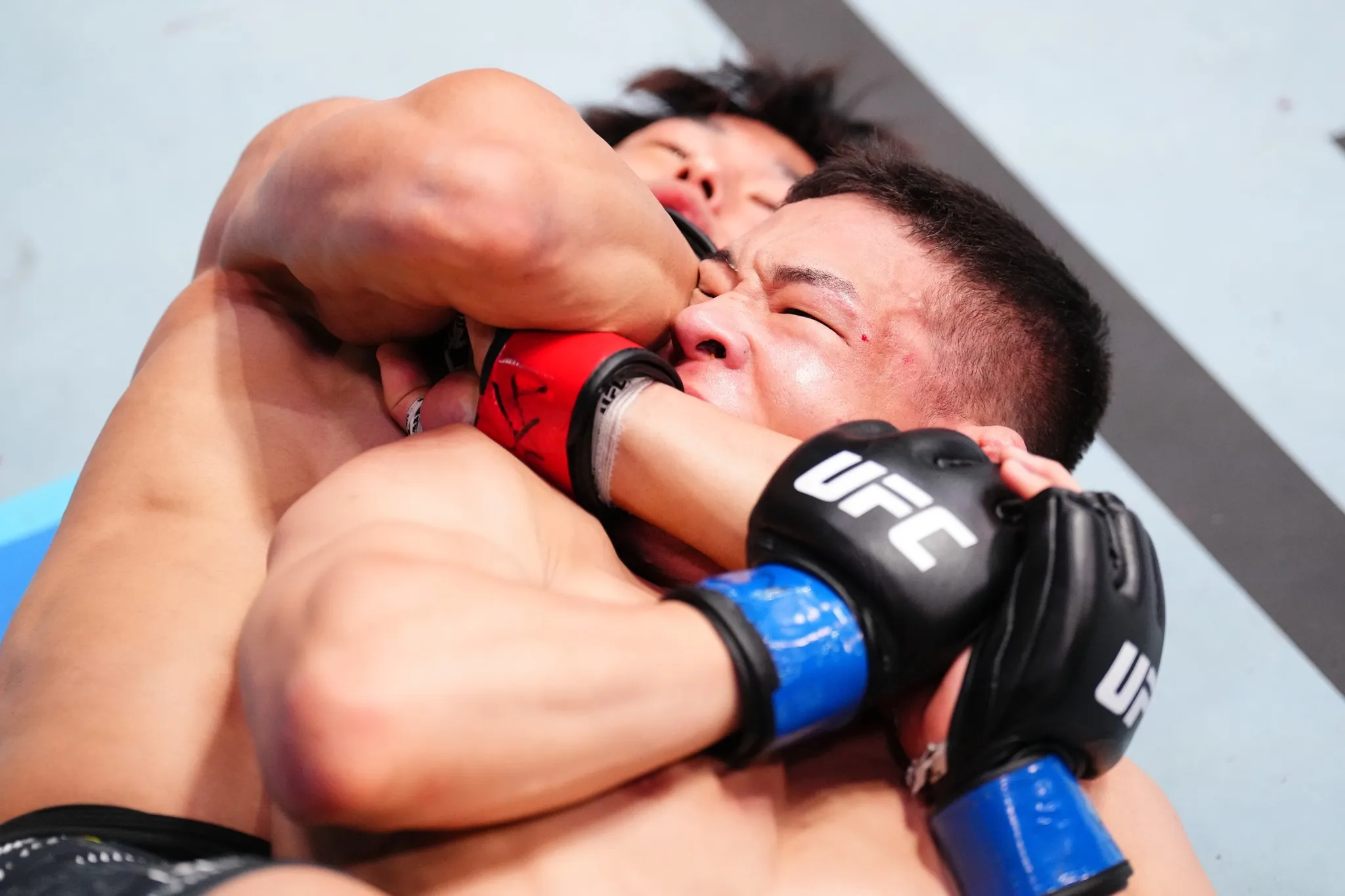
The end came quickly in the second round. After gaining top position during a scramble, Taira transitioned effortlessly into a rare submission—the face crank. With a grip that allowed no escape, he forced Park to tap at the 1:06 mark.
| Daniel Cormier (on commentary): “That was clean, man. Super clean. That’s a finish you don’t see every day.”
Indeed, the submission was technical artistry. A face crank might not get as much attention as a rear-naked choke or an armbar, but in this context, it sent a loud message: Tatsuro Taira is not just technical—he’s creatively dangerous.
From Devastation to Domination
Let’s rewind to late 2024, when Taira faced off against Brandon Royval. It was his toughest test yet, and many thought he had done enough to win. But the judges saw it differently, awarding Royval the win via split decision. It was a bitter pill to swallow, especially for a fighter who had never tasted defeat.
Instead of sulking, Taira returned to Okinawa, immersed himself in training, and began evolving his game.
| Taira: “I used that loss as fuel. I didn’t want to come back the same. I wanted to come back unrecognizable to the guy who lost in October.”
Fan Reactions: Awe and Admiration
Social media erupted after the submission. Some dubbed it the “submission of the year,” while others simply marveled at how smooth and instinctive the transition was. The MMA community, often divided, seemed united in praise.
MMAmania went a step further and crowned Taira the biggest winner of UFC Vegas 108—even overshadowing main event winner Neil Magny.
| MMAmania Headline: “Taira’s Crank Heard Round the World: Japanese Star Reclaims Glory”
What Makes Taira So Special?
Beyond the highlight-reel finishes and clean technique, what separates Taira is his calmness under pressure. He never rushes. Every move seems calculated, yet fluid. He brings that unique “samurai” energy—silent but deadly.
Born in Okinawa, a region known for its martial arts roots, Taira grew up watching PRIDE FC legends and dreamt of one day fighting on the world stage. That dream is no longer distant—it’s his reality.
A Look at the Numbers
-
Record: 16 wins, 1 loss
-
Submissions: 9
-
UFC Finishes: 5
-
Time of finish vs. Park: 1:06 of Round 2
-
Strikes landed: 42 significant
-
Takedowns: 2
-
Control Time: 2:18
These aren’t just stats—they’re markers of dominance. Especially after a loss, many fighters come back hesitant. Taira returned like a seasoned veteran.
Hyun Sung Park: The Unraveling of a Undefeated Streak
To give Taira full credit, we must also acknowledge Park, a talented and determined fighter. His unbeaten run had many touting him as South Korea’s next big MMA export. But on this night, he was outclassed.
Park managed to avoid danger early but was never able to impose his rhythm. The submission wasn’t just a flash moment—it was the result of a gradually constructed trap that Taira set with every exchange.
| Michael Bisping: “Park didn’t lose because he was bad. He lost because Taira was just on another level tonight.”
What’s Next for Taira?
With the loss to Royval behind him and his momentum back on track, the question now becomes: who should Taira face next?
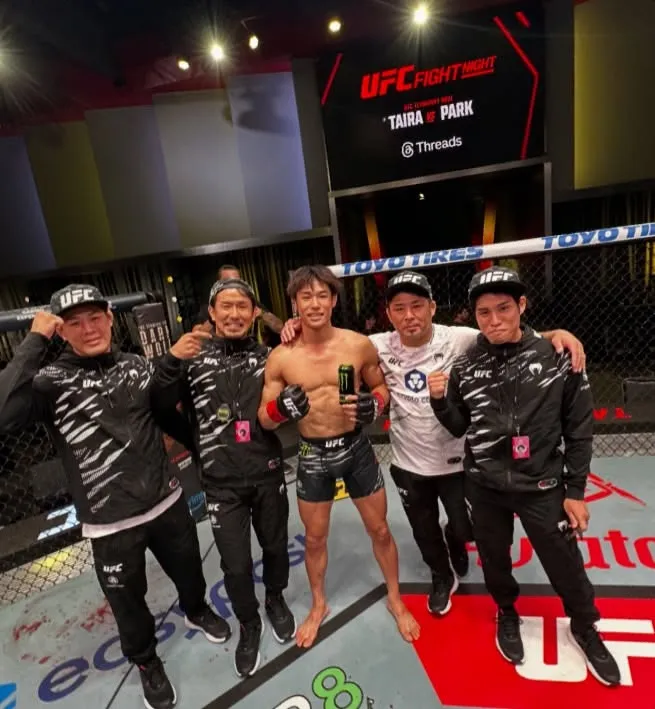
Here are some plausible matchups:
-
Alexandre Pantoja: If Taira is granted a title shot, this would be the ultimate test.
-
Amir Albazi: Another top-ranked flyweight with strong grappling.
-
Brandon Royval (rematch): A fight fans are clamoring for. Redemption and revenge in one.
| Taira: “I’m not here to take part. I’m here to take over. If it’s Royval, I want it. If it’s the belt, even better.”
UFC President Dana White was seen backstage giving Taira a nod of approval. If that’s any indication, the UFC brass is fully behind this young contender.
A Cultural Icon in the Making
Japan has had legendary MMA figures—Kazushi Sakuraba, Takanori Gomi, Shinya Aoki—but it’s been years since the country had a dominant figure in the UFC. Taira could be that man.
| Japanese fan on Twitter: “We cried with him when he lost. Now, we rise with him again.”
Okinawan newspapers ran front-page stories the morning after. Local gyms have started youth programs inspired by Taira’s success. His journey isn’t just athletic—it’s symbolic.
Training Evolution
Post-defeat, Taira didn’t just train harder—he trained smarter. He reportedly brought in:
-
ADCC-level grapplers to sharpen submission transitions
-
Muay Thai striking coaches to add versatility
-
Sports psychologists to refine mental strength
| Coach Hidetaka: “We built a smarter, more resilient fighter. You’ll never see the same version of Tatsuro twice.”
The Art of Adaptation
Modern MMA rewards those who can evolve between fights. Taira’s face crank wasn’t just brutal—it was strategic. He used Park’s habit of giving up the back in scrambles against him.
This ability to adapt on the fly puts him in rare company—alongside names like Demetrious Johnson and Jon Jones, both masters of mid-fight adjustments.
Critics Silenced
Before UFC Vegas 108, critics whispered about Taira’s ability to bounce back from adversity. They questioned his mental fortitude, his cardio in longer fights, and his finishing instincts.
Not anymore.
| ESPN Analyst: “That wasn’t a comeback. That was a coronation.”
Conclusion? Not Yet. Taira’s Just Getting Started
At only 24 years old, Taira has already achieved what most fighters only dream of. But ask him, and he’ll tell you—this is only phase one.
| Taira: “The best version of me is still on the way. Trust me.”
As UFC Vegas 108 fades into history, it will be remembered not for the main event, but for a young man from Okinawa who cranked his way back into relevance—and possibly, towards greatness.
A career redefined, a fanbase reinvigorated, and a division put on notice—Tatsuro Taira is back, and he’s not waiting for permission to dominate.
Related News