







He’s the Smartest? Nick Kyrgios Just Roasted Jannik Sinner — and the Internet Can’t Look Away
In the ever-dramatic world of professional tennis, Nick Kyrgios has once again inserted himself into the headlines—this time by mocking fellow player Jannik Sinner. The controversy erupted shortly after Daniil Medvedev and Lorenzo Musetti both praised Sinner, calling him the “smartest player” on the tour. As one would expect, Kyrgios didn’t hold back, responding with sarcasm and his signature brand of irreverent humor. What started as a few harmless compliments quickly spiraled into a fiery debate about intelligence, authenticity, and the politics of modern tennis.
Jannik Sinner’s Rise and Recent Praise
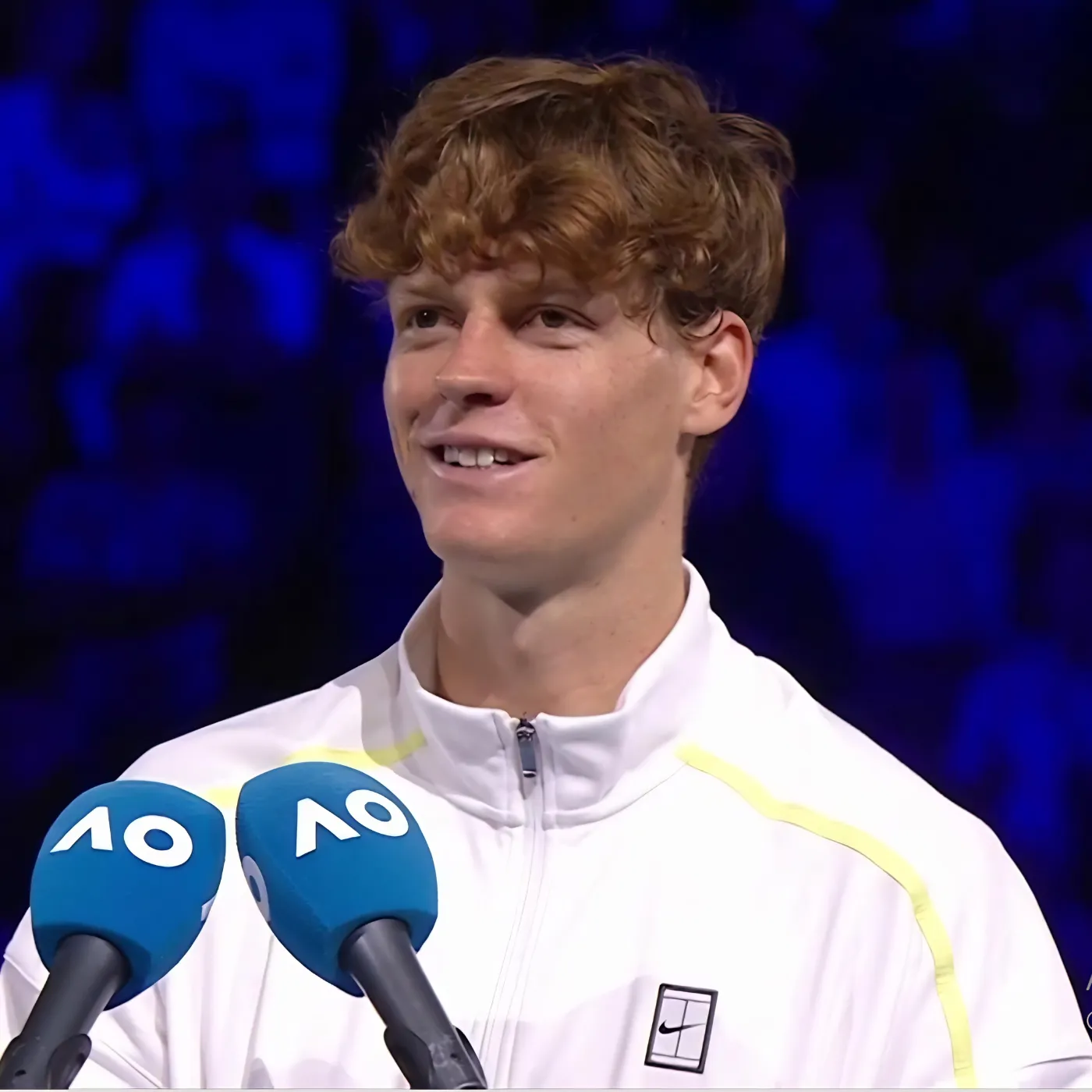
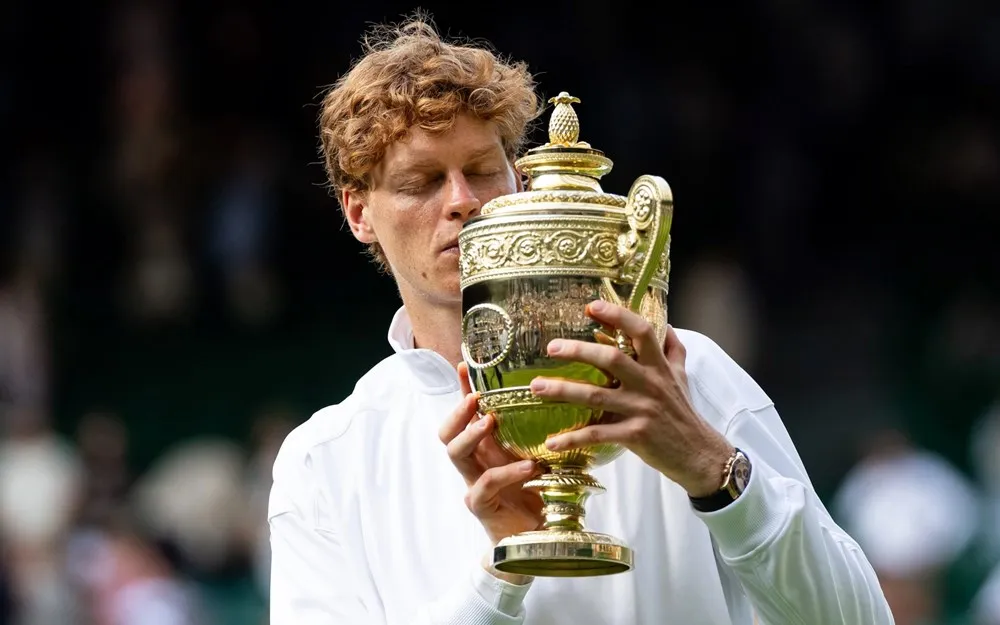
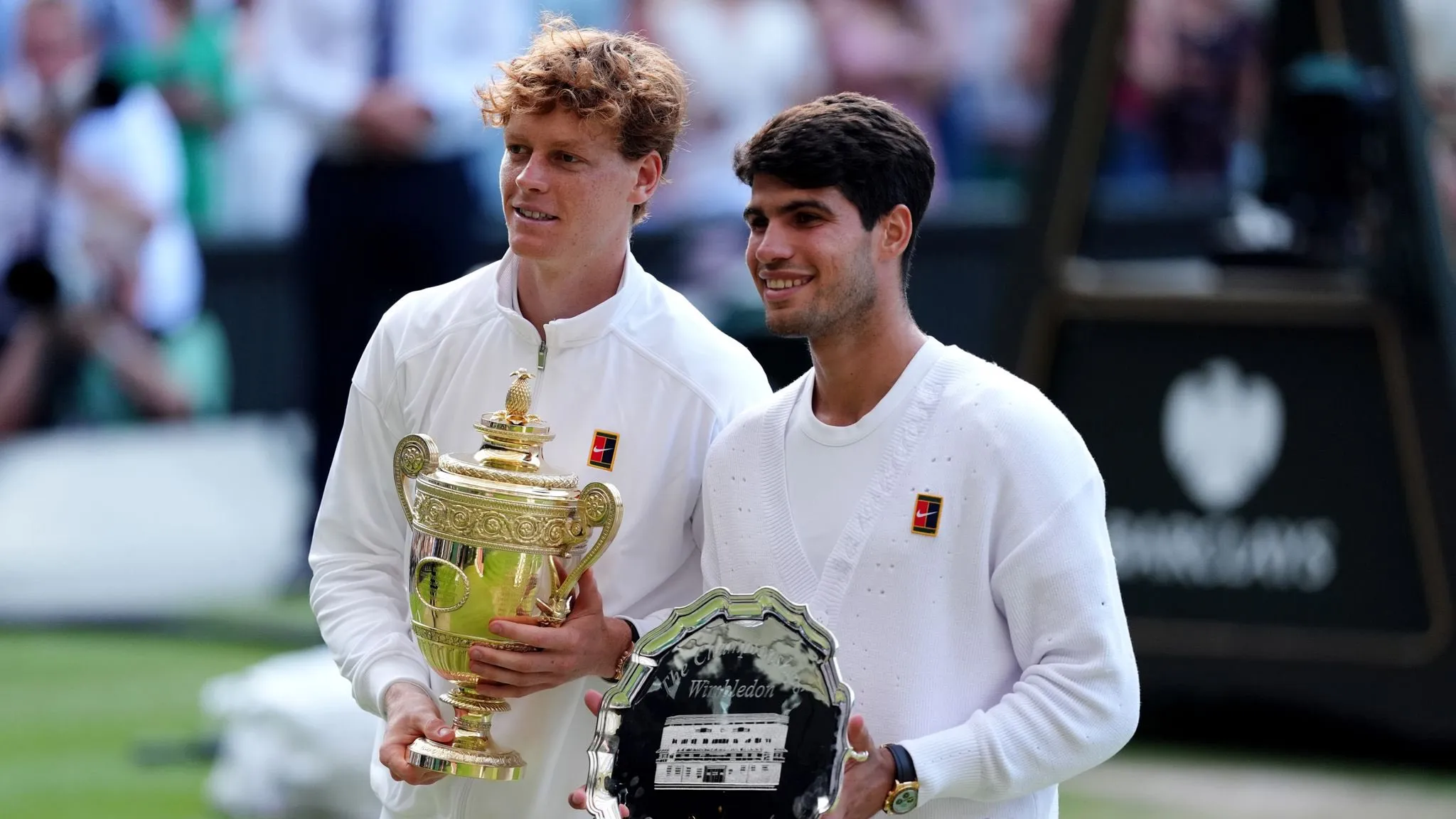
Jannik Sinner, the 22-year-old Italian prodigy, has been on a meteoric rise in the past two seasons. With a cool temperament and laser-sharp focus, he has slowly but surely embedded himself in the upper echelons of men’s tennis. Known for his powerful baseline play, strategic shot selection, and relentless consistency, Sinner has become a fixture in late-stage Grand Slam matches and ATP Masters tournaments.
Earlier this week, during a post-match press conference at the Queen’s Club Championships, Daniil Medvedev—himself a master of mental chess on court—was asked about the most intellectually gifted player he’s faced recently. Without hesitation, he responded: “Sinner is probably the smartest player out there right now. He understands the rhythm, adapts so well, and never wastes energy. It’s like playing a computer that learns with every shot.”
The statement was echoed by Lorenzo Musetti, another rising Italian star and frequent Sinner training partner. “Jannik doesn’t just play the game—he analyzes it in real-time. He’s methodical and incredibly efficient. People underestimate how clever he is just because he’s quiet.”
Such praise, naturally, triggered a wave of discussion across tennis forums and sports shows. Many fans lauded the recognition of Sinner’s mental acuity. Others, however, questioned whether intelligence in tennis was being measured solely through tactical patience and ball placement, ignoring the more instinctive, creative elements of the game.
Kyrgios’ Reaction: A Blend of Sarcasm and Provocation
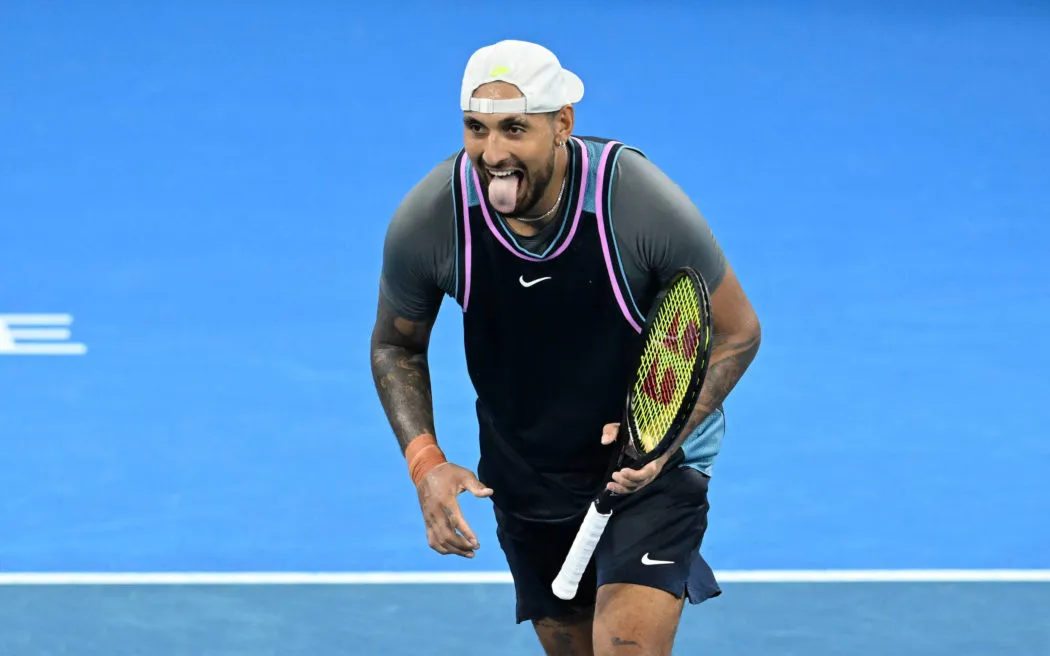
Enter Nick Kyrgios, the sport’s perennial wildcard and self-appointed truth-teller. Known for his unpredictable play, on-court outbursts, and unabashed social media presence, Kyrgios wasted no time firing off a response to the Sinner praise.
Taking to X (formerly Twitter), Kyrgios wrote:
“Smartest player? 🤣🤣 Guess I’ve been doing it all wrong—should’ve just hit safe cross-courts and worn poker face all day.”
He followed up with a now-deleted Instagram Story featuring a photo of himself hitting a no-look tweener with the caption:
“Dumbest shot by the dumbest player? Or just vibes and pure talent?”
The internet exploded. Supporters of Kyrgios praised him for challenging the narrow criteria of what constitutes “smart” tennis. Critics accused him of being bitter and disrespectful. Some even suggested that his comments reflected deeper insecurities about his own erratic career trajectory.
But true to form, Kyrgios doubled down. In a podcast appearance days later, he elaborated on his stance:
“Look, I like Jannik. He’s a good kid. But let’s not pretend hitting percentage tennis is some Mensa-level IQ move. People confuse discipline with genius. If being robotic makes you smart, then congrats—I must be the class clown. But tennis is an art, not a math problem.”
Redefining ‘Smart’ in the Context of Tennis
Kyrgios’ commentary, while divisive, raised a valid question: What does it really mean to be the “smartest player” in tennis? Is it someone who plays with analytical precision and follows a well-rehearsed plan, like Sinner? Or someone who improvises and relies on natural flair, like Kyrgios himself?
The traditional definition of tennis intelligence has often favored the former. Players like Novak Djokovic and Roger Federer are often praised for their ability to read the game, adjust tactics mid-match, and maintain focus under pressure. In this framework, Sinner fits the mold perfectly—calculated, efficient, and devoid of unnecessary risks.
But Kyrgios, and a minority of fans, argue for a broader interpretation. They point to Kyrgios’ unorthodox shot-making, instinctive positioning, and ability to dismantle top players when focused as evidence of a different kind of brilliance—creative intelligence, as opposed to academic intelligence.
Indeed, it’s hard to dismiss the achievements Kyrgios has made without a full-time coach or sports psychologist. In 2022, he reached the final of Wimbledon, defeating Stefanos Tsitsipas and other high seeds in spectacular fashion. He did it with flair, not formulas.
Is Jealousy at Play? Or Just Philosophical Differences?
Some tennis insiders believe Kyrgios’ comments stem not from genuine critique but from a place of envy. Sinner has accomplished in a few short years what took Kyrgios almost a decade to glimpse—consistency, respect from peers, and endorsement as a future world No.1. While Kyrgios has long been hailed as a “wasted talent,” Sinner is perceived as the complete package: discipline, talent, humility.
Others argue that the Australian simply detests conformity. Whenever the tennis establishment starts to collectively praise a new golden boy, Kyrgios instinctively pushes back. It’s not about Sinner, they claim—it’s about Kyrgios’ broader discomfort with the way tennis culture elevates stoicism over spontaneity.
There may be truth to both. Kyrgios has always been most comfortable as the outsider, the rebel. Being asked to accept Sinner’s stoic style as the apex of tennis intelligence probably rubbed him the wrong way.
Sinner’s Response: Silence Speaks Volumes
For his part, Jannik Sinner has remained notably silent. He neither acknowledged Medvedev and Musetti’s praise publicly nor responded to Kyrgios’ jabs. This, too, plays into the image that so many of his fans admire: a quiet professional who lets his racquet do the talking.
Sources close to Sinner’s camp say he’s “unbothered” by the drama and is focusing entirely on his Wimbledon preparation. When asked about Kyrgios in a recent media scrum, Sinner simply smiled and replied,
“Nick is Nick. He plays in his own way, and it works for him sometimes.”
That short answer was widely interpreted as a subtle but masterful deflection—another sign, perhaps, of the Italian’s calculated poise.
Media Frenzy and Fan Divides
The debate has taken over tennis Twitter and Reddit threads, with fans polarizing into camps. Team Kyrgios argues that raw talent and improvisational skill are being unfairly devalued in favor of baseline grinders. Team Sinner, meanwhile, insists that discipline and strategic depth are not just admirable but necessary for long-term success.
Even former players have weighed in. Andy Roddick, never one to avoid a spicy debate, tweeted:
“Being smart isn’t about doing trick shots. It’s about making the best decision over and over again. That’s Jannik.”
On the other hand, Marat Safin, known for his own flamboyant playing style, chimed in on Instagram:
“Tennis needs both types. The artists and the scientists. Sinner is great. So is Kyrgios. But don’t forget the showmen built this sport too.”
A Sport at a Crossroads
This entire saga reflects a broader tension within men’s tennis. As the Big Three era (Federer, Nadal, Djokovic) winds down, the sport is struggling to decide what kind of personalities—and playing styles—it wants to champion. Players like Carlos Alcaraz and Holger Rune blend athleticism with flair, while others like Sinner and Taylor Fritz lean toward a more clinical approach.
Nick Kyrgios, though frequently absent from the tour due to injuries and personal reasons, remains a potent voice in shaping this conversation. His criticism may not always be diplomatic, but it forces the tennis world to reckon with uncomfortable truths: Is the sport rewarding predictability over passion? Order over originality?
Conclusion: More Than Just a Clash of Egos
The Kyrgios vs. Sinner mini-drama isn’t just about two players and their contrasting personalities. It taps into deeper questions about how we value intelligence, style, and identity in modern sport. It’s about the athletes we choose to celebrate and why.
Whether you believe Jannik Sinner is the smartest player in the game or that Nick Kyrgios represents a more authentic genius, one thing is certain: tennis is better with both of them in the mix. Their differences—like their shots—create angles that keep the game exciting.
And in a world increasingly obsessed with metrics, data, and polished personas, maybe a little chaos from Kyrgios is exactly what we need to keep the heart of tennis beating.
Related News