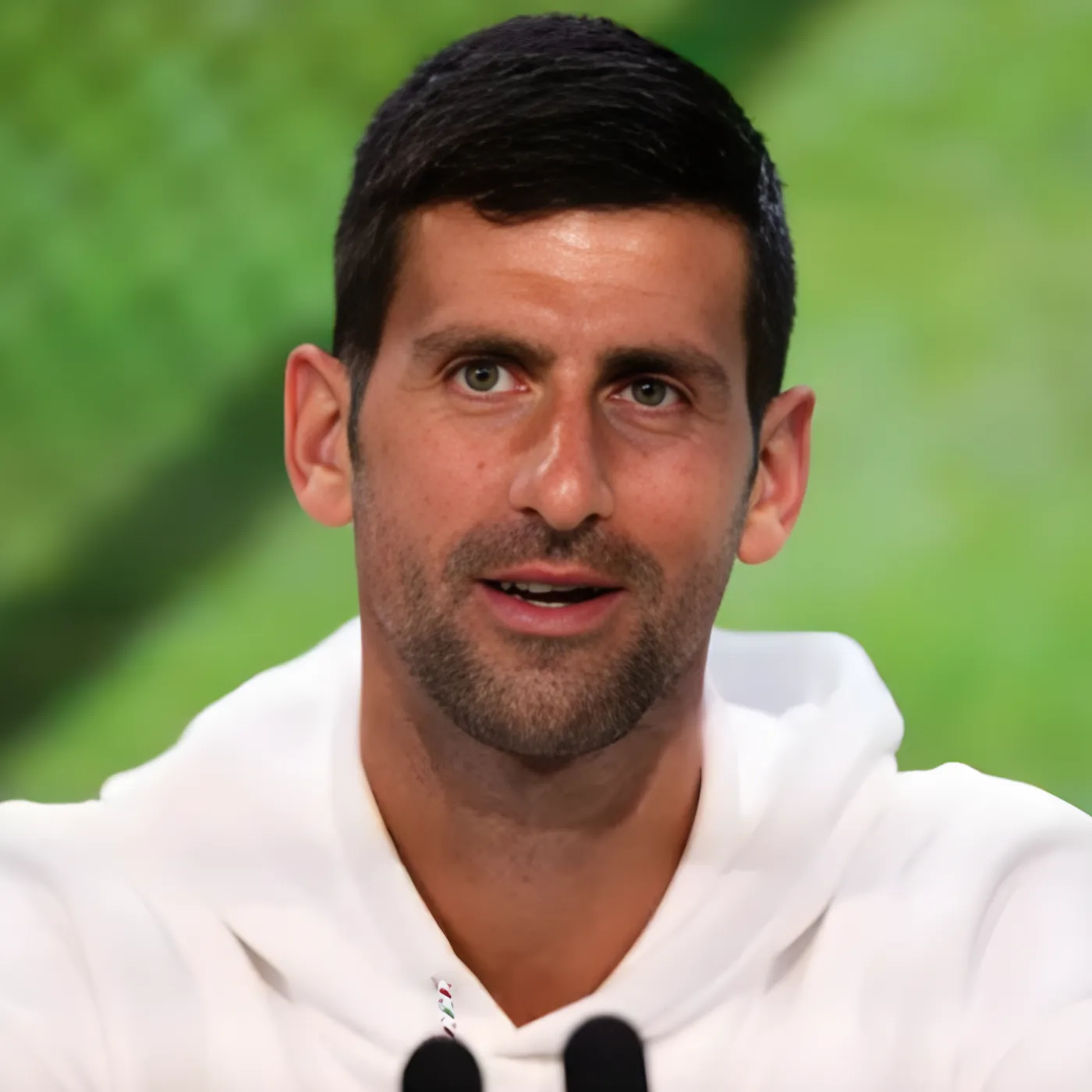









Jelena Djokovic Reveals the Trauma That Still Haunts Novak on Court
In the glittering world of professional tennis, where athletes are often seen as unbreakable gladiators of the modern era, the vulnerability behind their victories rarely makes headlines. Yet in a recent candid and emotional revelation, Jelena Djokovic has opened up about the inner battles her husband, Novak Djokovic, continues to face. The Serbian tennis legend, who has long stood at the pinnacle of the sport, is still haunted by past trauma that casts a shadow over every match he plays. This stunning confession sheds new light on the emotional weight carried by one of the greatest players of all time, and how the remnants of his early struggles have shaped, and continue to shape, his career.

A Childhood Marked by War and Uncertainty
Novak Djokovic’s childhood has often been briefly referenced in interviews and documentaries, but the full emotional impact of growing up in war-torn Serbia remains difficult for even his most loyal fans to fully grasp. Born in Belgrade in 1987, Novak’s formative years were scarred by the horrors of the Yugoslav Wars and the NATO bombings that devastated his homeland in the late 1990s. Jelena, his wife and closest confidante, recently recalled how deeply those experiences carved into his psyche.
“He still remembers the sound of sirens, the fear in his mother’s eyes, and the feeling that everything could be taken away in a moment,” Jelena said tearfully. “That kind of trauma doesn’t just disappear when you grow up. It follows you.”
For a young Novak, tennis was not just a sport—it was a lifeline. While other children found escape in games or television, Novak found his in the rhythm of his racket hitting the ball, even as bombs fell in the distance. Training under the mentorship of Jelena Gencic, his first coach, he often practiced on damaged courts or in makeshift facilities. The idea that his future would depend on surviving each day instilled in him both resilience and a deep-seated fear—an uneasy balance that still defines his approach to competition.
The Invisible Weight of Expectations
Even as Novak rose to become one of the greatest athletes in history, with multiple Grand Slam titles and a reputation for mental toughness, Jelena revealed that the scars of his past are never far from the surface. “People see Novak on the court and think he’s invincible,” she explained. “But every time he steps out there, he carries the weight of his history—his family’s sacrifices, his country’s struggles, and his own need to prove that those hardships meant something.”
This heavy emotional baggage has created a paradox for the champion. On one hand, it fuels his relentless drive and his ability to outlast opponents in the toughest moments. On the other, it leaves him emotionally drained and sometimes unable to enjoy his victories fully. Jelena’s revelation paints a picture of a man who, despite his monumental achievements, continues to live with an underlying fear—a fear of losing, not just matches, but the purpose that has defined his life since childhood.
Jelena’s Role: More Than a Wife
Jelena Djokovic has long been a steadying presence in Novak’s life, often seen quietly supporting him from the stands. But her recent statements reveal just how deeply involved she is in helping Novak navigate his emotional struggles. “I’ve seen him wake up in the middle of the night from nightmares about the past,” she admitted. “I’ve been there when he questions himself, wondering if he’ll ever be free from that fear that lingers from those days.”
Her words underscore the unique position she holds—not just as a partner, but as a caretaker for his emotional well-being. Jelena has been instrumental in creating a safe space for Novak, helping him confront his past rather than bury it. In doing so, she has become an anchor in his journey, offering the stability he desperately needed to thrive both on and off the court.
Fear on the Court: More Than Just Competition
When Jelena revealed that Novak experiences fear “every time he steps on court,” she wasn’t speaking merely about the natural nerves of competition. Rather, she was pointing to a deeper, more profound fear—a fear rooted in survival. According to her, the tennis court sometimes becomes a battleground where Novak subconsciously relives the survival instincts of his youth.
“This is why you see such intensity in him,” she explained. “He’s not just playing for titles; he’s fighting for his identity, for his family, for the little boy who practiced while planes flew overhead.”
This perspective changes the way we view his legendary comebacks and fierce on-court demeanor. What might appear as confidence or aggression is often Novak channeling the emotional scars of his past into his performance. But this approach comes with a cost. It leaves him emotionally exhausted and, at times, vulnerable to moments of self-doubt that fans rarely see.
Living with the Past: The Psychological Battle
The concept of post-traumatic stress is often associated with soldiers and victims of extreme violence, but Jelena’s account suggests that Novak experiences a form of it as well. While he has learned to channel his past into motivation, those unresolved emotional wounds continue to resurface, especially in high-pressure situations.
Sports psychologists often talk about the “inner child” that drives an athlete, and in Novak’s case, that child is the boy who grew up amid fear and destruction. Jelena’s words suggest that every time he competes, he’s not just facing an opponent across the net—he’s facing the ghosts of his past.
“Sometimes I wish people could see beyond the trophies and the celebrations,” Jelena said. “He’s still that little boy inside, trying to feel safe.”
How Trauma Shapes a Champion
Interestingly, this past trauma may also be what makes Novak Djokovic such a formidable player. The same fear that haunts him also fuels his legendary mental resilience. It’s what allows him to endure grueling five-set matches, to claw back from the brink of defeat, and to rise after every fall. But as Jelena pointed out, resilience does not equal healing.
“There’s a difference between surviving and being healed,” she emphasized. “Novak knows how to survive. But he’s still learning how to truly heal.”
This distinction is critical to understanding why Novak sometimes appears to be at war with himself on court. His ability to transform pain into performance is remarkable, but it also means that every match takes a profound emotional toll.
The Public vs. the Private Novak
To the world, Novak Djokovic is a polarizing figure—a celebrated champion to some, a controversial personality to others. But Jelena’s heartfelt disclosure reminds us that behind the headlines and public persona is a man still grappling with the unresolved echoes of his past.
“He doesn’t like to talk about it much because he doesn’t want people to think he’s making excuses,” Jelena explained. “But I know how much courage it takes for him just to step onto that court. Every time he does, he’s confronting his deepest fears.”
This humanizes Novak in a way statistics and accolades cannot. It invites us to view his career not merely as a quest for tennis greatness, but as an ongoing battle for emotional freedom.
Moving Forward: Can Novak Find Peace?
The question now is whether Novak Djokovic can truly find peace—not just as an athlete, but as a man. Jelena expressed hope that through continued self-reflection and professional support, he will eventually reconcile with his past. “He’s come so far,” she said. “But healing is a journey. And we’re walking it together.”

As Novak approaches the later stages of his career, this emotional healing may prove just as important as any Grand Slam victory. It’s not just about how many titles he wins; it’s about whether he can step off the court one day without feeling the heavy shadow of fear.
A Legacy Beyond Tennis
In the end, Jelena Djokovic’s revelation reframes Novak’s legacy in a profound way. His career is no longer just the story of a man who defied the odds to become one of the greatest tennis players of all time. It’s the story of a boy from Belgrade who learned to survive, a man who continues to confront his trauma, and an athlete who turns his pain into greatness even as it threatens to consume him.
Perhaps that’s why Novak Djokovic resonates so deeply with fans who have faced their own struggles. His victories are not just his—they are proof that even the most haunted among us can rise, fight, and find meaning.
As Jelena tearfully reminded the world: “He’s still haunted. But every time Novak walks onto that court, he proves that fear doesn’t have to win.”
Related News