







This Is How Mark Zuckerberg Hardwired Your Brain Without You Knowing
What if you weren’t just using Facebook, but Facebook was using you?
For over two decades, Mark Zuckerberg has been hailed as a visionary, a disruptor, and even a genius. But behind the code, the likes, and the ever-changing algorithms lies a far more disturbing legacy—one that may have reshaped an entire generation’s behavior, identity, and way of thinking.
This is no longer about a social media site. It’s about how one man’s worldview became a digital mirror, slowly turning billions into reflections of himself.
The Rise of Facebook: Harmless or Hidden Agenda?
Back in 2004, Facebook was marketed as a college network tool—a way to connect with friends and classmates. Fast-forward two decades, and it’s become the most influential communication machine in modern history, infiltrating homes, workplaces, relationships, and even minds.
But here’s the unsettling truth: the way we think, communicate, remember, and even react emotionally has shifted under Zuckerberg’s watch.
The endless scroll, the “like” button, the comment battles, the dopamine-driven design—these aren’t accidents. They’re part of a larger blueprint.
A blueprint designed not just to keep you online… but to mold you.
The Algorithm Isn’t Just Math—It’s Psychology
Facebook’s algorithm doesn’t just respond to your behavior—it teaches you what behavior to have. Over time, it rewards certain types of posts, punishes others, and most dangerously, reinforces emotional extremes.
Posts that express outrage, envy, vanity, or tribal loyalty receive greater reach. Calm discussions? Nuance? Not so much.
What began as a neutral feed soon evolved into an emotional treadmill, optimized to keep users anxious, reactive, and hooked.
And who designed it this way? Mark Zuckerberg.
He didn’t just build a platform—he crafted a psychological experience that favors his values, his logic, and his style of interaction.
Zuckerberg’s Personal Coding Into Global Culture
Mark Zuckerberg is famously introverted, analytical, emotionally restrained, and driven by measurable impact. As Facebook grew, so did his influence—not just over tech, but over how people behave globally.
Now, think about how people engage online today:
Reward-driven posting behavior
Minimal attention spans
Emotional detachment behind screens
High dependency on validation from strangers
Constant image management and performance
Sound familiar? It’s Zuckerbergian to the core.
The traits of the man behind the machine have been embedded into the machine itself—and now they echo in nearly every user’s digital personality.
The Generation He Built: Gen Zuck?
Forget Millennials. Forget Gen Z. We may be living in the age of Gen Zuck.
From influencers to 9-to-5 workers, students to retirees—billions have adapted to a communication model rooted in Facebook’s original design. Fast status updates. Controversial takes. Click-worthy moments over real ones. Filters over flaws.
It’s not just what people post. It’s how they think.
A growing number of psychologists argue that Facebook’s dominance has subtly reshaped cognition, leading to:
Shortened attention spans
Higher social comparison anxiety
Diminished ability to handle ambiguity
Lower tolerance for boredom or silence
In essence, Zuckerberg didn’t just connect the world. He coded a cognitive framework for an entire digital generation.
The Feedback Loop of Identity
It gets more disturbing.
Every photo you post. Every story you like. Every ad you scroll past. Facebook learns you. Then it shows you more of what it wants you to become.
This isn’t prediction. It’s prescription.
Over time, Facebook doesn’t just show you the world—it shows you a version of the world designed to reinforce your behavior, your worldview, and your emotional triggers. It’s a loop of self-reinforcement, and it’s engineered to maximize usage at the cost of personal identity.
Mark Zuckerberg’s vision of “connection” has become a hall of mirrors, where authenticity is distorted, and users are rewarded for conforming to algorithmic incentives—not reality.
The Real Cost: Emotional Addiction Disguised as Engagement
Here’s what most people miss:
You’re not addicted to Facebook.
You’re addicted to how Facebook makes you feel about yourself.
And that’s exactly how Zuckerberg wins.
The feedback loops of attention and response are designed to mimic intimacy while promoting isolation. You feel seen—but you’re actually being surveyed. You feel connected—but you’re more alone than ever.
This emotional dependency isn’t accidental. It’s engineered.
And again—it mirrors how Mark Zuckerberg himself processes relationships, power, and communication.
Silicon Puppeteer or Accidental Messiah?
So what does this mean for Zuckerberg?
To some, he’s a tech messiah, bringing digital life to billions and economic power to creators, brands, and businesses.
But to others, he’s a digital puppeteer, quietly orchestrating emotional dependency, generational conformity, and behavioral shaping on an unprecedented scale.
Whether by design or by default, Mark Zuckerberg has done something no political leader, no cult, no empire in history ever achieved:
He made billions of people slowly turn into versions of him—without ever meeting him.
Can We Undo the Facebook Effect?
Now, the real question cuts deeper than convenience or privacy. Can we actually reclaim our minds?
In 2025, it’s not just about logging off. That’s the easy part. The real challenge? Detangling ourselves from the mental frameworks Facebook helped install over nearly two decades.
Because whether you liked it or not, Facebook rewired you.
You now expect validation in the form of likes. You now scroll through bad news, humblebrags, and ragebait like it’s second nature. You now question if your vacation or your opinion or your grief is “share-worthy.” That’s not an accident. That’s design.
And at the center of that design was Mark Zuckerberg—not just as CEO, but as a worldbuilder.
The Mindset Shift: From Social to Psychological
While most tech companies sell products, Facebook sold identity engineering. Through algorithms, interface choices, and “frictionless sharing,” Zuckerberg quietly trained billions to live within a digital architecture that shaped how we see ourselves and others.
He didn’t just build Facebook. He built the emotional operating system of a generation.
Even your memories—curated by the platform’s “On This Day” feature—became reprocessed nostalgia, served back to you with selective framing. This is no longer passive consumption. It’s behavioral sculpting.
And what made it more potent?
You agreed to it.
From Users to Echoes
Mark Zuckerberg’s vision wasn’t just about connection. It was about influence at scale. Under the hood, Facebook trained users to prioritize visibility over depth, conflict over nuance, speed over reflection. It was never just a feed. It was a mirror maze—and we got lost inside it.
By rewarding outrage, amplifying trends, and burying complexity, the platform nudged us into becoming more predictable, more reactive, and more performative.
And all of it—every share, every story, every reaction—trained the machine… to better train us.
Zuckerberg didn’t have to force culture to change.
He simply built the rails and watched us run.
Why It Matters Now More Than Ever
In a time where attention is the most scarce currency, Facebook didn’t just compete for yours—it conquered it.
Think about it:
Conversations now start with memes.
Opinions are measured by shares, not substance.
Events feel real only when posted.
This is the Zuckerberg Effect—a subtle but total recalibration of the social psyche.
And the scariest part? We don’t know where Zuckerberg ends and we begin.
Digital Detox Can’t Fix What Facebook Broke
Sure, you can delete your account.
You can log out.
You can switch to another platform.
But if your default setting is still: “Did anyone see this?” or “Will this get traction?”—then Facebook is still running your OS.
That’s what makes this era different.
Zuckerberg didn’t just build the house.
He built the furniture inside your mind.
The New Age of “Unlearning”
Now, people are beginning to resist—not just by quitting, but by questioning.
There’s a slow movement forming, not just around digital minimalism, but around mental rewilding:
Reclaiming boredom as a space for creativity.
Detaching from metrics as a measure of self-worth.
Rebuilding attention spans through focus and silence.
Speaking slower, thinking deeper, reacting less.
These aren’t just lifestyle trends. They’re survival strategies.
Because we now realize: The true cost of Facebook wasn’t time wasted. It was selfhood eroded.
You Were Never Just the User
Let’s be honest.
When Zuckerberg launched Facebook, he didn’t know it would become this.
But that doesn’t change what it is today: a behavioral empire.
An empire built on micro-reactions, coded hierarchies, dopamine triggers, and psychological hooks so effective that governments, markets, and families began structuring their decisions around them.
And who stood quietly at the center of it all?
A man who once said, “Move fast and break things.”
Well, we moved fast.
And something broke.
Final Thoughts: The Ghost in the Feed
Facebook is no longer just a website. It’s a cultural echo that lingers even after you leave.
You see it in the shortened attention spans, the addiction to validation, the need to broadcast instead of simply live. And behind all of that is a man who, without ever raising his voice, managed to project his mindset onto 3 billion people.
Mark Zuckerberg didn’t need to clone himself. He just needed your scroll.
Now, as AI advances, platforms splinter, and digital fatigue grows, one truth becomes uncomfortably clear:
We were never just using Facebook.
Facebook was using us—to reflect him.
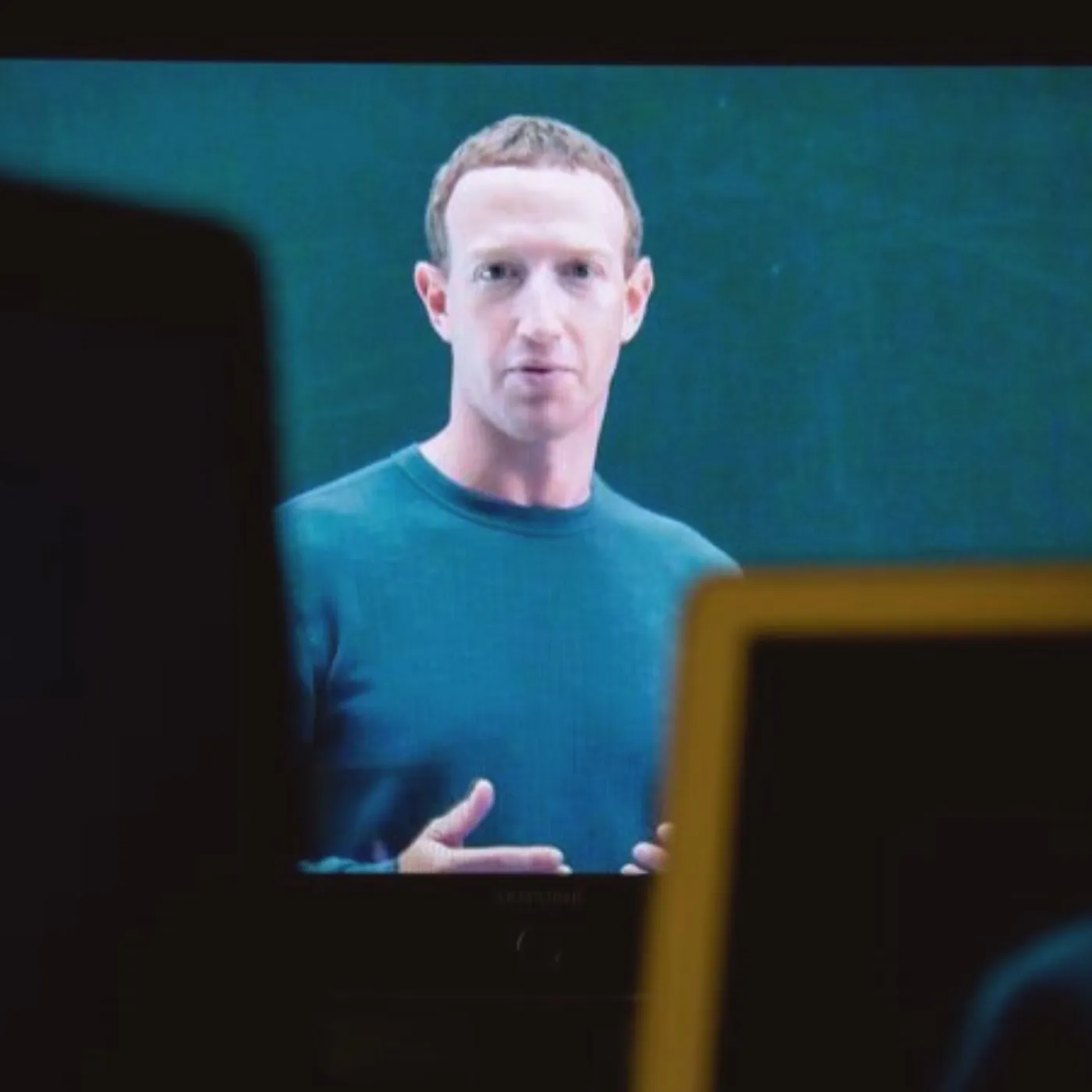
Can You Ever Log Out of Something That Lives Inside You?
That’s the final paradox of the Zuckerberg era.
You can leave Facebook, but that doesn’t mean Facebook leaves you. The platform may fade, but the reflexes it coded—to perform, compare, scroll, divide, react—still live in your habits, your speech, your instincts.
Undoing them will take more than silence. More than time.
It will take intention.
Because the legacy of Facebook is not a timeline. It’s a generation shaped in Mark Zuckerberg’s image.
And now we must ask: Whose image comes next?