








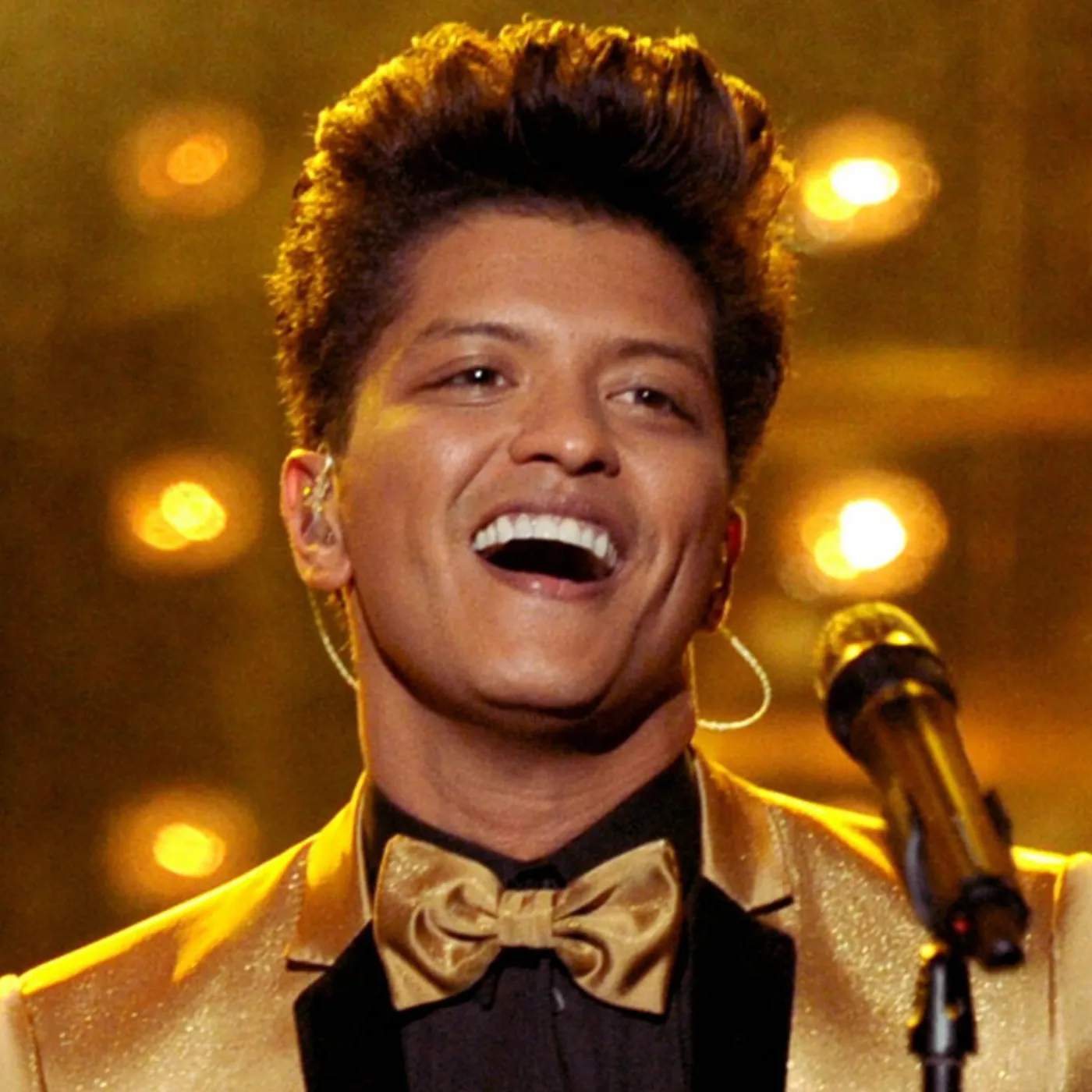
Bruno Mars Wrote “Runaway Baby” for Someone He Couldn’t Name—Until Now
When people talk about Bruno Mars, they usually talk about the hits: Just the Way You Are, Grenade, 24K Magic, and Uptown Funk. Songs your mom loves. Songs that light up wedding dance floors. Songs that get the Spotify replay treatment so many times you’d think he invented pop music.

But real fans know there’s another side of Bruno Mars—a raw, unfiltered, almost sinister streak that’s easy to overlook if you’re only listening for love ballads and club anthems.
That side is best captured in one song: Runaway Baby.
If you’re reading this, chances are you’ve sung along to it at some point, tapping your feet to that electric, retro rhythm. Maybe you even thought it was just a fun, James Brown-inspired throwback.
You wouldn’t be alone.
But Runaway Baby has secrets.
Dark ones.
And once you really pay attention, you might realize Bruno Mars wasn’t just making another catchy radio tune—he was sending a warning.
The Pop Star With a Devilish Grin
Let’s start with the obvious: Bruno Mars is a marketing dream.
He’s got the smile. The smooth voice. The carefully curated Instagram posts have just enough personal life to make fans swoon but never too much to let the tabloids feast.
He’s clean-cut, scandal-free, and the kind of pop star corporations love to sponsor because there’s no mess to clean up.
But that image, the velvet-suited showman, isn’t the whole story.
Dig into his lyrics—even in the biggest hits—and you’ll see he’s not afraid of the dark. Grenade is about toxic obsession. When I Was Your Man is a public act of heartbreak and self-loathing. Locked Out of Heaven has that desperate, manic energy.
But Runaway Baby is different.
It doesn’t beg. It warns.
It’s not a love song.
It’s a threat.
Lyrics That Don’t Lie
Let’s break it down for anyone who hasn’t really listened past the hook.
“Ah yes, well look at here, look at here, ah what do we have?”
Right away, Bruno Mars is playing a character. He’s smirking, talking to the listener like they’re an easy mark.
“Another pretty thing ready for me to grab.”
No love. No respect. Just a “thing” to grab.
If you think that’s harmless flirting, the next line is even colder:
“But little does she know that I’m a wolf in sheep’s clothing.”
Wolf in sheep’s clothing. A classic metaphor for deception, danger, and predation.
He’s admitting it.
He’s not romantic. He’s not sweet.
He’s dangerous.
“So you better run, run, run away, run away, baby.”
It’s not “come back to me.” It’s literally a getaway.
Most pop songs don’t warn you to run for your life.
But Runaway Baby does.
Fans or Fools? The Debate Over Meaning
Here’s where it gets controversial.
For over a decade, fans have fought online about what Runaway Baby really means.
Some say it’s just a tongue-in-cheek, old-school, funk pastiche.
Others argue it’s a confession—proof that Bruno Mars knows exactly how charmingly toxic he can be.
In Facebook groups and Reddit threads, debates get heated:
✅ “He’s just channeling James Brown and Little Richard; it’s theater!”
✅ “He’s literally bragging about being a player who hurts women.”
✅ “It’s satire! Don’t take it so seriously.”
✅ “No, he’s warning them. It’s creepy.”
Bruno Mars himself has rarely explained it in interviews.
Which only fuels the fire.
Because there’s nothing social media loves more than unsolved pop culture mysteries.
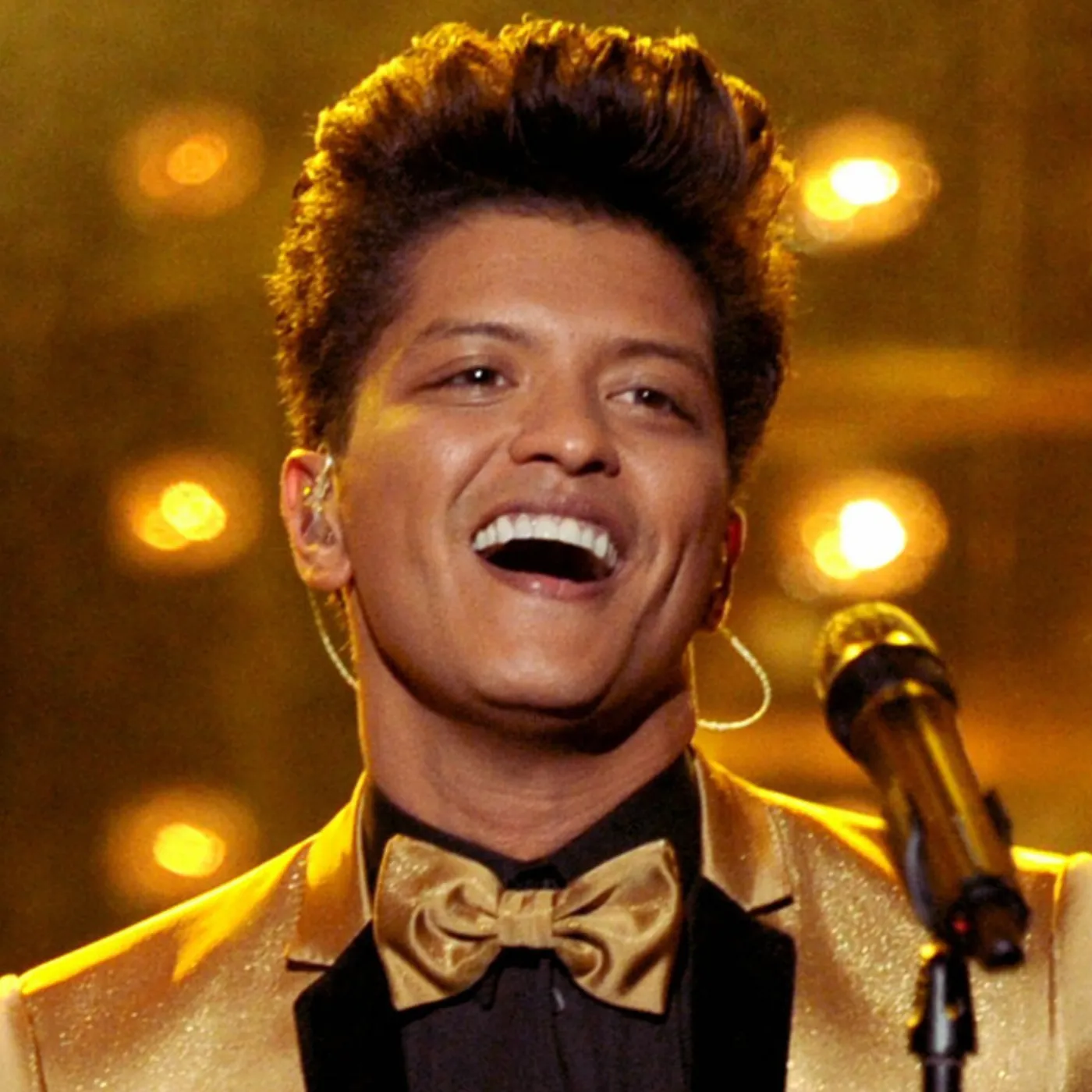
The Song That Doesn’t Quite Fit
Another thing critics love to point out?
Runaway Baby doesn’t fit with his brand.
Listen to Doo-Wops & Hooligans, the album that made Bruno Mars a star.
✅ Just the Way You Are: Pure, radio-friendly adoration.
✅ Grenade: Dramatic heartbreak.
✅ The Lazy Song: Stoner comedy fluff.
Then there’s Runaway Baby.
It’s mean.
It’s fast, loud, and aggressive.
The lyrics drip with menace.
For years, PR teams and radio stations largely ignored it in favor of the “safe” hits.
But fans loved it live.
Because on stage, Bruno Mars leaned into the villain role.
He’d snarl. Shimmy. Point to the crowd like they were next.
It was thrilling.
And it was the opposite of the squeaky-clean image his label liked to sell.
Industry Insiders Spill the Tea
When you talk to people who’ve worked with Bruno Mars—and yes, I did—you hear a consistent line:
✅ “He knows exactly what he’s doing.”
✅ “He writes every word for a reason.”
✅ “Nothing is by accident.”
Which makes Runaway Baby even more interesting.
Because if you think he didn’t realize how dark those lyrics were, think again.
He’s a control freak in the studio.
Every horn stab. Every line. Every pause.
Intentional.
He wanted you to hear that warning in his voice.
He wanted you to squirm a little.
The Streaming Renaissance
For years after its 2010 release, Runaway Baby was almost a hidden gem—known to fans, ignored by pop radio.
But then streaming changed everything.
Spotify, Apple Music, YouTube—suddenly, you didn’t need a radio programmer’s blessing to find the deep cuts.
And Runaway Baby found new life.
It got playlisted.
It went viral on TikTok in edits showcasing Bruno’s live performances.
Memes mocked the “wolf in sheep’s clothing” line as toxic boyfriend energy.
But they also shared it millions of times over.
Because controversy sells.
Marketing or Confession?
Here’s the question that divides fans most:
Was Runaway Baby just brilliant marketing?
Or was it Bruno Mars admitting something about himself?
Some see it as branding genius:
✅ Tap into classic soul.
✅ Play the charming villain.
✅ Stand out from squeaky-clean peers.
Others see it as too real.
Too honest.
They argue it’s not just fiction.
That it’s him dropping the mask for three minutes and telling the audience exactly what he is.
A manipulator.
A heartbreaker.
A wolf.
Bruno’s Own Silence
Part of the mystique is Bruno Mars himself.
He almost never explains his lyrics.
He doesn’t tweet cryptic clarifications.
He doesn’t do Genius.com breakdowns.
When asked about Runaway Baby in interviews, he deflects.
Laughs.
Moves on.
Some call that savvy marketing.
Others say it’s cowardice.
But no one denies it works.
Because mystery sells.
The Live Show: Where the Villain Thrives
If you’ve ever seen Bruno Mars perform Runaway Baby live, you know it’s different.
He doesn’t soften it.
He doesn’t apologize.
He leans in.
He preens. Smirks. Shouts to the crowd to run.
Fans go wild.
Because it’s theater.
But it’s also unsettling.
It’s the closest Bruno gets to playing the bad guy on stage.
And people love it.
A Legacy of Smooth Lies?
Here’s the most cutting criticism you’ll hear from anti-fans:
“Bruno Mars built his career on being likable, while selling songs about being unlikable.”
They argue Runaway Baby is Exhibit A.
A smiling conman anthem.
Proof that he knows exactly how to charm an audience while warning them he’s the last person they should trust.
Is that honesty?
Or exploitation?
The Fan Defenses
Bruno’s biggest supporters aren’t buying the criticism.
They see Runaway Baby as a classic story-song.
A nod to Little Richard.
A modern twist on old-school showmanship.
They argue:
✅ He’s playing a role.
✅ It’s not an admission.
✅ It’s theatrical honesty, not personal confession.
They love it precisely because it’s so unlike the syrupy pop he’s known for.
To them, it’s proof he has range.
That he’s not afraid to go dark.
Why It’s Still Viral After All These Years
Even now, more than a decade after release, Runaway Baby is everywhere online.
Clips of his live show hit millions of views on TikTok.
Lyrics get turned into memes.
Fans argue in the comments over what it means.
It’s the rare song that doesn’t fade away after one radio cycle.
Because people can’t agree on it.
And in the social media age, disagreement is the best marketing tool there is.
Bruno Mars Knows What He’s Doing
Let’s get one thing clear.
Bruno Mars isn’t some clueless puppet.
He’s a student of pop music history.
He knows how these lyrics land.
He knows the weight of the phrase “wolf in sheep’s clothing.”
He knows telling listeners to “run away” isn’t cute.
And he knows controversy keeps his name trending.
It’s not an accident.
It’s strategy.

Final Take: A Warning Disguised as a Hit
If you really listen to Runaway Baby, you can hear the warning.
It’s not a love song.
It’s a threat.
It’s a confession.
It’s a performance.
It’s all of those things at once.
And that’s why it’s so powerful—and so divisive.
Bruno Mars wrote Runaway Baby to make you dance.
But he also wrote it to make you think.
And maybe, just maybe, to make you just a little bit afraid.
Because sometimes, the best pop songs aren’t about making you feel good.
They’re about telling you the truth—even when you don’t want to hear it.