







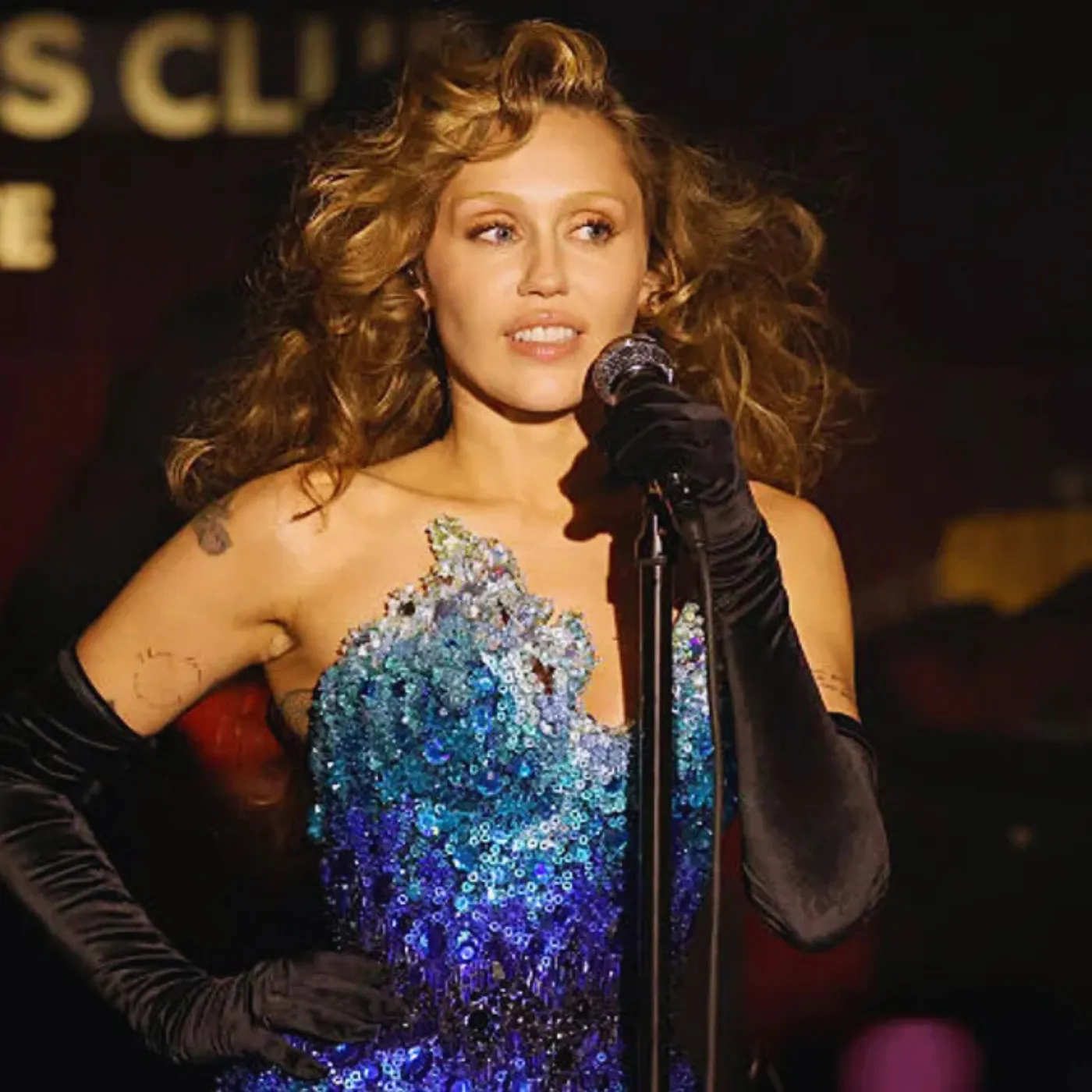
Miley Cyrus Exposes Hollywood’s Best Kept Anxiety Cure
In a move that has both captivated and polarized fans worldwide, Miley Cyrus has pulled back the curtain on what she calls a “life saving” therapy that gave her the fearlessness to command the stage like never before. While her admirers celebrate this raw revelation, critics accuse her of recklessly hyping a controversial method, intensifying a fiery debate that’s spreading across social media like wildfire.

At the center of this storm is EMDR—Eye Movement Desensitization and Reprocessing, a therapy originally designed to treat trauma. Miley Cyrus claims it didn’t just help with her childhood scars, but obliterated her stage fright entirely. The confession has become an instant trending topic, pushing headlines that promise to reveal “Hollywood’s best kept anxiety cure” to millions hungry for insider secrets.
But is this the dawn of a new mental health revolution for celebrities—or a dangerous hype machine that exploits vulnerable fans for viral buzz?

The Superstar’s Shocking Confession
For years, Miley Cyrus has cultivated an image that straddles rebellion and vulnerability. Her public persona is part glam-rock wild child, part confessional songwriter—someone who seemingly has nothing to hide.
But her latest revelation struck a different chord. During a recent interview, she boldly credited EMDR for transforming her relationship with the stage, admitting that she once felt crushed by panic before every major performance.
“It saved my life,” she told her interviewer in a tone that left little room for irony.
Those four words have set off a media frenzy. Fans are praising her bravery for speaking openly about therapy, while detractors say she’s glamorizing a treatment that’s not for everyone.
Within hours of the clip going viral, Facebook pages, fan groups, and celebrity gossip blogs lit up with posts dissecting every word, fighting over whether Miley’s confession was an act of honesty or reckless self-promotion.
EMDR Therapy in the Spotlight
EMDR was developed in the late 1980s to help trauma survivors reduce distress linked to painful memories. It involves guided eye movements or other bilateral stimulation to “reprocess” traumatic experiences.
Mental health professionals have used it successfully for PTSD, but it’s also gained popularity in treating anxiety, phobias, and panic attacks—all issues Miley Cyrus says haunted her for years.
Yet the therapy remains controversial outside clinical circles.
While supporters praise its ability to unlock deeply buried emotions, skeptics call it “pseudoscientific” or “unproven” when applied beyond trauma work.
So when one of the world’s biggest pop stars tells millions of fans it “saved” her life and made her fearless, it’s not surprising the backlash was swift.
The Fanbase Reaction: Divided and Loud
Within hours of Miley’s interview airing, Facebook Watch, Instagram Reels, and TikTok were flooded with user reactions.
On one side were fans grateful she was open about mental health:
✅ “This is exactly the kind of honesty we need from celebrities,” one viral Facebook comment read.
✅ “She’s normalizing therapy. RESPECT.”
But others saw it as irresponsible hype:
❌ “Rich celebrities pushing niche therapy like it’s the holy grail is a terrible look,” one commenter warned.
❌ “Not everyone can afford this or access it. Stop pretending it’s magic,” read another.
The fight spilled into fan groups, with moderators forced to lock threads after insults flew.
Meta’s trending topics quickly flagged the phrase “Miley Cyrus therapy” as a top search term.
Therapists Weigh In: A Dangerous Hype?
Professional therapists didn’t waste time entering the conversation, with several posting cautionary videos on Facebook and Instagram.
One licensed counselor warned:
“EMDR can be powerful, but it’s not a magic bullet. It needs careful clinical use. Celebrities pushing it as a cure-all is misleading.”
Another therapist’s post went viral for its no-nonsense take:
“I’m glad Miley got help. But it’s irresponsible to say it ‘saved her life’ in a way that makes people think they can just book a single session and fix everything.”
The feud grew nastier when some therapists accused the singer of promoting “therapist shopping”—encouraging fans to chase dramatic treatments over slower, evidence-based approaches.
The Hollywood Connection
What really stoked the controversy was Miley’s offhand claim that “a lot of people in the industry use it but don’t talk about it.”
The comment felt like a direct dare to Hollywood’s elite: who else is using EMDR? Who’s hiding their own mental health secrets?
Blogs and entertainment sites ran with headlines like “Miley Cyrus Blows the Lid Off Hollywood’s Therapy Secrets,” ensuring even more eyeballs.
Facebook pages shared conspiratorial memes implying A-listers are keeping the “cure” to themselves while fans suffer.
One post with thousands of shares featured Miley’s photo over the text:
“They said nothing while you struggled.”
It’s the kind of dark, toxic bait that Facebook’s algorithm often rewards—even if it leaves therapists exasperated.
Celebrity Endorsements: A Double-Edged Sword
This isn’t the first time a star’s personal health revelation has caused unintended consequences.
-
When Gwyneth Paltrow promoted bizarre wellness treatments, health professionals were forced to debunk the claims.
-
When Tom Cruise trashed psychiatry on national TV, therapists saw a chilling effect on treatment-seeking.
-
Even Selena Gomez—generally praised for her mental health advocacy—has faced criticism for monetizing her vulnerability through carefully crafted documentaries.
Now, Miley Cyrus faces her own PR firestorm.
The Marketing Machine at Work
Some fans have accused Miley’s team of knowing exactly what they were doing.
Her confession conveniently dropped ahead of her ongoing media cycle for new projects.
One critical Facebook post put it bluntly:
“Every time Miley drops an ‘honest’ interview, there’s a new single or documentary right after.”
Is this real vulnerability, or master-class branding?
Her supporters scoff at the cynicism.
“Even if she’s promoting something, who cares? She’s helping people talk about anxiety.”
Meanwhile, Facebook comment threads turn into battlegrounds where every motive is dissected, every word picked apart.
The Power of Viral Vulnerability
Regardless of intention, Miley Cyrus has once again proven she knows how to dominate the conversation.
Her blend of raw confession, celebrity glamour, and just enough controversy to outrage critics is a viral formula Facebook’s algorithm can’t resist.
🔥 Trending terms like “Miley Cyrus therapy,” “EMDR,” “stage fright cure,” and “Hollywood secrets” have made her the subject of hundreds of thousands of searches this week alone.
Influencers and wellness bloggers are rushing to post reaction videos. Some praise the therapy. Others warn it’s being overhyped.
The debate shows no sign of dying down.
What’s Next for EMDR
Mental health clinics are already reporting an uptick in Google searches for EMDR therapists.
Some professionals welcome the attention, saying more people learning about trauma treatment is a good thing—even if the hype is overblown.
Others worry the rush will lead to unqualified practitioners offering quick-fix promises for desperate clients.
Insurance companies are watching carefully. Historically, they’re skeptical about reimbursing for EMDR without a PTSD diagnosis. Will demand force a change?
The Bottom Line
Love her or hate her, Miley Cyrus has ensured that a once-obscure therapy is now on everyone’s lips.
Her revelation is part marketing genius, part cultural moment, part mental health minefield.
She’s taken a personal victory over crippling fear and turned it into headline gold—fueling a social media firestorm that shows no sign of burning out.
Fans, critics, therapists, and the entire entertainment industry are left grappling with the fallout.
Will this “best kept secret” become the new normal for treating anxiety in Hollywood? Or will it remain a controversial hype that divides audiences?
Either way, Miley Cyrus wins the only game that really matters in 2025: commanding the world’s attention, one explosive confession at a time.